 Lynden Roofing
 Building Decks for Acme Homes Near Lynden
Acme sits in a part of Whatcom County where a deck earns its keep. It's where you grill, where the kids play, where you sit with coffee before the fog burns off. But it's also outdoor lumber and hardware left to fend for itself against a coastal Washington climate for ten or twenty years straight. Salt-tinged air drifting in from the Sound, driving rain that comes sideways more often than people admit, and a moss season that seems to stretch longer every year — all of it works on a deck the same way it works on a roof or a fence. The difference is a deck takes the abuse from every angle at once: sun and rain from above, standing moisture from below, and foot traffic wearing down whatever protective finish is left.
We build and repair decks for homeowners around Acme and greater Lynden, and most of the call-backs we see on other contractors' work trace back to the same handful of decisions made wrong at the start — the wrong footing depth, an unflashed ledger board, decking laid tight against the house instead of sloped away from it. None of that is exotic knowledge. It just requires building for the climate that's actually here, not the one on the lumber yard's brochure.
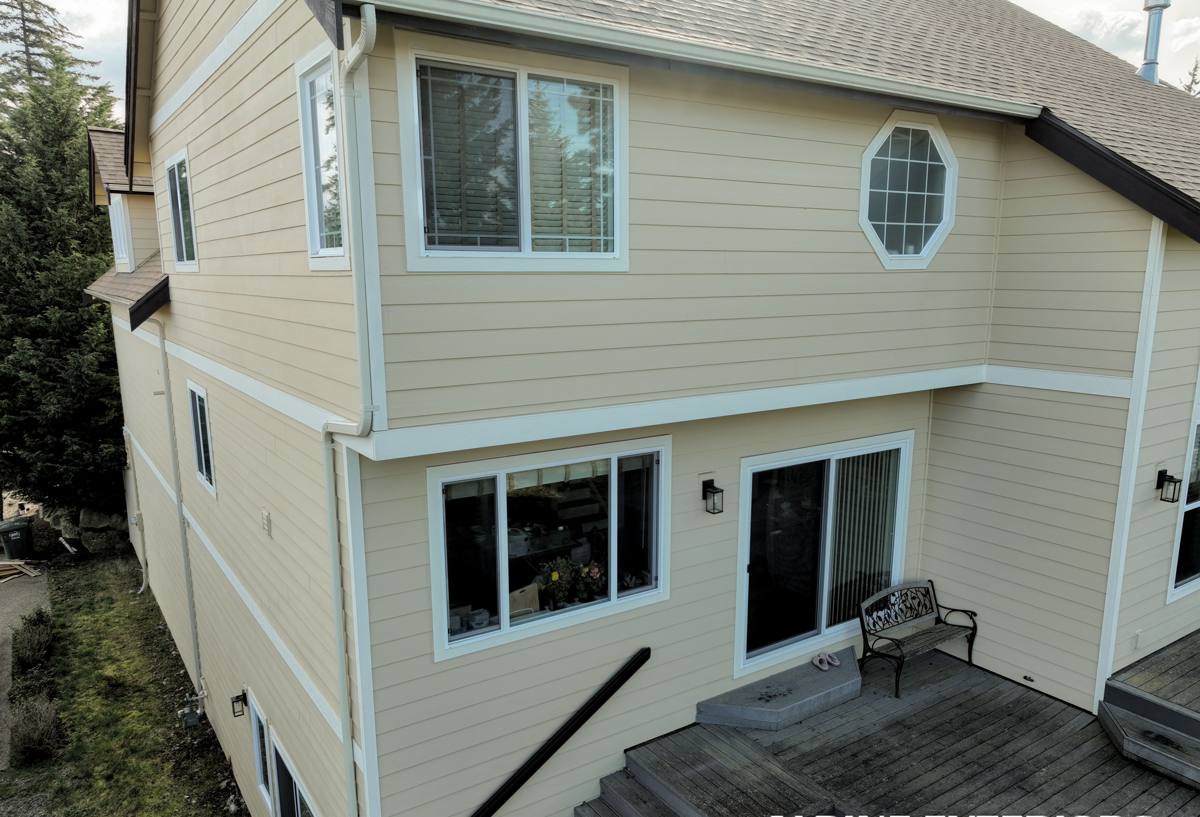
What Whatcom County's Climate Does to a Deck
Moisture and Standing Water
Lynden-area winters aren't dramatic, but they are long and wet, and a deck spends months at a time with wood staying damp far longer than it dries. Any spot where water can sit — a low joist, a board laid flat against another, a post base without drainage — becomes the spot where rot starts. It's rarely the whole deck that fails; it's one section that never got a chance to dry out.
Moss and Algae Growth
The same shade and dampness that makes moss take over a north-facing roof does the same thing to deck boards, especially under overhangs or near fence lines where sun and airflow are limited. Moss holds moisture against the wood surface and makes boards slick and dangerous underfoot long before it does structural damage. It's a maintenance issue more than a build issue, but the right board spacing and site layout make a real difference in how bad it gets.
Salt Air and Coastal Exposure
Acme isn't right on the water, but this part of Whatcom County still gets enough marine air off the Sound to accelerate corrosion on anything metal — nails backing out, screw heads rusting and staining the decking, joist hangers weakening from the inside where you can't see it. It's slower and less obvious than moss, but it's often the reason a deck that looks fine on the surface has hardware failing underneath.
Choosing Decking Material for This Climate
There's no single "right" material for every deck — it depends on budget, how the deck is used, and how much upkeep a homeowner actually wants to do. Here's how the common options hold up under Lynden-area conditions specifically.
| Material | Moisture Resistance | Moss/Algae Tendency | Maintenance Needed | Typical Lifespan |
|---|---|---|---|---|
| Pressure-treated pine | Good if detailed correctly, prone to cupping if not | Moderate — needs regular cleaning | Re-stain/seal every 2-3 years | 15-25 years |
| Cedar | Naturally decay-resistant, but surface still needs sealing | Moderate — same exposure rules apply | Re-stain/seal every 2-3 years | 15-20 years |
| Composite/PVC decking | Excellent — doesn't absorb water | Lower, but still needs washing on shaded sections | Occasional washing, no staining | 25-30+ years (per manufacturer warranty) |
We install all three depending on what a homeowner wants. Composite costs more up front but removes the staining cycle entirely, which matters to a lot of people once they've done that chore a few times in a wet climate. Wood costs less initially and can look great, but only if the maintenance actually happens on schedule — skipped seasons are where wood decking loses ground fastest here.
What a Correctly Built Deck Actually Requires
Footings Set Below Frost Depth
Footings that aren't dug and poured to the depth Whatcom County code requires can heave or settle over a few freeze-thaw cycles, which is what causes a deck to develop a slight lean or bounce a few years in. This is invisible once the deck is built, which is exactly why it has to be done right the first time.
Ledger Board Attachment and Flashing
The ledger board — where the deck attaches to the house — is the single most common point of failure we see on older or poorly built decks in this climate. Without proper flashing, water tracks behind the ledger and into the house's rim joist, and by the time it's visible from inside, real structural damage has usually already happened. This connection gets flashed and fastened correctly on everything we build, full stop.
Joist Spacing, Beam Sizing, and Drainage
Joist spacing and beam sizing need to match the actual span and the decking material chosen — composite and wood have different deflection requirements, and undersized framing shows up as bounce or sag well before it becomes a safety issue. Decking also needs a slight slope away from the house and enough gap between boards for water to drain rather than pool.
Fasteners and Hardware
Given the salt air moving through this part of the county, we use stainless or heavy hot-dip galvanized fasteners and connectors rather than standard coated hardware. It costs a little more. It's also the difference between hardware that's still solid in fifteen years and hardware that's rusting and staining the decking in five.
Permits and Local Code Considerations
Most new decks above a certain height, and any deck attached to the house, require a permit through Whatcom County or the applicable local jurisdiction, along with inspection at the footing and framing stages. This isn't paperwork for its own sake — it's what catches an undersized footing or a missed ledger flashing detail before the decking goes down and covers it up. We handle the permit process as part of the job so homeowners aren't tracking down inspections themselves.
Our Deck Building Process
1. Site Visit and Design
We walk the site, talk through how the deck will actually be used, and look at drainage, sun exposure, and how the deck ties into the house. This is also where material choice gets discussed honestly — including the maintenance trade-offs above.
2. Permitting and Planning
We submit for the required permit and schedule inspections, and lock in a framing plan sized correctly for the span and material chosen.
3. Construction
Footings, framing, ledger flashing, and decking — built and inspected at the stages that matter, not just at the end.
4. Final Walkthrough
We walk the finished deck with the homeowner, cover basic care for whatever material was installed, and make sure everything is solid before we call it done.
Seasonal Maintenance Checklist for Acme-Area Decks
- Clear leaves and debris from between boards before fall rains set in — trapped debris holds moisture against the wood
- Check for moss or algae buildup each spring, especially in shaded corners, and wash it off before it gets slick
- Inspect fasteners and connectors yearly for rust staining or loosening, particularly on older galvanized hardware
- Re-seal or re-stain wood decking on the schedule the product calls for — don't wait until it visibly needs it
- Check the ledger board area and any spots where the deck meets the house siding for signs of water staining
- Make sure gaps between boards haven't closed up from swelling, which blocks drainage
Why a Crew That Already Works in Acme Makes a Difference
A deck built to a generic spec sheet and a deck built for this specific stretch of Whatcom County aren't the same project, even if they look identical on installation day. Knowing how long moss season actually runs here, how much salt exposure the hardware needs to handle, and which permit and inspection steps the local jurisdiction expects isn't something you get from a manual — it's something you get from building decks in this area, season after season, and seeing which details actually matter once the weather sets in. That's the difference between a deck that needs attention again in five years and one that's still solid in twenty.
If you're planning a new deck or want an honest look at one that's showing its age, we're happy to come take a look. Estimates are free, there's no pressure, and you'll get a straight answer about what your deck actually needs — just fill out the form below to get started.