 Lynden Roofing
 Board & Batten Siding in the Acme Area: A Style That Has to Earn Its Keep
Board and batten has been part of the Pacific Northwest building vocabulary for well over a century, and it is easy to see why homeowners in the Acme area outside Lynden keep asking for it. The vertical lines read as farmhouse, mountain, or modern depending on the trim and color choices around it, and it pairs naturally with the wooded, semi-rural lots common in this part of Whatcom County. But board and batten is not a purely decorative choice. The wide boards and narrow battens create a distinct pattern of seams, joints, and shadow lines that all have to shed water correctly, year after year, in a climate that does not let up for long stretches of the year. Get the material and the install wrong, and board and batten is one of the least forgiving profiles on the market. Get it right, and it is one of the most durable-looking sidings you can put on a home.
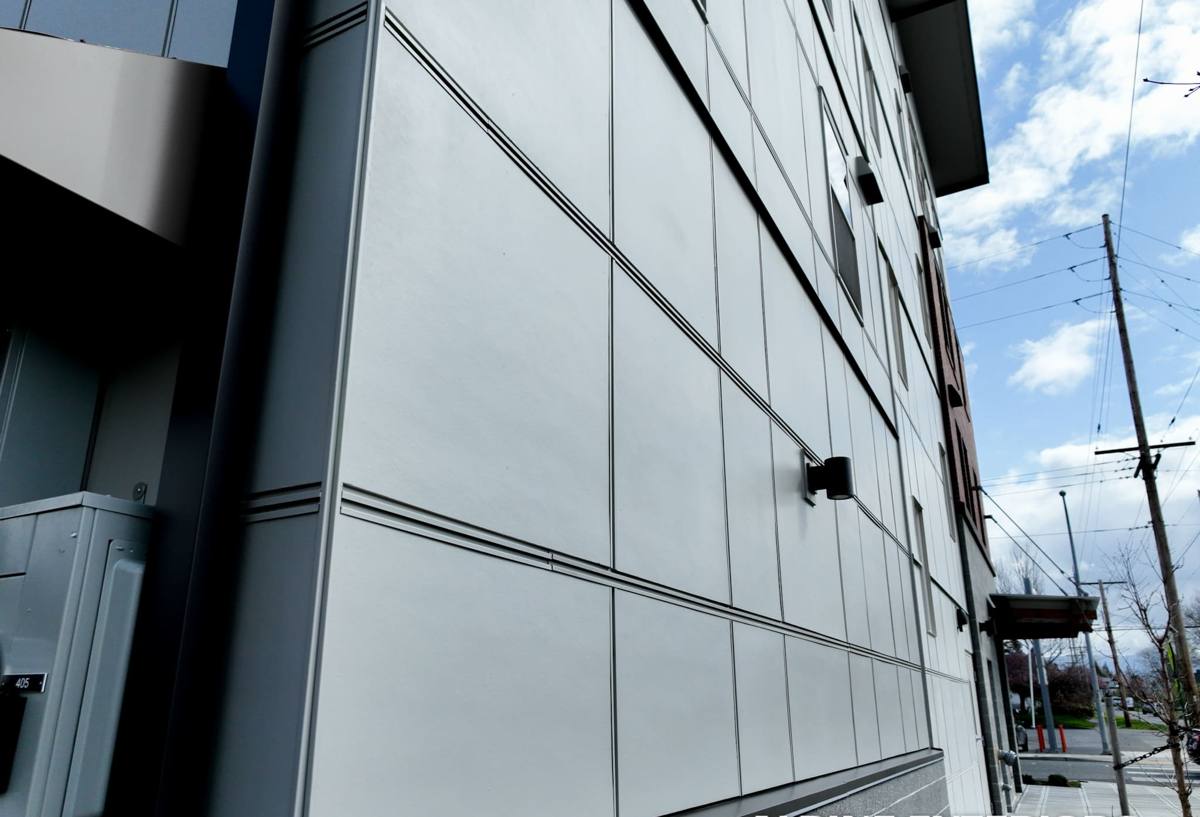
Why Whatcom County Weather Puts Extra Stress on This Profile
Homes around Lynden and out toward Acme deal with a long wet season, driving rain that comes in sideways during winter storms, and a marine-influenced air mass that carries salt and moisture further inland than people expect. Add the tree cover and shaded, damp ground common on rural and foothill lots in this area, and you get long stretches where siding simply does not fully dry out between rain events. That combination is exactly what feeds moss, algae, and mildew growth on exterior surfaces.
Board and batten is more exposed to this than flat lap siding in one specific way: every vertical batten creates a joint, and every joint is a place water can find a way behind the cladding if it is not detailed correctly. A siding style with more seams needs a better moisture-management plan behind it, not just a good-looking face.
What this means in practice
- North- and west-facing walls exposed to driving rain need extra attention to flashing and caulk joints, not just the boards themselves.
- Shaded elevations near trees or fences hold moisture longer and grow moss faster — material choice matters more here than on a sun-exposed wall.
- Ground-level battens near landscaping or downspouts see the most splash-back and should be inspected most often.
Why Material Choice Matters More With Board & Batten Than With Other Profiles
Because board and batten has more vertical joints per square foot than lap siding, whatever material sits behind those joints is doing more work. Wood battens swell and shrink with moisture cycles, which opens gaps at fastener points over time. Engineered wood products can perform well when kept sealed and painted on schedule, but any breach in that factory coating exposes wood fiber to the same swelling and softening problems as solid wood, and Whatcom County's wet season doesn't give those breaches much chance to dry out before the next rain arrives. Vinyl board and batten avoids rot, but it is a rigid material with a fixed shape that has to be installed with room to expand and contract, and it is not a fire-resistant product — a real consideration for homes near the tree cover typical of the Acme area during dry summer stretches.
This is the core reason our crew installs only James Hardie fiber cement siding. Fiber cement does not swell, does not feed rot, and does not rely on an unbroken paint film to keep water out of the substrate the way wood-based products do. It is a material that is engineered to hold its shape and finish through repeated wet-dry cycles, which is precisely the stress board and batten profiles put on a wall.
What a Correct Board & Batten Installation Actually Involves
A good-looking board and batten job and a correctly built one are not always the same thing. The visible boards and battens are the last layer of a system that starts with what is behind the wall.
- Weather-resistive barrier and flashing first. Every penetration, window, and horizontal transition needs proper flashing integrated with the water-resistive barrier before a single board goes up.
- A drainage plane behind the siding. In a climate this wet, incidental moisture behind the cladding needs somewhere to go. A furring strip or rainscreen gap lets water drain and lets the wall breathe instead of trapping moisture against the sheathing.
- Correct fastener placement and spacing. Board and batten depends on consistent reveals and properly spaced fasteners driven into framing, not just sheathing, so the assembly stays flat and doesn't telegraph movement over time.
- Sealed and flashed joints at every board end. Butt joints, corners, and transitions to trim are the highest-risk spots for water intrusion and need to be treated as such, not just caulked and left.
- Clearance at grade and hard surfaces. Siding that runs too close to soil, decking, or concrete stays damp longer and invites both moss and rot — a common shortcut on rushed jobs.
Skipping any one of these steps can leave a wall that looks right for a season or two before problems show up behind the boards, by which point repairs cost far more than doing it correctly the first time.
The James Hardie Board & Batten System We Install
We install James Hardie's engineered fiber cement panel and batten systems, built specifically to deliver the vertical board and batten look without the maintenance burden of solid wood or the heat sensitivity of vinyl. Hardie's HZ5 product line is engineered for regions like the Pacific Northwest that see sustained wet weather, with a formulation designed to resist moisture damage and hold its finish through repeated freeze-thaw and wet-dry cycles.
The ColorPlus factory-applied finish is part of why this matters for board and batten specifically. Because the finish is baked on in a controlled factory process rather than field-applied, the color and protective coating are consistent across every board and batten, including the cut edges when treated correctly at installation — there is no field-painted product trying to keep up with dozens of extra seams. Hardie fiber cement is also non-combustible, which is a real consideration for homes near tree lines and brush common on rural Whatcom County properties, not a marketing point.
What we do not install, and why
We do not install LP SmartSide, vinyl board and batten, Cemplank, Allura, or primed cedar or spruce boards. Each of those products has legitimate uses and each has honest trade-offs — engineered wood needs disciplined maintenance and prompt attention to any coating damage, vinyl has real limits on fire resistance and long-term color stability, and solid wood requires the most ongoing upkeep of any of them. We made a professional call to standardize on one system we can stand behind on every home we touch, and warranty it accordingly, rather than offer several products with different long-term risk profiles.
Comparing Board & Batten Material Options
| Factor | James Hardie Fiber Cement | Engineered Wood (LP) | Vinyl | Solid Wood/Cedar |
|---|---|---|---|---|
| Moisture/rot resistance | High — non-organic core | Moderate — depends on coating integrity | High (doesn't rot, but can warp) | Low without diligent upkeep |
| Moss/algae resistance | Good, especially with factory finish | Fair — finish can wear at seams | Fair — surface can still host growth | Poor in shaded, damp areas |
| Fire resistance | Non-combustible | Combustible (wood-based) | Combustible, can deform under heat | Combustible |
| Finish maintenance | Factory-cured, long repaint interval | Requires scheduled repainting/sealing | No paint, but limited color options and fading over time | Frequent painting/staining required |
| Typical lifespan installed to spec | Decades, with strong transferable warranty | Shorter if maintenance lapses | Long, but brittle with age | Shortest without consistent care |
Our Process for Acme-Area Homeowners
We walk every home before quoting anything, because board and batten performance depends entirely on the wall it's going on. That means checking existing sheathing and moisture barrier condition, grade clearance, roofline transitions, and how much shade and tree exposure each elevation gets — all of which shapes both the install plan and where we recommend extra attention to drainage detailing.
From there: tear-off and prep of the existing cladding, correction of any water-resistive barrier or flashing issues found underneath (a step some crews skip to save time), installation of the Hardie panel and batten system to manufacturer spec, and a final walk-through with the homeowner before we consider the job done. We haul away our own debris and don't leave a site half-finished between phases.
Maintaining Board & Batten Siding in This Climate
Even a correctly installed system benefits from basic seasonal attention, especially in a climate that stays damp for months at a stretch.
- Rinse siding annually, focusing on shaded or tree-covered elevations where moss and algae take hold first.
- Keep gutters clear so overflow doesn't run down battens or pool at the base of the wall.
- Trim back vegetation and tree limbs that keep siding shaded and damp longer than the rest of the house.
- Check caulking at trim and window transitions every year or two, since sealant is the one component that wears faster than the siding itself.
- Keep an eye on grade clearance — mulch, soil, or landscaping that creeps up against the bottom boards should be pulled back.
Why Working With a Crew That Already Knows This Area Matters
Board and batten installed correctly in a dry climate and board and batten installed correctly in Whatcom County are not quite the same job — the drainage details, fastener choices, and finish system all need to account for a wet season that runs much longer here than in most of the country. A crew that regularly works the Lynden and greater Whatcom County area already understands how local moisture and moss patterns behave on real walls, not just in a manufacturer's install guide. That local pattern recognition is often the difference between a board and batten job that still looks tight in ten years and one that needs early repair.
If you're considering board and batten siding for a home in the Acme area, we're happy to take a look and give you a straightforward, no-pressure estimate — no obligation, just an honest assessment of what your home needs.