 Lynden Roofing
 Windows Built for Abbotsford's Wet, Salt-Laden Climate
Abbotsford sits in a stretch of the Pacific Northwest where the weather doesn't do anything halfway. Winters bring long stretches of driving, wind-blown rain that hits window assemblies sideways instead of straight down. Humid marine air carries salt and moisture that settles into frames, sills, and hardware year-round. And the shoulder seasons stretch out long enough that moss and algae get a real foothold on anything that stays damp for more than a day or two. None of that is a problem for a window that's installed correctly. All of it is a problem for a window that isn't.
Most window failures we get called out for in this region aren't manufacturing defects. They're installation shortcuts — missing sill pans, reused old flashing, caulk asked to do a job that only proper drainage detailing can do. A window installed for a dry climate and shipped up here with the same assumptions will leak, fog, and rot years ahead of schedule. A window installed for what this area actually throws at it will outlast its warranty.
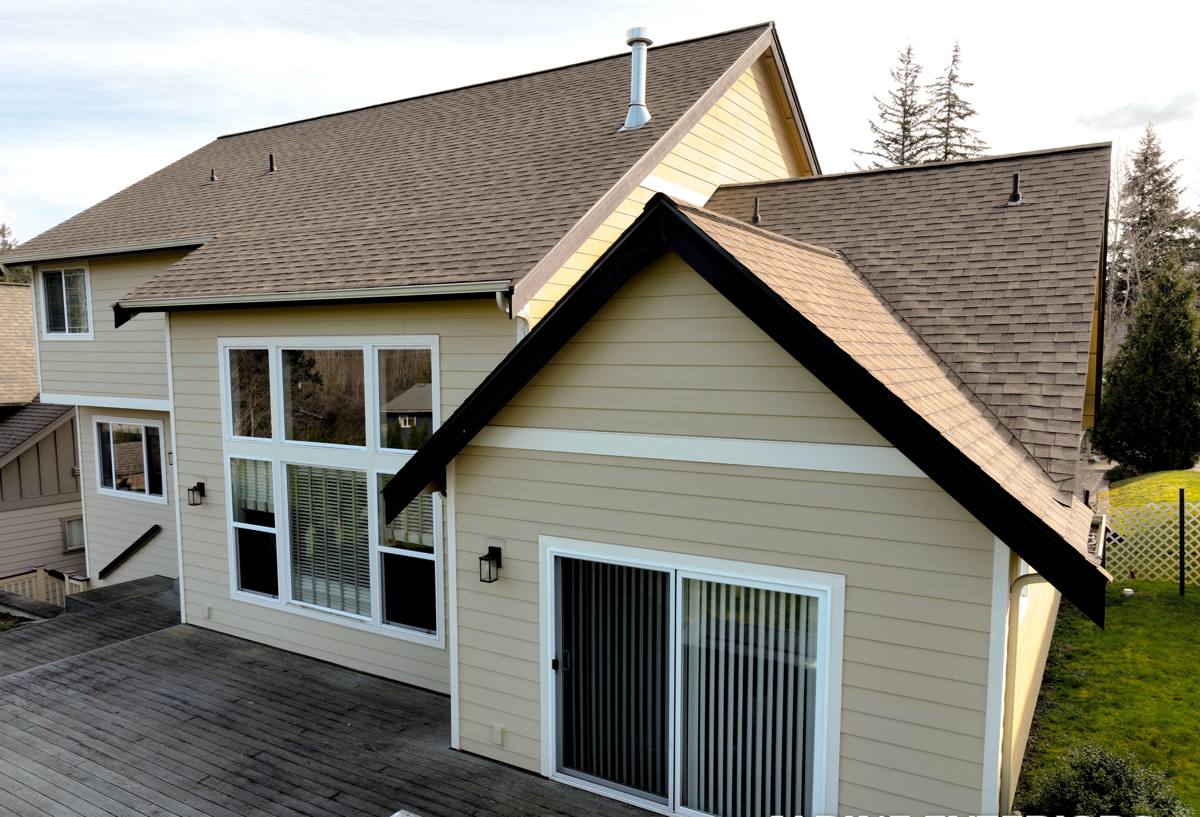
What Abbotsford Homes Need From a Window Install
Every window job in this area has to answer to three things at once: wind-driven rain, sustained moisture and humidity, and the slow biological growth that thrives in both. That shapes decisions most homeowners never think about until something goes wrong.
Wind-Driven Rain
Storms here don't just fall — they push. Rain gets forced up and under trim, into gaps, and behind cladding that isn't properly lapped. A window opening needs a sill pan that sheds water back outside no matter what angle it arrives from, plus flashing tape and building paper integrated in the right shingle-lap order so water is always directed down and out, never trapped behind the frame.
Sustained Moisture and Salt Air
Humid, salt-tinged air accelerates corrosion on cheap hardware and speeds up rot wherever wood is exposed and unsealed. Fasteners, flashing, and hinge or lock hardware all need to be rated for a coastal-influenced climate, not a generic inland one.
Moss and Algae Season
When a region stays damp for months at a stretch, anything that holds moisture against a surface becomes a growth medium. Sills, bottom rails, and any horizontal ledge on a window assembly need to shed water fast and dry out between rains — otherwise you get organic growth staining frames and, over time, breaking down caulk and sealant from underneath.
What a Correct Installation Actually Involves
A window install is mostly invisible once it's done — which is exactly why corners get cut without anyone noticing until the drywall stains or the sill goes soft. Here's what has to happen, in order, on every opening:
- Remove the old window and inspect the rough opening framing for hidden rot or prior water damage before anything new goes in.
- Install a sloped sill pan so any water that gets past the window is directed back outside, not down into the wall cavity.
- Integrate flashing tape with the house wrap or building paper in proper shingle-lap order — top piece always overlapping the one below it.
- Set the window level, plumb, and square, then shim and fasten per the manufacturer's specified pattern — not "close enough."
- Insulate the gap between the frame and rough opening with a low-expansion foam or backer rod, avoiding gaps and avoiding over-packing that can bow the frame.
- Seal the exterior with a compatible sealant rated for the cladding and trim material, and finish interior air sealing to stop drafts and interior condensation.
Skip step two or three and every other step is cosmetic. That's the part that fails first in this climate, and it's the part you can't see once trim goes back on — which is exactly why it matters who's doing the work.
Choosing the Right Window for This Climate
Frame material and glazing package both affect how a window handles constant damp, temperature swings, and the occasional salt-carrying wind off the water. There's no single "best" answer — it depends on budget, the home's existing trim, and how much upkeep an owner wants to take on.
| Frame Material | Moisture Behavior | Maintenance | Typical Fit |
|---|---|---|---|
| Vinyl | Won't rot; handles constant damp well | Low — occasional cleaning | Most budgets, reliable long-term performer |
| Fiberglass | Very stable in wet/dry cycling, resists warping | Low | Higher upfront cost, longest service life |
| Wood | Needs consistent sealing to resist rot and moss staining | High — regular repainting/sealing | Character/heritage homes willing to maintain it |
| Wood-clad (wood interior, aluminum or vinyl exterior) | Exterior shell resists weather; interior keeps traditional look | Moderate | Good compromise for older-style homes |
For glazing, a double-pane unit with a low-E coating and an argon fill is the baseline we recommend in this region — it manages both the cold, damp winters and the condensation risk that comes from big indoor-outdoor humidity gaps. Triple-pane is worth the added cost on north-facing walls or homes right along a windy corridor, where the extra insulating layer noticeably cuts down on interior condensation at the glass edge.
Why Local Installation Experience Matters Here
A crew that installs windows across a range of climates might get the product right and still get the detailing wrong for this one. Flashing sequences that work fine in a drier region can leave gaps that this area's driving rain finds within a season or two. A crew that regularly works this stretch of the Pacific Northwest — including the Fraser Valley side of the border — already knows which details can't be skipped: the sill pan slope, the flashing order, the sealant that actually stays flexible through repeated wet-dry cycling instead of cracking.
We work both sides of the border regularly, which means we're used to coordinating with the applicable local permitting and inspection requirements on the Canadian side as well as material and code expectations that differ slightly from what's standard on U.S. jobs. That's a scheduling and paperwork detail for us — it shouldn't be your problem to manage.
Our Process
- On-site assessment — we inspect existing windows, trim, and framing for hidden moisture damage before quoting anything.
- Honest product recommendation — frame material and glazing suited to the specific exposure of that wall, not a one-size answer for the whole house.
- Clear, written estimate — scope, materials, and timeline in plain language, no vague allowances.
- Proper tear-out and framing check — we don't install a new window over a rotted or compromised opening.
- Full flashing and drainage detailing — sill pan, shingle-lapped flashing, correct sealants, every time.
- Final walkthrough — we check operation, seal, and finish with you before calling the job done.
Signs Your Current Windows Are Losing the Fight
Given how much moisture this region deals with, most homeowners notice a problem well before it becomes structural. Worth checking for:
- Soft or discolored wood at the sill or bottom corners of the frame
- Persistent condensation between panes (a sign the seal has failed)
- Moss, algae, or dark staining building up on sills or bottom rails
- Drafts or a noticeable temperature difference near the window in winter
- Difficulty opening, closing, or locking a window that used to operate smoothly
- Peeling paint or bubbling drywall on the interior wall around the frame
Any one of these on its own might just mean an aging window. Two or three together, especially on a wall that catches the prevailing wind and rain, usually means water has been getting past the flashing for a while.
Cost Factors to Expect
Every quote depends on the specifics of the opening and the home, but the main variables that move a window installation's price are consistent:
| Factor | Why It Matters |
|---|---|
| Number and size of openings | More or larger windows mean more material and labor |
| Frame material chosen | Vinyl, fiberglass, and wood-clad carry different material costs |
| Glazing package | Double vs. triple pane, low-E coatings, gas fills all add cost and performance |
| Condition of the existing opening | Hidden rot or framing damage adds repair work before installation can proceed |
| Access and site conditions | Second-story or hard-to-reach windows take more time and equipment |
We'd rather walk a property and give you real numbers than throw out a broad range that doesn't mean much once we see the actual openings.
Get a Straight Answer on Your Windows
If you're dealing with drafts, fogged glass, soft sills, or windows that just feel like they're losing the battle against another wet season, it's worth having someone look before winter rain finds every weak point. We'll give you a straightforward, no-pressure assessment and a clear estimate — fill out the form below and we'll set up a time to take a look.