 Lynden Roofing
 Storm Damage Roof Repair for the Abbotsford Border Corridor
Homes along the Whatcom County and Fraser Valley border see a specific mix of weather that's harder on roofs than most homeowners realize. It isn't one big storm that causes the damage — it's the accumulation. Wind gusts loosen shingle tabs a little at a time. Driving rain finds the smallest gap in flashing and works it wider. Damp air off the Strait and Puget Sound keeps roofs from ever fully drying out, which feeds moss and algae almost year-round. By the time a homeowner notices a stain on the ceiling, the roof has usually been dealing with storm-related wear for months or years.
This page covers what storm damage actually looks like on roofs in and around Abbotsford, BC, what a proper repair involves, and how we approach the work so it holds up through the next storm season instead of just patching the visible problem.
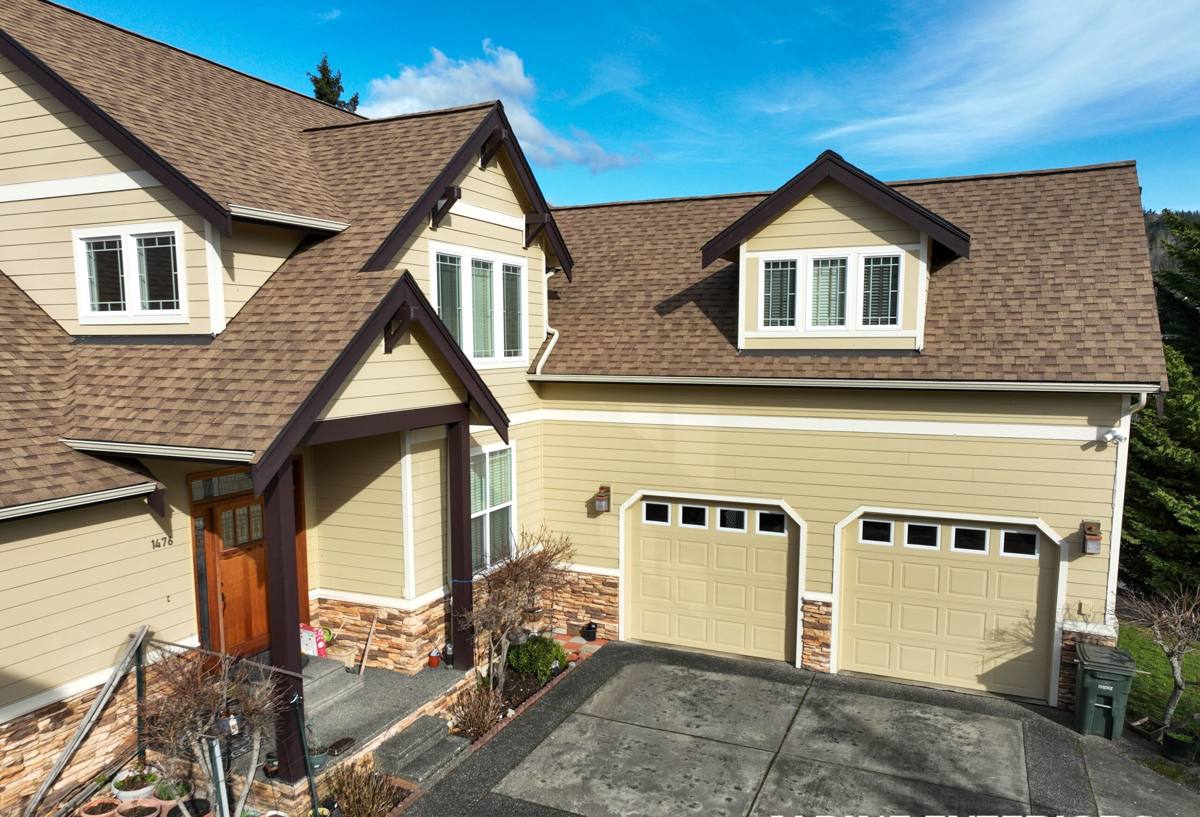
What This Climate Does to a Roof
Wind
Storm systems moving through the Fraser Valley and northern Whatcom County regularly bring sustained wind and gusts strong enough to lift shingle edges, especially on roofs that are already a few years past their prime sealant bond. Once a tab lifts, it doesn't always lay back down flat — and a shingle that isn't sealed tight is far more vulnerable the next time wind hits it.
Driving Rain
Rain that comes in at an angle behaves differently than a straight downpour. It gets pushed up under shingle laps, around vent boots, and into flashing seams that would otherwise shed water fine. Roofs in this area need flashing and underlayment detailing that accounts for wind-driven rain, not just gravity.
Moss and Salt-Laden Air
The marine air that moves through this corridor keeps roof surfaces damp longer after a storm passes, which is exactly what moss and algae need to take hold. Moss growth on a roof isn't just cosmetic — it lifts shingle edges as it grows, holds moisture against the roof deck, and accelerates the same wear that storms cause on their own. A roof dealing with both storm exposure and ongoing moss pressure ages faster than one dealing with either issue alone.
Signs of Storm Damage Worth Checking
Not all storm damage is obvious from the ground, and some of it doesn't show up inside the house until it's been leaking for a while. If you've had a recent windstorm or a stretch of heavy rain come through, it's worth checking for:
- Shingles that look lifted, curled, or are missing entirely, especially along roof edges and ridges
- Granules collecting in gutters or at downspout outlets (a sign shingles are losing their protective surface)
- Soft or discolored spots on ceilings or upper walls, particularly after a storm
- Flashing around chimneys, skylights, or vent pipes that looks bent, separated, or rusted
- Visible moss or dark streaking on north-facing or shaded roof slopes
- Debris — branches, needles, or built-up organic matter — sitting in valleys or against the roof edge
- Gutters pulling away from the fascia or sagging under debris weight
- Daylight visible through the attic roof deck or damp insulation when you check the attic
If you notice more than one of these, it's worth getting the roof looked at before the next storm rather than after.
What a Correct Storm Repair Involves
A Real Inspection First
Storm damage repair starts on the roof, not with an estimate written from the driveway. That means walking the full roof surface, checking every penetration (vents, chimneys, skylights), and inspecting the attic from the inside for moisture, staining, or daylight. A repair quoted without an attic check is a guess.
Matching the Repair to the Actual Damage
Storm damage ranges from a handful of lifted shingles to compromised decking underneath. The right scope depends on what's actually happening at the roof deck, not just what's visible on the surface. That's why we separate the diagnosis from the sales pitch — the goal is an accurate scope, not the largest possible job.
Flashing Gets the Same Attention as Shingles
Most storm leaks trace back to flashing, not shingle failure. Chimney step flashing, valley flashing, and vent boot seals are the parts most likely to fail under wind-driven rain, and they're often overlooked in a quick patch job. A correct repair checks and, where needed, replaces flashing — not just the shingles around it.
Checking the Deck, Not Just the Surface
If water has been getting in for any length of time, the plywood or OSB decking underneath can be softened or delaminated. Laying new shingles over a compromised deck doesn't fix the underlying problem — it just hides it until it fails again. Any legitimate storm repair includes a deck check where staining or soft spots suggest ongoing moisture.
Our Process
- Inspection and documentation. We walk the roof and attic, note the specific damage, and take photos for your records and any insurance claim.
- Honest scope. We explain what's storm-related versus what's pre-existing wear, and give you a clear, written estimate before any work starts.
- Repair or replace, matched to the damage. Localized damage gets a targeted repair. Widespread or repeated damage gets discussed as a replacement conversation, with the tradeoffs laid out plainly.
- Proper materials and detailing. Matching shingles where possible, correct flashing, and underlayment suited to wind-driven rain — not just the fastest fix.
- Cleanup and final check. Debris removed, gutters cleared if they were part of the problem, and a final walk-through so you know exactly what was done.
Repair or Replace? What Actually Drives That Decision
| Factor | Leans Toward Repair | Leans Toward Replacement |
|---|---|---|
| Extent of damage | Isolated area (one slope, one flashing point) | Multiple areas or spread across the roof |
| Roof age | Under 10-12 years, good remaining shingle life | Near or past expected lifespan |
| Deck condition | Solid, dry decking under the damaged area | Soft, stained, or delaminated decking found |
| Storm frequency | First significant damage in years | Repeated storm damage in the same areas |
| Moss/algae history | Minor, manageable with cleaning and maintenance | Heavy, longstanding growth affecting shingle integrity |
These are guidelines, not rules — the only way to know for certain is a hands-on inspection. But this table gives you a rough sense of what we're weighing when we talk through options with you.
Storm Damage and Insurance
Many storm repairs involve a homeowner's insurance claim, and documentation matters as much as the repair itself. We photograph damage before and during the work, describe findings in plain terms, and can provide the kind of documentation an adjuster typically wants to see. We're not a public adjuster and won't promise a claim outcome — but we can make sure the roof-side facts are clearly recorded so you're not relying on memory or guesswork when you talk to your insurer.
Why a Crew That Already Knows This Corridor Matters
Roofing crews unfamiliar with this specific stretch of Whatcom County and the Fraser Valley border area sometimes miss the details that matter here — how much moss pressure a north-facing slope really gets, how far wind-driven rain can travel under a shingle lap in this climate, or which flashing details hold up against repeated damp-dry cycles instead of just looking right on installation day. A crew that regularly works Abbotsford-area homes has already seen how local weather patterns show up as actual roof failures, not just theory. That translates into fewer surprises, more accurate scoping, and repairs built for the conditions the roof will actually face again next storm season.
Maintenance That Reduces Storm Damage Risk
A roof that's already in good condition holds up to storms far better than one that's been neglected. A few habits go a long way in this climate:
- Clear moss and debris from the roof surface before it accumulates, rather than after growth is heavy
- Keep gutters and downspouts clear so water has somewhere to go during heavy rain
- Trim overhanging branches that drop debris into valleys or scrape shingles in wind
- Have flashing and vent boots checked periodically, since they fail quietly before they leak visibly
- Address minor shingle damage promptly instead of waiting for the next storm to make it worse
If a recent storm has you wondering whether your roof took damage, or you just want a straight answer on its current condition, we're glad to take a look. The estimate is free, there's no pressure attached to it, and you'll get a plain-English explanation of what we find — use the form below to get in touch.