 Lynden Roofing
 Siding Built for Abbotsford's Coastal-Valley Climate
Abbotsford sits in a stretch of the Fraser Valley that takes a real beating from the weather. Homes here deal with salt-laden air moving in off the coast, long stretches of driving rain through fall and winter, and a moss season that can run half the year on shaded walls and north-facing exposures. That combination is hard on siding — especially siding that wasn't engineered with this kind of moisture load in mind. When we replace siding on a home in Abbotsford, we're not just swapping old material for new. We're solving for the specific way this climate attacks a wall system: constant dampness, organic growth, and the slow cycle of wetting and drying that eventually finds every weak seam, every soft spot of caulk, and every place water can get behind the cladding instead of running off it.
That's a big part of why we standardized on James Hardie fiber cement siding and stopped installing anything else. It's not a marketing position — it's a decision built around what actually holds up on homes in this region, year after year, without turning into a maintenance project.
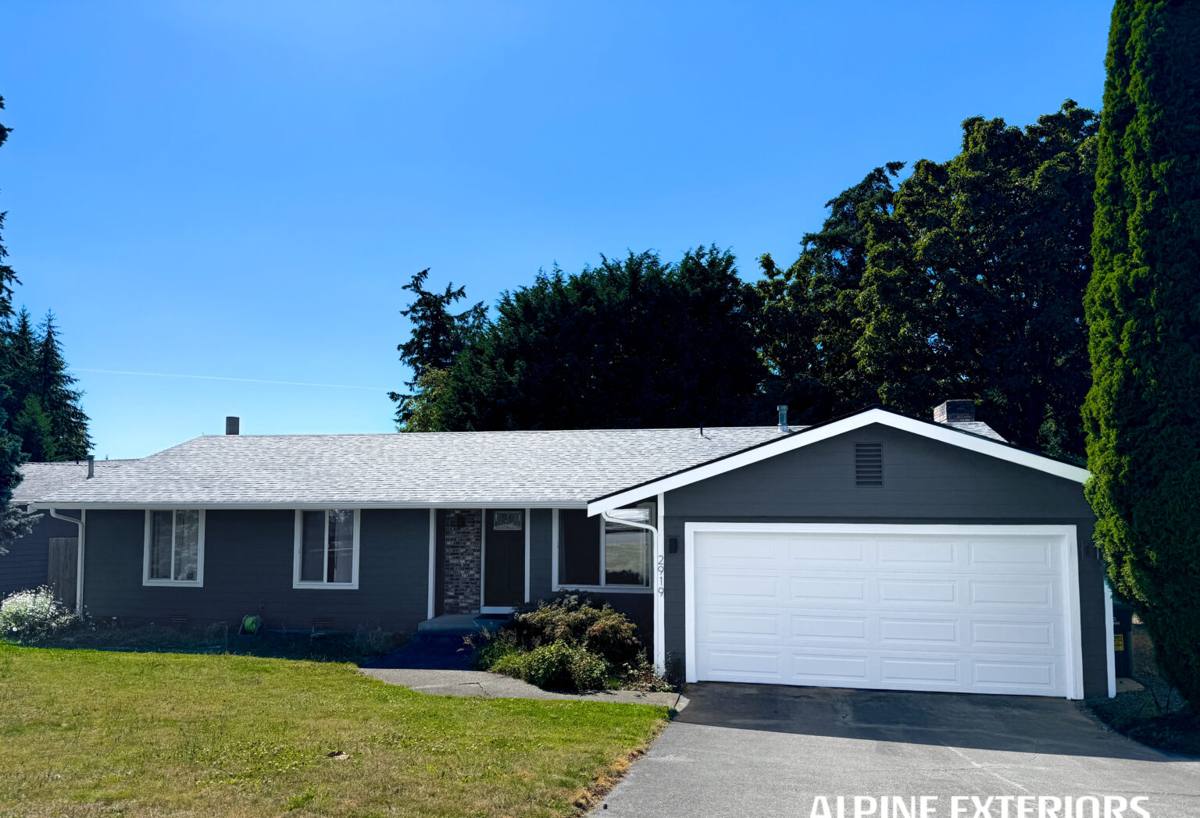
Signs a Home in Abbotsford Needs Siding Replacement
Siding failure in this climate rarely shows up as one dramatic problem. It's usually a slow accumulation of small signals that, together, mean the wall system is no longer doing its job. On homes we've evaluated around Abbotsford, the pattern is fairly consistent:
- Persistent moss, algae, or green-black staining on siding that gets scrubbed off but keeps coming back within a season
- Soft, spongy, or crumbling spots when you press on the siding, especially near the bottom courses and around window trim
- Paint that's peeling, bubbling, or wearing unevenly rather than fading uniformly
- Visible warping, cupping, or buckling of individual boards or panels
- Gaps opening up at seams, corners, or trim joints that let wind-driven rain track behind the siding
- A musty smell or damp patches on interior walls that line up with an exterior siding problem
- Siding that's original to a home built more than 20-25 years ago with wood-based or older composite products
Any one of these on its own might just need a repair. Several together, especially combined with visible rot at the sheathing or framing when a section is opened up, usually means it's time to talk about full replacement rather than another round of patching.
What a Correct Siding Replacement Job Actually Involves
Siding is a system, not a single product. A house can be clad in a good material and still fail early if the underlying assembly is wrong. Here's what we consider non-negotiable on every replacement.
Full Tear-Off and Inspection
We remove the old siding down to the sheathing rather than installing over it. That's the only way to actually see what's happening underneath — soft sheathing, rot at window and door openings, or moisture damage that's been hidden for years. In a climate that gets as much sustained rain as Abbotsford does, skipping this step just buries a problem under new material.
Weather-Resistive Barrier and Water Management
Behind every new siding installation goes a properly lapped weather-resistive barrier, correctly flashed window and door openings, and rainscreen or drainage detailing where the wall assembly calls for it. The goal is simple: any water that gets past the siding surface has to have a clear path to drain and dry out, not sit trapped against the sheathing.
Fastening, Clearances, and Joint Detailing
Fiber cement has specific fastening patterns, nail spacing, and clearance requirements from grade, roofing, and decks that matter more in a wet climate than a dry one. Butt joints get flashed or caulked to manufacturer spec, not just butted together and painted over. Getting this wrong is one of the most common reasons siding fails early, regardless of what brand is on the wall.
Finish and Trim Integration
Corner boards, trim, and any transitions to stone, brick, or other materials get tied in cleanly so there's no exposed edge for water to work into. This is also where a lot of the visual character of the house comes together, so it's worth doing carefully rather than rushing to close up the job.
Why We Install Only James Hardie Fiber Cement Siding
We used to see homeowners choose siding mostly on upfront price, then call us back in eight or ten years asking why it was already failing. That's what pushed us to standardize on one product line instead of offering everything.
James Hardie fiber cement is non-combustible, dimensionally stable, and manufactured in climate-specific HZ formulations engineered for exactly the kind of wet, humid, temperature-swinging conditions the Pacific Northwest and Fraser Valley produce. It doesn't absorb water the way wood-based products can, it resists the swelling and warping that drives moss and algae growth into surface texture, and its factory-applied ColorPlus finish is baked on under controlled conditions rather than field-applied, which means far more consistent, long-lasting color performance against sun and salt air exposure than a job-site paint job. Hardie also backs the product with a strong transferable limited warranty, which matters to homeowners who may sell before the siding's functional life is up.
None of that replaces correct installation — even the best siding product fails early if it's hung wrong. But starting with a material that's actually built for this climate, instead of fighting against one that isn't, removes a whole category of problems before they start.
How Siding Materials Compare in This Climate
We get asked fairly often why we don't offer vinyl, LP SmartSide, or cedar as options. Here's an honest side-by-side of how these materials tend to perform under Fraser Valley conditions — sustained rain, humidity, and long moss seasons.
| Material | Moisture Behavior | Typical Maintenance | Longevity in This Climate |
|---|---|---|---|
| Vinyl | Doesn't absorb water, but can warp or buckle with heat and doesn't manage trapped moisture behind it well | Low, but cracks and fades over time; hard to repair invisibly | Moderate; seams and fasteners are common failure points |
| LP SmartSide (engineered wood) | Wood-strand core is vulnerable if the factory coating is breached; edge swelling is a known risk | Moderate to high; cut edges and seams need diligent sealing and upkeep | Shorter than fiber cement if moisture gets into the substrate |
| Cedar / primed spruce | Natural wood absorbs moisture readily; very susceptible to rot and moss in wet, shaded exposures | High; regular refinishing, sealing, and moss treatment required | Shortest without an aggressive, ongoing maintenance schedule |
| James Hardie fiber cement | Non-combustible, dimensionally stable, engineered moisture resistance (HZ climate lines) | Low; factory ColorPlus finish resists fading and doesn't need repainting on the same cycle | Longest in this climate when installed to spec, with a strong transferable warranty |
This isn't a claim that the other products are bad materials in every setting — vinyl and engineered wood both have legitimate uses elsewhere. It's that for a Fraser Valley wall assembly dealing with salt air, driving rain, and months of damp shade, we've made the professional call that fiber cement is the material worth standing behind.
Our Siding Replacement Process
- Walkthrough and assessment — we look at current siding condition, trim, flashing, and any visible moisture damage before quoting anything
- Written estimate — a clear scope covering tear-off, sheathing repair contingencies, weather barrier, product line and color, and trim work
- Scheduling around weather windows — in a climate with a long rainy season, timing matters; we plan tear-off in stretches where the wall won't sit exposed longer than necessary
- Tear-off and sheathing inspection — old siding comes off, sheathing is checked and repaired as needed before anything new goes up
- Weather barrier and flashing installation — the water management layer goes in correctly before the first piece of siding is hung
- Hardie installation to manufacturer spec — proper fastening, clearances, and joint treatment throughout
- Trim, caulking, and finish detail — corners, transitions, and openings are finished cleanly
- Final walkthrough — we go over the finished job with the homeowner before calling it done
What Affects the Cost of a Siding Replacement
Every home is different, so we won't quote a number without seeing the house, but these are the main factors that move the price of a siding replacement job up or down.
| Factor | Why It Matters |
|---|---|
| Home size and wall complexity | More square footage and more corners, dormers, or gables mean more material and labor |
| Condition of the existing sheathing | Rot or moisture damage found during tear-off adds repair scope that can't always be predicted beforehand |
| Siding profile and trim detail | Lap siding, shingle-style panels, and board-and-batten all install differently and involve different trim work |
| Color and finish selection | Factory ColorPlus finishes and certain color families carry different material costs |
| Accessibility of the home | Multi-story sections, tight lot lines, or difficult staging areas affect labor time |
| Scope beyond siding | Trim replacement, window flashing repair, or tying into other exterior work changes the total project |
What to Ask Before Hiring a Siding Contractor
Siding is one of those projects where a poor installation can look fine for a year or two and then fail badly. A few questions upfront can save a lot of trouble later:
- Do you tear off the old siding down to the sheathing, or install over existing material?
- What weather-resistive barrier and flashing details do you use behind the siding?
- Which siding manufacturer and product line are you quoting, and why that one?
- Is the installation crew factory-trained or certified on the product being installed?
- What does the manufacturer's warranty actually cover, and is it transferable if the home sells?
- How do you handle sheathing repair or rot found once tear-off starts?
- Can you walk me through how joints, corners, and trim will be finished?
Why a Crew That Already Works in Abbotsford Matters
We're based in Whatcom County, and Abbotsford is close enough that it's a regular part of our service area rather than a stretch job. That matters for more than convenience. A crew that already works this side of the border understands the specific climate pattern here — the salt air moving in off the coast, the length and intensity of the rainy season, and just how aggressively moss and algae take hold on shaded and north-facing walls in this part of the Fraser Valley. We schedule tear-off and installation around that weather pattern instead of learning it on the job. We also know from repeat experience which details — flashing at window heads, clearance at grade, joint treatment at corners — actually matter here versus in a drier climate where those same shortcuts might not show up as a problem for years.
Cross-border logistics for materials and scheduling are something we've already worked out, so it doesn't turn into a source of delay or surprise cost on your project. You're getting a crew with an established process, not one figuring out the regional realities for the first time on your home.
Get an Honest Look at Your Siding
If your siding in Abbotsford is showing moss buildup that won't stay off, soft spots, peeling paint, or open joints, it's worth having someone take a real look before those small signs turn into a sheathing problem. We offer free, no-pressure estimates — we'll walk the exterior, tell you honestly what we see, and lay out what a correct James Hardie siding replacement would involve for your home. Use the form below to get started.