 Lynden Roofing
 Wiser Lake sits in a pocket of Whatcom County where tree cover, still water, and a wet marine climate combine to punish outdoor structures faster than they do a few miles away in open ground. Decks around the lake see more standing moisture, more shade, and more moss buildup than a typical in-town deck in Lynden. If your deck is graying unevenly, feels spongy underfoot, squeaks when you walk it, or has green growth working its way between the boards, the fix usually isn't cosmetic. It's a sign of what years of lake-area moisture have been doing to the wood and hardware underneath.
Why Wiser Lake Decks Wear Differently
A deck's enemy isn't rain by itself — it's rain that doesn't get a chance to dry. Homes around Wiser Lake often sit under mature tree canopy or close to the water, and both of those things slow down drying time in ways a deck out in the open doesn't deal with.
Shade and Standing Moisture
Tree cover keeps a deck cooler in summer, which homeowners like, but it also means sun and wind never fully dry the boards between rain events. Combined with Whatcom County's long, gray, driving-rain stretches, that shade turns into weeks at a time where deck boards stay damp at the surface and even damper where boards meet joists.
Moisture Off the Lake Itself
Proximity to open water raises ambient humidity right at deck level, especially on calm mornings when fog sits low. Fasteners, ledger connections, and end-grain cuts — the parts of a deck most exposed to trapped water — take the brunt of it.
Coastal Air and Metal Fatigue
Whatcom County's marine-influenced air carries a low but steady level of salt and moisture inland from the Salish Sea, and it doesn't take much to accelerate corrosion on lower-grade fasteners and connectors over a decade or more of exposure. Add in moss, which holds moisture against wood and metal alike, and you get a maintenance profile that's genuinely different from a deck on the dry side of town.
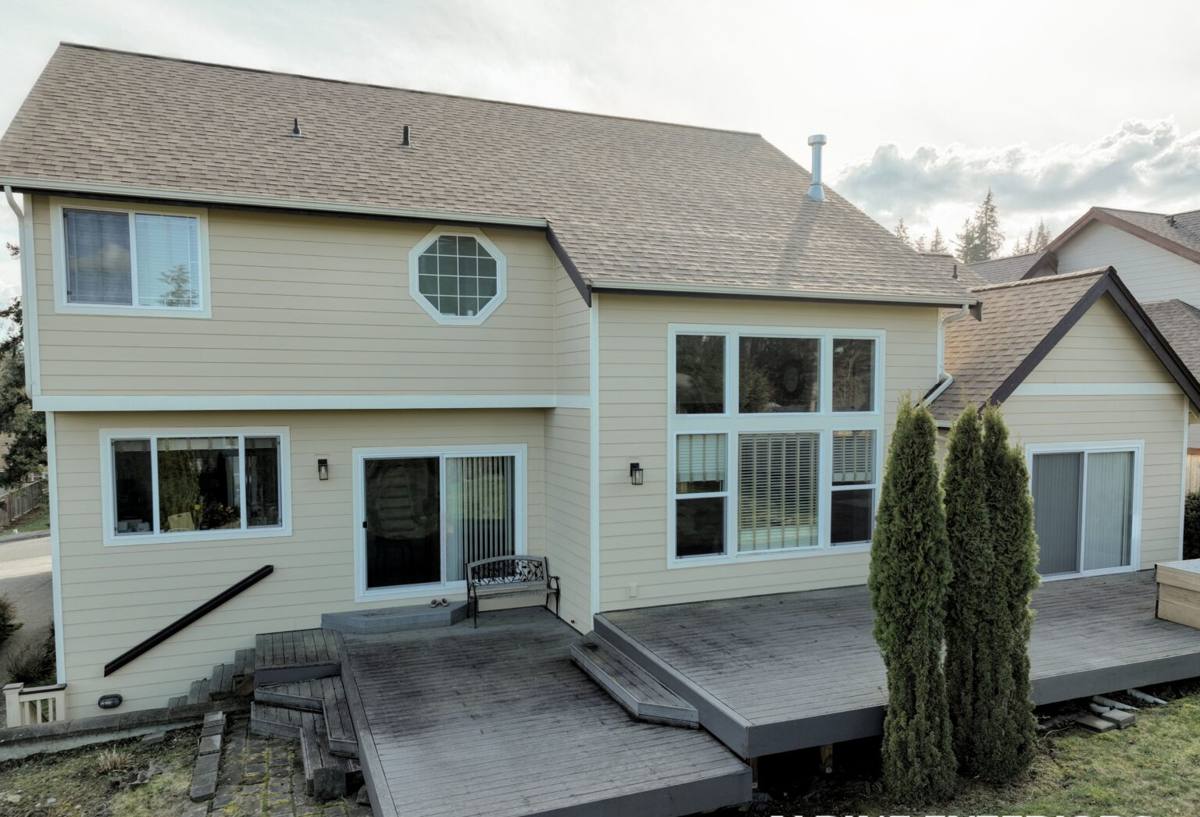
Common Deck Problems We Find Around Wiser Lake
We see the same handful of issues repeat on lake-area decks, almost always tracing back to trapped moisture rather than age alone.
- Soft or spongy boards, especially near the house or in shaded corners
- Moss and algae buildup on the walking surface, particularly the north-facing side
- Rusted or corroded fasteners, nail heads popping up through the decking
- Ledger board separation or soft wood where the deck attaches to the house
- Railing posts that wiggle at the base from moisture wicking up through end grain
- Joists and beams that look fine from above but are soft or discolored underneath
- Stair stringers showing rot first, since they shed water slower than open decking
None of these are unusual for the area. What matters is catching them before soft wood becomes a structural problem, and that means knowing where to actually look, not just what's visible from the top.
What a Correct Deck Repair Actually Involves
A repair that just swaps a few gray boards and calls it done is a repair that will need redoing in a few years. A correct repair on a lake-area deck starts underneath, not on the surface.
Structural Assessment First
Before we touch a single board, we check the ledger connection to the house, the condition of the joists and beams, post bases, and any spots where water has clearly been pooling or running. Surface boards can look fine while the framing underneath is compromised — that's the opposite of what a homeowner wants to find out after the repair is finished.
Fixing the Cause, Not Just the Symptom
If moss and standing water are the reason a section rotted, replacing the boards without addressing drainage, ventilation under the deck, or flashing at the ledger just resets the clock on the same failure. Correct repair means identifying why that spot failed and changing the conditions, not only the material.
Matching Structural Standards
Any framing repair — joists, beams, ledger reattachment — gets done to current structural fastening standards, including proper joist hangers and structural screws rated for exterior use, not whatever was on hand when the deck was originally built. This matters more on older Wiser Lake decks, many of which were built before today's fastening and flashing standards were common practice.
Repair or Replace: How We Help You Decide
Not every deck problem needs a full rebuild, and not every deck is worth patching indefinitely. The honest answer depends on how much of the structure is still sound.
| Factor | Leans Toward Repair | Leans Toward Replacement |
|---|---|---|
| Framing condition | Joists and beams are solid, problem is isolated | Rot has spread through multiple structural members |
| Age of the deck | Newer deck, one localized failure point | Older deck nearing the end of its practical service life |
| Ledger connection | Ledger and flashing are intact | Ledger is soft or was never properly flashed |
| Extent of moss/rot damage | Contained to a few boards or one section | Spread across most of the deck surface |
| Relative project cost | Lower — targeted material and labor | Higher upfront, but resets the clock on the whole structure |
We'll tell you honestly which side of that table your deck falls on. If a repair is the right call, we won't talk you into a rebuild — and if the framing is too far gone, we'll explain exactly why patching it wouldn't be a responsible use of your money.
Our Process, From First Call to Finished Deck
- On-site assessment. We walk the deck, check underneath, probe suspect boards, and inspect the ledger and posts.
- Honest scope and estimate. You get a clear picture of what's failing, what's still sound, and what it will take to fix it correctly.
- Repair or rebuild the framing first. Any structural work happens before new decking goes down — never the other way around.
- Address the moisture source. Improved drainage, ventilation, or flashing where that's what caused the original failure.
- Install decking and fasteners rated for exterior, lake-adjacent exposure.
- Final walk-through. We show you what was done and what to watch for going forward.
Materials We Use and Why
Material choice on a lake-area deck is about managing moisture and maintenance, not just appearance.
Wood Decking
Cedar and pressure-treated lumber both work well around Wiser Lake, but they ask for regular upkeep — cleaning, sealing, and staying ahead of moss — in exchange for a natural look and lower upfront cost. We're upfront that wood in a shaded, humid spot needs more attention than the same wood in full sun.
Composite Decking
Composite costs more to install but resists moisture absorption and rot in a way solid wood can't, which matters in a spot where boards rarely get a full chance to dry out. The trade-off is that composite needs correct spacing and ventilation underneath to perform as intended — installed wrong, it can trap moisture just as badly as neglected wood.
Fasteners and Hardware
We use corrosion-resistant, exterior-rated fasteners and connectors on every repair. In a marine-influenced climate like Whatcom County's, cutting corners on hardware is one of the most common reasons a deck fails again within a few years — the wood can be fine while rusted fasteners are what's actually letting go.
Maintenance Checklist for Wiser Lake Homeowners
Between repairs, a few habits go a long way toward keeping a lake-area deck sound.
- Sweep leaves and debris off the deck regularly, especially in fall
- Clean moss and algae off the surface before it has a chance to spread
- Check under the deck once a year for standing water or blocked drainage
- Inspect the ledger board area where the deck meets the house for soft spots
- Look at railing post bases for wobble, which often signals wicking moisture
- Reseal or restain wood decking on the schedule the product calls for, not longer
- Trim back overhanging branches to let more air and light reach the deck surface
Why a Local Lynden Crew Matters for a Wiser Lake Deck
A deck repair crew that only sees your property once doesn't know what's normal for this area versus what's a red flag. A crew that regularly works Wiser Lake and the rest of Whatcom County already knows which failure patterns are common around shaded, lake-adjacent lots, what the local building department expects for structural repairs, and how to plan around the region's wet stretches instead of getting caught by them mid-project. That familiarity shows up in fewer surprises once we open up a deck and in repairs that are built for the conditions your property actually has, not generic assumptions.
If you're dealing with a soft spot, a mossy surface, or a deck that just doesn't feel as solid as it used to, we're happy to take a look and give you a straight answer. Reach out for a free, no-pressure estimate using the form below, and we'll walk your deck with you before recommending anything.