 Lynden Roofing
 Windows Built for the Wiser Lake Climate
Wiser Lake sits in a part of Whatcom County that gets more moisture than most homeowners realize until they start looking closely at their window frames. Between the marine air moving in off the Pacific, long stretches of driving rain, and a moss season that seems to run longer every year, the windows on a Wiser Lake home take a steady beating. Most of that damage happens slowly, behind trim and under sills, which is exactly why window installation in this area needs to be treated differently than it would be in a drier inland climate.
We install windows around Lynden and the surrounding Whatcom County communities, including Wiser Lake, and we size every job around what actually happens to a window here over ten or twenty years — not just how it looks the day it's installed.
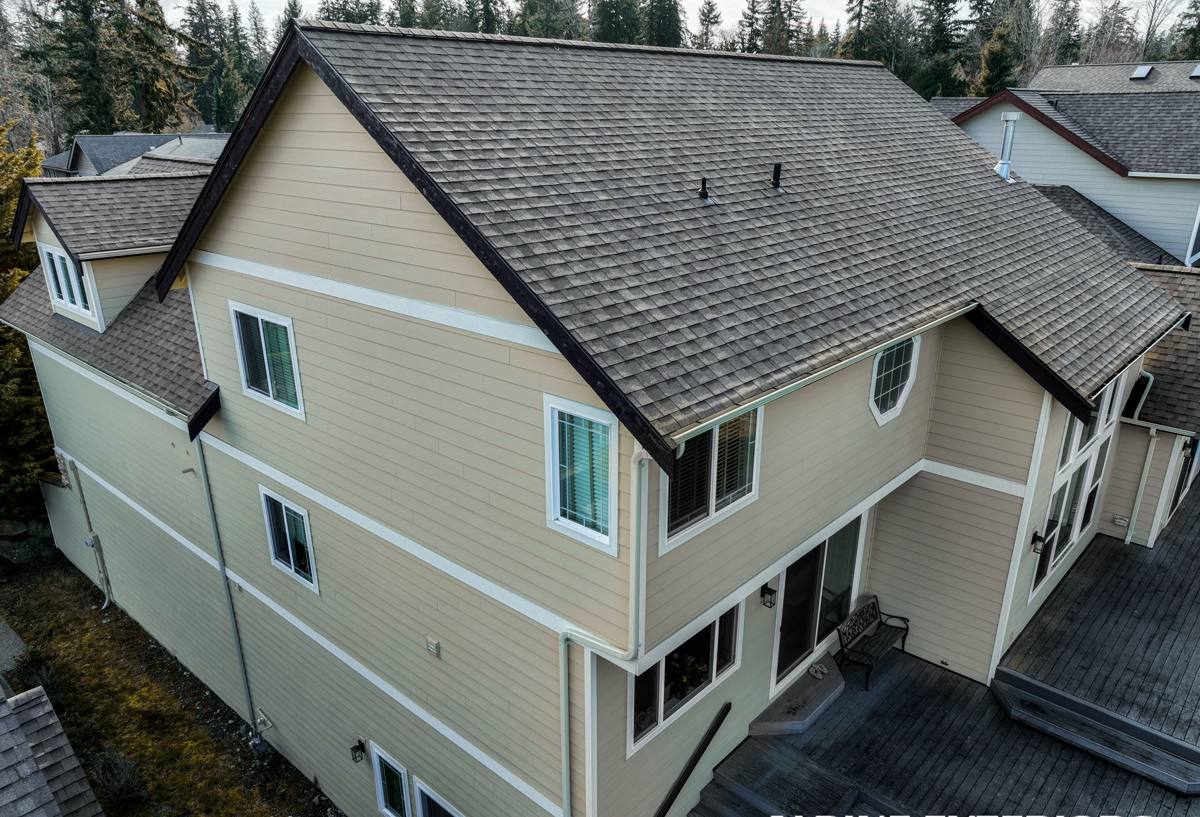
What Local Homes Are Up Against
A window failure in this area is rarely dramatic. It's a slow accumulation of small problems that eventually show up as a soft spot in the drywall or a draft you can feel standing next to the glass.
Salt Air and Corrosion
Even homes that aren't right on the water pick up salt-laden air moving inland from the Pacific. Over years, that air is hard on unprotected metal hardware, fasteners, and lower-grade aluminum components. Cheaper hinges, locks, and cranks corrode faster here than they would in a drier climate, which is one reason hardware quality matters more in this region than the spec sheet might suggest.
Driving Rain
Rain in Whatcom County doesn't always fall straight down. Wind-driven storms push water sideways against the building envelope, testing every seam, seal, and flashing detail around a window opening. A window that would stay watertight in calm rain can leak under wind-driven conditions if the flashing wasn't lapped correctly or the sill pan wasn't sloped to drain.
Moss and Sustained Moisture
The long moss season here isn't just a roof problem. Moss and algae take hold anywhere moisture sits without enough sun or airflow to dry it out — shaded window sills, north-facing trim, and the lower corners of frames tucked under eaves. Left alone, that sustained dampness breaks down caulk, primes wood trim for rot, and holds moisture against the frame far longer than a quick rain shower would.
Signs a Wiser Lake Home Needs Window Attention
- Fogging or a hazy film between panes on a double- or triple-pane window (a sign the seal has failed and the gas fill is gone)
- Soft or spongy wood trim around the frame, especially at the bottom corners
- Visible moss, algae, or black staining collecting on the sill or lower sash
- Drafts or a noticeable temperature difference near the window on a windy day
- Windows that are difficult to open, close, or lock — often a sign the frame has shifted or swollen
- Paint or finish that's bubbling, peeling, or discolored near the window opening
- Visible daylight or gaps around the frame from outside
Any one of these on its own might not mean much. Two or three together, especially on the same window, usually mean moisture has been getting past the seal for a while.
What a Correct Installation Actually Involves
The window itself is only part of the job. In a climate like this one, the installation details around the window matter as much as the product, because that's what determines whether water actually stays out.
Removal and Opening Inspection
Once the old window is out, we check the rough opening and sheathing for rot, soft spots, or existing water damage before anything new goes in. Installing a new window over a compromised opening just hides a problem instead of fixing it.
Flashing and Drainage
This is the step that decides whether wind-driven rain stays outside. A sloped sill pan directs any water that gets past the window back out, and flashing tape is lapped in the correct order — sides over the sill pan, top flap over the sides — so water is always shed downward and outward, never trapped behind the siding.
Sealing and Insulation
Low-expansion foam or backer rod and sealant fills the gap between the frame and the rough opening, cutting drafts and giving moisture nowhere to collect. Exterior caulking gets matched to the siding material so the seal actually bonds and holds up through wet winters.
Interior and Exterior Finish
Trim goes back cleanly, and any exterior wood is primed and sealed on all sides — including edges that won't be visible once installed — since that's usually where rot starts first in a wet climate.
Choosing the Right Window for This Climate
There's no single "best" window material — each comes with real tradeoffs, and the right call depends on the home, the budget, and how much upkeep an owner wants to take on.
| Frame Material | Moisture Performance | Maintenance | Typical Fit |
|---|---|---|---|
| Vinyl | Won't rot or corrode; good seal life | Low — occasional cleaning | Most Wiser Lake homes, strong value |
| Fiberglass | Excellent; very stable in wet/cold swings | Low | Higher-end replacements, larger openings |
| Wood (clad exterior) | Good if maintained; exterior clad protects the wood | Moderate to high — interior wood still needs care | Homes prioritizing a traditional interior look |
| Bare wood | Poor in this climate without diligent upkeep | High — repainting/resealing on a regular cycle | We generally steer clients away from this in Whatcom County unless there's a strong preservation reason |
We don't install bare wood windows as a rule in this area — not because the product is bad, but because the maintenance schedule it demands doesn't line up with the moss season and sustained dampness Wiser Lake sees for months at a time. Clad wood, vinyl, or fiberglass all give a homeowner a better long-term return without that upkeep burden.
Glass Package
Double-pane, low-E glass is the standard baseline for this climate and handles the region's temperature swings well. Triple-pane adds meaningful insulation value for homes with a north or west exposure that takes the brunt of the wind, though it comes at a higher cost and added weight on the frame.
Our Process for Wiser Lake Homeowners
- On-site assessment — we look at existing windows, trim condition, and any signs of past water intrusion before recommending anything
- Measurement and product selection — matched to the opening, the home's exposure, and the owner's budget
- Scheduling around the weather — we plan installation days to minimize how long an opening sits uncovered
- Removal, opening inspection, and repair of any rot or damage found underneath the old window
- Installation with proper flashing, sill pan drainage, sealing, and insulation
- Interior and exterior finish work
- Final walkthrough and operation check on every window before we consider the job done
Why a Crew That Already Works Wiser Lake Matters
Window installation isn't a one-size-fits-all job, and a crew that mostly works drier inland climates can miss details that matter here — a sill pan that isn't sloped enough, flashing sequenced the wrong way, or trim left unprimed on the back side. Those shortcuts don't usually show up as a problem on installation day. They show up two or three wet seasons later, as a soft spot in the wall or a window that won't seal anymore.
Working regularly in and around Lynden and Whatcom County means we see how windows actually hold up here over time, not just how they perform on a spec sheet. That's the standard we build every installation to, whether it's a single replacement window or a full-home upgrade.
What Affects the Cost of a Window Installation
| Factor | Why It Matters |
|---|---|
| Frame material | Vinyl, fiberglass, and clad-wood carry different upfront costs and long-term maintenance needs |
| Number and size of openings | Larger or custom-sized windows require more material and labor |
| Condition of the existing opening | Rot or water damage found during removal adds repair work before the new window goes in |
| Glass package | Double-pane vs. triple-pane, and any added coatings, shift the price |
| Trim and finish work | Matching existing interior trim or repainting exterior trim adds time |
| Access and site conditions | Second-story windows or tight access can add labor time |
We give straightforward, itemized pricing so a homeowner can see exactly what's driving the cost of their specific project, not a flat per-window number that hides the details.
Keeping New Windows Performing Long-Term
- Rinse sills and lower sashes periodically to keep moss and algae from establishing, especially on shaded or north-facing windows
- Check exterior caulking once a year, particularly after a hard winter, and have any cracked or separated sealant redone before it lets water in
- Keep gutters and downspouts clear so runoff isn't sheeting directly down over window openings
- Trim back vegetation that keeps a window shaded and damp longer than the rest of the exterior
- Operate each window a few times through the year so hardware doesn't seize up from disuse
If your Wiser Lake home has windows showing any of the signs above, or you're simply ready to stop losing heat and fighting drafts every winter, we're happy to take a look and walk you through your options. Use the form below to request a free, no-pressure estimate — we'll assess your windows honestly and tell you what we'd actually recommend, not just what's easiest to sell.