 Lynden Roofing
 Decks in Sumas Take a Different Kind of Beating
Sumas sits right up against the Whatcom County line, close enough to Lynden that the same weather pattern hits both towns: long wet winters, a short dry window in summer, and a shoulder season where fog and dew keep every horizontal surface damp for days at a time. A deck is one of the hardest-working structures on a house because it's built flat, exposed to sun and rain in the same afternoon, and walked on constantly. That combination of standing moisture, temperature swings, and UV exposure is what eventually breaks decks down, whether they're wood or composite.
We're a Lynden-based crew, and Sumas is part of our regular service area, not a stretch job we drive out for once a year. That matters for deck work specifically, because the failure patterns in this corner of Whatcom County are consistent enough that we can usually tell what we're dealing with before we even get a ladder out.
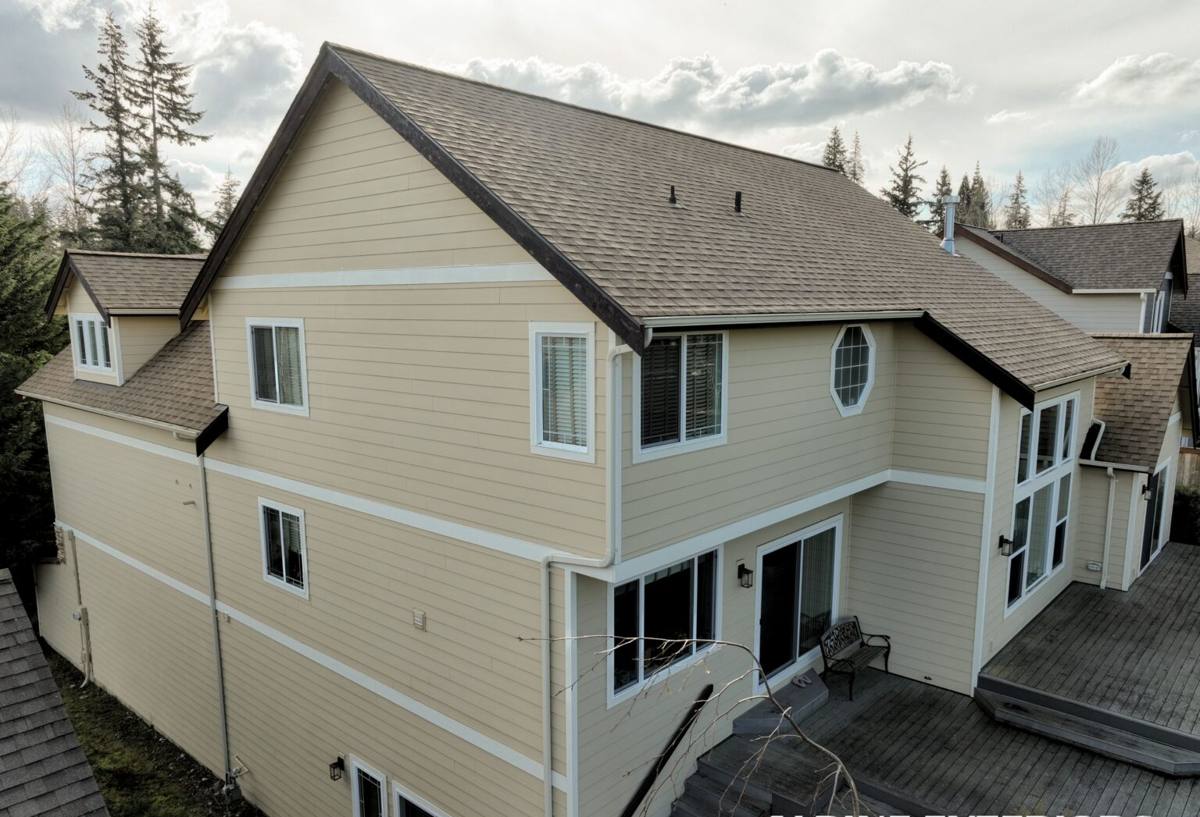
What Local Decks Are Actually Fighting
Moss and Algae Season Runs Long
In this climate, moss isn't a cosmetic nuisance — it's a moisture trap. Once moss or algae establishes on a deck surface, it holds water against the wood or composite cap far longer than open air ever would. On wood decking, that accelerates rot at the board surface and around fastener holes. On composite, it can stain the cap and, on lower-quality boards, work into surface scratches. Whatcom County's moss season can run from fall through spring, which means a deck that isn't cleaned and treated regularly is under near-constant low-grade moisture stress for half the year.
Driving Rain Gets Where You Don't Expect
Wind-driven rain in this region doesn't just fall straight down — it gets pushed sideways into ledger connections, under flashing, and into the end grain of boards where cuts weren't sealed. End grain is the most absorbent part of any piece of lumber, and it's usually the last thing a builder thinks to protect. We see a lot of localized rot that starts at board ends, stair stringer cuts, and post bases for exactly this reason.
Freeze-Thaw Cycling
Whatcom County doesn't get brutal winters, but it gets enough freeze-thaw cycling to matter. Water that's already soaked into a joint, a crack, or a fastener hole expands when it freezes and works the damage wider each time it thaws and refreezes. This is why small problems on a deck rarely stay small if they're ignored through a winter.
Signs a Sumas Deck Needs Repair, Not Just Cleaning
- Soft or spongy spots underfoot, especially near the house or at stair landings
- Boards that have cupped, crowned, or visibly separated at the seams
- Rust streaks or dark staining around fasteners
- A ledger board connection that looks gapped, stained, or has visible flashing failure
- Railing posts that flex or feel loose when pushed
- Persistent moss or algae that comes back within weeks of cleaning
- Stair stringers with checking (splitting) or soft spots at the cuts
- Visible daylight or gaps at joist hangers underneath the deck
Any one of these on its own might be a minor fix. Several at once usually means the deck's moisture management has been failing for a while and the damage has spread past the surface.
What a Correct Repair Actually Involves
A lot of "deck repair" in this region amounts to swapping a few obviously rotten boards and calling it done. That approach treats the symptom, not the cause. Boards don't rot in isolation — something let water sit where it shouldn't. Our approach starts with figuring out why the failure happened before we decide how to fix it.
Our Process
- On-site inspection. We walk the whole structure, not just the spot the homeowner is worried about — surface, railings, stairs, ledger connection, and the framing underneath where we can access it.
- Probe testing. We check suspect boards, posts, and framing members with a probe to find soft wood that isn't visible from the surface. Rot spreads under paint and stain long before it shows.
- Scope the repair. We separate what's cosmetic (staining, surface wear) from what's structural (framing, ledger, post bases) and give a written scope so you know exactly what's being replaced and why.
- Address the water source. If the damage traces back to missing or failed flashing, poor drainage, or a gap that lets water sit, we fix that first — otherwise the repair just fails again.
- Replace and match. Damaged boards, framing, or railing components are replaced with material matched as closely as possible to the existing deck, or upgraded where the homeowner wants a longer-term fix.
- Fasteners and hardware. We use corrosion-resistant fasteners and connectors rated for exterior/treated lumber contact — mismatched hardware is a common cause of the rust staining and hole enlargement we see on older decks.
- Final walk-through. We check the repair against the original scope and point out any maintenance the homeowner should keep an eye on going forward.
Repair vs. Replacement — How We Help You Decide
Not every deck with problems needs to come down. But some do, and it's not always obvious which category a given deck falls into from the surface. Here's the general framework we use:
| Factor | Leans Toward Repair | Leans Toward Replacement |
|---|---|---|
| Framing condition | Joists and beams probe solid | Widespread soft spots in structural framing |
| Extent of damage | Isolated boards or connections | Damage spread across most of the deck surface |
| Age of structure | Newer deck, isolated issue | Deck near or past typical service life for its material |
| Code/attachment | Ledger and post bases meet current standards | Ledger connection or footings are undersized or failing |
| Owner's plans | Staying in current footprint/layout | Wanting a different size, layout, or material |
We'll always tell you honestly which side of that line a given deck falls on. A repair that's really a stopgap on a failing structure isn't a good use of anyone's money, and we'd rather say so upfront.
Material Choices When Boards Need Replacing
When we're replacing decking boards, homeowners usually have a few paths available, and each comes with real trade-offs — not a "better" or "worse" option, just different maintenance and cost profiles.
Pressure-Treated Lumber
The most common and least expensive option, and it matches most existing decks in this area. It requires regular cleaning and periodic sealing to perform well in our climate — skip that maintenance for a few years and moss, checking, and fastener corrosion catch up fast.
Cedar
Naturally more rot- and insect-resistant than treated lumber and a common upgrade choice, but it's softer and needs its own maintenance rhythm to keep its color and resist surface checking under our UV and rain cycle.
Composite Decking
Composite boards resist rot and don't need staining, which appeals to a lot of homeowners tired of the maintenance cycle. The trade-off is a higher upfront cost and the fact that composite still needs cleaning to prevent moss and algae from taking hold on the surface — it doesn't rot, but it can still stay damp and grow organic buildup if it's shaded or poorly drained. We're upfront about installation sensitivity too: composite needs correct spacing and fastening for our climate's expansion and contraction, and cutting corners there is what leads to the warping and squeaking problems that give some composite installs a bad reputation.
For repairs specifically, we'll usually recommend matching your existing material unless there's a good reason to switch — mixing materials on a single deck can look patched-together and sometimes creates new moisture-trapping seams.
What Affects the Cost of a Deck Repair
| Factor | Why It Matters |
|---|---|
| Extent of rot below the surface | Hidden framing damage found during the repair changes scope |
| Access to the underside | Low decks or enclosed skirting take longer to inspect and repair |
| Material match | Discontinued or custom board profiles cost more to source or replicate |
| Structural vs. cosmetic scope | Ledger, post base, or footing work adds labor and inspection time |
| Stairs and railings | Code-compliant railing and stair repairs have specific requirements |
We don't give ballpark numbers over the phone for repair work, because the range between "replace six boards" and "rebuild the ledger connection and half the framing" is too wide to be useful. A short on-site look is what gets you a real number.
Keeping a Repaired Deck From Needing Repairs Again
- Sweep debris and standing leaves off the deck regularly, especially in fall
- Keep gutters and downspouts clear so runoff isn't dumping onto or near the deck
- Clean moss and algae off the surface at least once before winter and once in spring
- Reseal or restain wood decking on a regular schedule rather than waiting until it looks dry and gray
- Check under the deck once a year for standing water, soft framing, or pest activity
- Keep planters and rugs from sitting in one spot for months at a time — they trap moisture underneath
- Address small issues, like a loose board or a rust streak, before they sit through a winter
Why a Crew That Already Works Sumas Is Worth Choosing
Deck repair done right requires knowing what's normal wear for this climate versus what's an early warning sign. A crew that works Sumas and greater Lynden regularly has already seen the failure patterns specific to this area — where moisture tends to collect, which board profiles hold up and which don't, and how fast moss can undo a cleaning if it isn't followed with treatment. That local pattern recognition is the difference between a repair that addresses the actual cause and one that just replaces what's visibly rotten and waits for the next call.
We also stand behind repair work with a crew you can reach locally if a question comes up down the road, rather than a name that only shows up for the original job and disappears.
Get a Free Estimate
If your deck in Sumas has soft spots, staining, moss that won't quit, or just feels like it's past due for a real look, we're glad to come take a look and give you an honest read on what it needs. There's no pressure and no obligation — just a straight assessment from a crew that already knows this area's weather and what it does to decks. Use the form below to request your free estimate.