 Lynden Roofing
 Storm Damage Roof Repair for Kendall Homes
Kendall sits up against the foothills east of Lynden, which means homes here take weather a little differently than roofs closer to town. Wind funnels down the valley, rain sits longer under tree cover, and the tree canopy that makes the area beautiful also means more debris landing on roofs during every storm system that comes through Whatcom County. When a wind event, hailstorm, or heavy rain pushes through, the damage isn't always obvious from the ground — and waiting to find out usually costs more than catching it early.
This page is about one thing: what storm damage roof repair actually looks like for a Kendall property, done right, by a crew that already knows this stretch of Whatcom County.
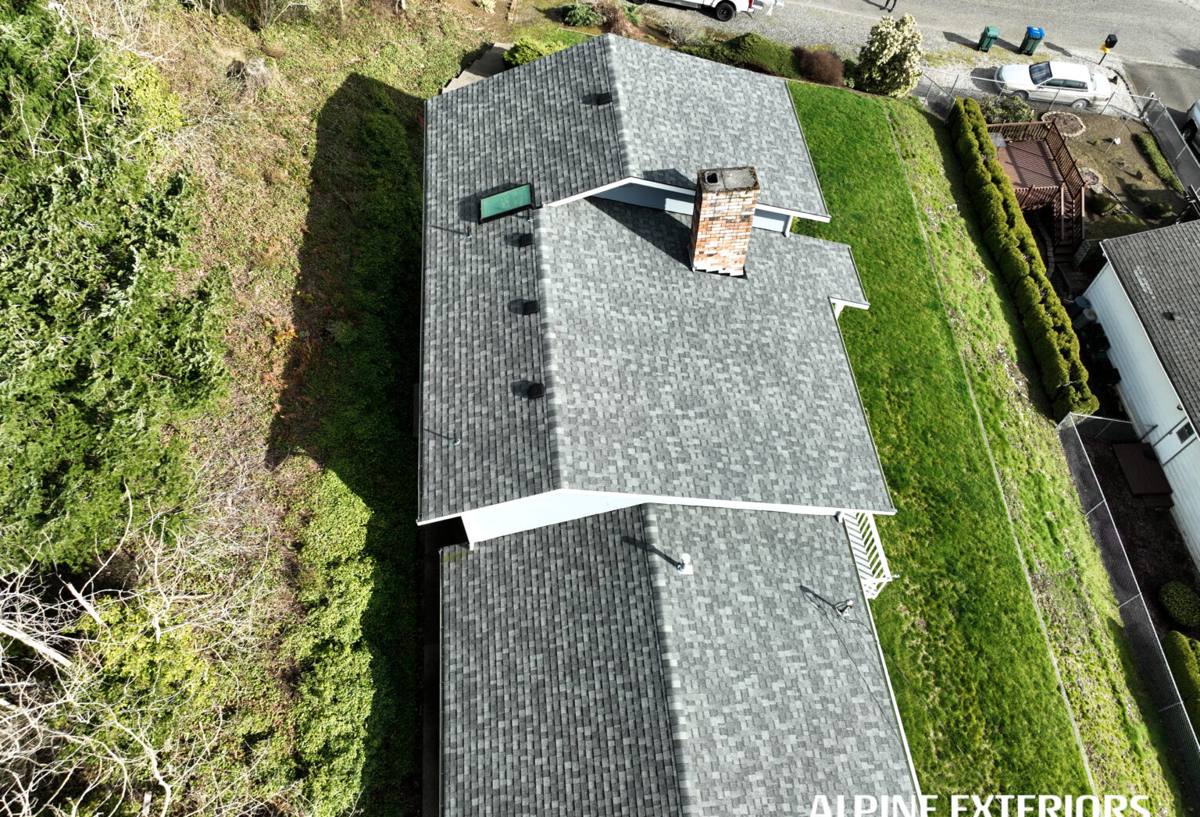
What Storms Actually Do to a Kendall Roof
Storm damage isn't always a dramatic hole or a sheet of missing shingles. Most of the storm-related roof calls we get involve damage that's easy to miss unless you know what you're looking for.
Wind Damage
Sustained wind and gusts lift shingle edges and break the adhesive seal that keeps them locked down. Once that seal is broken, the shingle may look fine sitting there, but it's no longer doing its job — the next rain can drive water underneath it. Kendall's more exposed and elevated lots tend to see stronger gusts than sheltered in-town lots, so wind-lifted shingles are one of the most common issues we find after a storm out this way.
Impact Damage
Hail is less frequent here than in other parts of the country, but branch and debris impact is a regular issue given how much tree cover surrounds many Kendall properties. A falling branch can bruise or crack shingles without punching all the way through, which means the damage doesn't show up as a leak until months later.
Water Intrusion Around Penetrations
Flashing around chimneys, vents, and skylights is the first thing to fail during a hard, driving rain — the kind that comes in sideways rather than straight down. Whatcom County gets plenty of that wind-driven rain off the Sound, and Kendall's more exposed positioning means flashing seams and step flashing take a beating over the years.
Moss and Trapped Moisture
This region has a long moss season, and Kendall's shaded, tree-lined lots are prime moss territory. Moss itself doesn't puncture a roof, but it holds moisture against the shingle surface for weeks at a time, and after a storm loosens or lifts shingles, moss-trapped water finds those openings fast. A storm repair that ignores existing moss growth is only solving half the problem.
Why Kendall's Conditions Make This a Specialized Job
A storm repair in a dry, open subdivision closer to town is a different job than a storm repair on a shaded, wind-exposed Kendall property. Three things change the approach out here:
- Salt air influence: Even inland from the coast, Whatcom County's marine air carries moisture and salt that accelerates corrosion on exposed fasteners, flashing, and metal roof edges — storm-damaged metal components need a closer look than they would in a drier climate.
- Longer drying time: Tree cover and hillside shade mean storm-affected areas of a Kendall roof stay wet longer after the weather clears, which extends the window where trapped moisture can do damage before anyone notices.
- Debris load: More trees means more limbs, needles, and organic debris landing on the roof during and after a storm, which can mask damage and clog drainage paths right when the roof needs to shed water fastest.
None of this means Kendall roofs need exotic materials or unusual techniques. It means the person doing the inspection and repair needs to know what to check for, and check it thoroughly, rather than doing a quick surface pass.
What a Correct Storm Damage Repair Involves
A proper storm repair is a sequence, not a single step. Skipping any of these is how "repaired" roofs end up leaking again the next season.
1. Full Roof Inspection, Not Just the Reported Spot
If a homeowner calls about a leak in one room, that's the starting point, not the whole inspection. Wind and impact damage often show up in more than one location, and we walk the entire roof surface — not just the area near the reported leak — because storms rarely damage just one spot.
2. Documenting the Damage
Clear photo documentation of what the storm did matters for two reasons: it gives the homeowner an honest record of the actual condition, and it's what an insurance adjuster needs to process a claim. We document before any repair work starts.
3. Removing and Replacing Compromised Material
Lifted, cracked, or torn shingles get replaced — not just re-glued or nailed back down. A shingle that's lost its seal or been physically damaged won't perform the same way it did before the storm, even if it looks okay after being pressed back into place.
4. Flashing and Penetration Repair
Any flashing that's been bent, separated, or corroded gets addressed as part of the same repair. Patching shingles while leaving damaged flashing in place is one of the most common shortcuts that leads to a repeat leak within a year.
5. Addressing Moss and Debris
If moss growth or debris buildup contributed to the damage or is sitting near the repair area, we clear it as part of the job. Leaving moss in place next to a fresh repair defeats the purpose of the repair.
6. Sealing and Verification
Once material is replaced and flashing is corrected, we verify the repair holds under water testing where appropriate, rather than assuming it's sealed because it looks finished.
Our Process for Kendall Storm Calls
Because Kendall properties often have longer driveways, more tree cover, and less roof visibility from the ground than in-town homes, we treat every storm call out here with a few extra steps built in:
- Initial call and timing: We ask what the homeowner has noticed — visible damage, a leak, sounds during the storm — and get out to look at the roof as soon as reasonably possible, since trapped moisture only gets worse with time.
- On-site inspection: A full walk of the roof surface, checking shingles, flashing, vents, and any areas where trees overhang the structure.
- Written findings and options: We explain what we found in plain terms — what's damaged, what's at risk, and what repair options exist — before any work starts.
- Repair or referral for full replacement: Most storm damage is a repair job. If the roof's overall condition means a repair won't hold up long-term, we say so honestly rather than patching an aging roof that needs more than a patch.
- Follow-up: After significant storm systems move through the area, it's worth a check even if nothing looks obviously wrong — the goal is catching small problems before the next storm turns them into bigger ones.
Repair vs. Replacement: How We Decide
Not every storm-damaged roof needs full replacement, and not every roof is a good candidate for a simple patch. The table below covers the general factors that push a decision one way or the other.
| Factor | Favors Repair | Favors Replacement |
|---|---|---|
| Roof age | Under roughly 15 years, otherwise sound | Near or past expected service life |
| Extent of damage | Isolated to one or two areas | Spread across multiple slopes or the whole roof |
| Underlying material condition | Decking and underlayment intact | Soft decking, widespread rot, or prior water damage found |
| Moss and debris history | Minor, manageable buildup | Long-term moss damage already compromising shingles |
| Insurance assessment | Adjuster scopes a targeted repair | Adjuster scopes full slope or full roof |
We'll always give a straight answer on which category a given roof falls into, and why — not the option that's most profitable for us.
Insurance and Storm Claims
Most storm damage repair work in this region gets processed through homeowners insurance, and having clear, honest documentation matters for that process. We provide photo documentation and a written scope of the damage that homeowners can bring to their insurance company or adjuster. We're not a public adjuster and don't negotiate claims on a homeowner's behalf, but we make sure the roof-side documentation is accurate and complete so the claims process goes smoothly.
What Homeowners Can Check After a Storm
Before calling anyone, there are a few safe, ground-level things worth checking after a wind or rain event:
- Granules collecting in gutters or at downspout outlets, which can indicate shingle wear or impact damage
- Visible shingle pieces or flashing fragments in the yard
- New or worsening water stains on interior ceilings, especially near chimneys, vents, or skylights
- Sagging or uneven roof lines visible from the driveway or street
- Large branches or limbs that came down near or on the roofline
- Moss patches that look freshly disturbed or lifted at the edges
None of these require getting on a ladder or the roof itself — that part is our job, and it's not worth the risk for a homeowner to check it personally, especially right after a storm when surfaces are wet.
Why Hire a Crew That Already Works in Kendall
A roofing crew that regularly works Kendall and the surrounding Lynden area already understands how the tree cover, elevation, and wind exposure out here affect a roof differently than a property closer to town or down toward the coast. That local familiarity means less time spent figuring out what's normal for the area and more time spent correctly diagnosing what a specific storm actually did. It also means a shorter response time — we're not driving in from across the county for a leak that's actively letting water into someone's home.
We're a Whatcom County roofing company, and Kendall storm calls are a regular part of our work, not an occasional trip out of our usual service area.
Get a No-Pressure Estimate
If a recent storm has left you wondering whether your roof took damage, it's worth getting a straight answer before it turns into a bigger repair. We offer free, no-pressure estimates for Kendall homeowners — use the form below to get one scheduled.