 Lynden Roofing
 Ferndale's Coastal Exposure Changes What a Roof Repair Needs to Do
Ferndale sits close enough to the water that its roofs deal with a specific mix of stress most inland Whatcom County homes don't see in the same combination: salt-tinged marine air, driving rain that gets pushed sideways and up under shingle edges instead of simply falling straight down, and a moss season that runs long on shaded, north-facing slopes. None of that means Ferndale roofs fail faster than others when they're built and repaired correctly. It does mean a repair that would hold up fine in a drier inland climate can fail here within a season or two if it skips the details that matter for this exposure.
We're based in Lynden and work Ferndale roofs on a regular basis, which matters more than it might sound. A repair crew that already knows which flashing details tend to fail first in this specific coastal exposure isn't guessing at the fix — they've seen the pattern before.
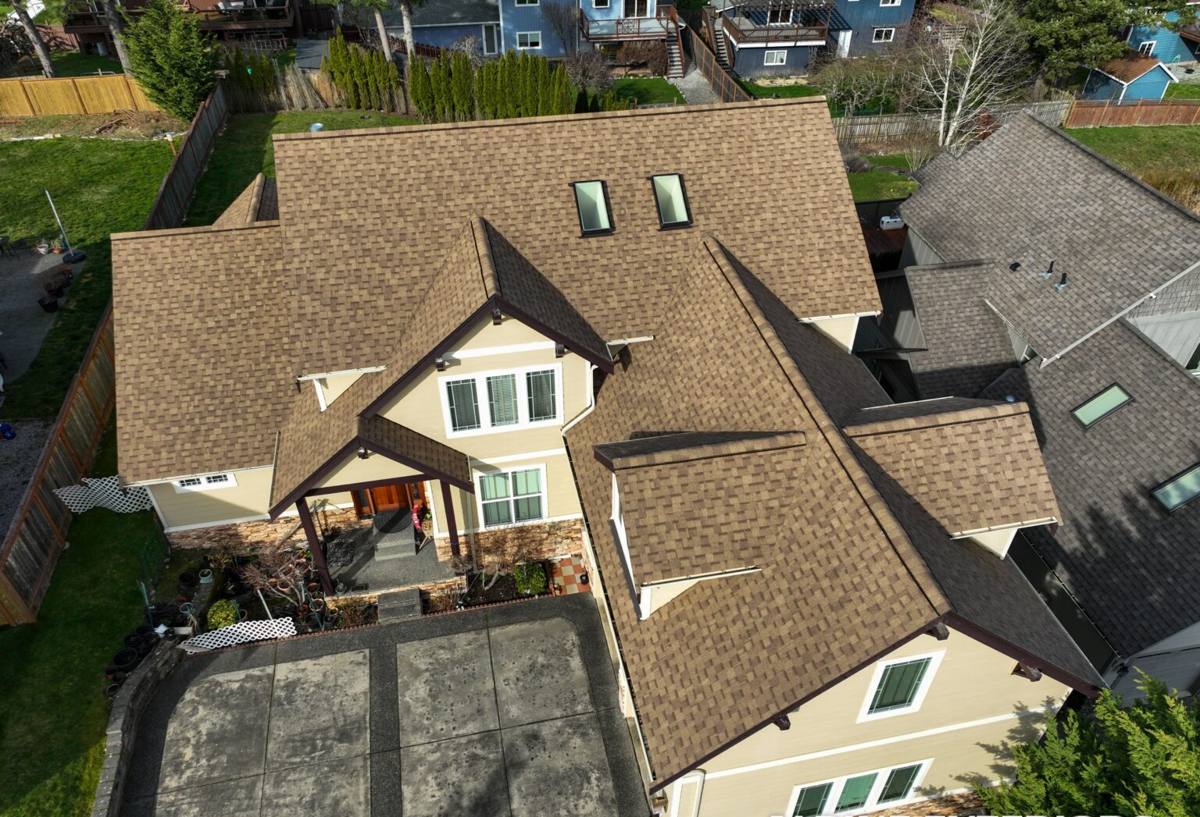
Common Roof Repair Issues We See in Ferndale
Wind-Driven Rain at Flashing and Penetrations
Most roof leaks don't start in the open field of the roof — they start at the transitions: valleys, chimney flashing, skylight curbs, vent boots, and wall intersections. When rain is being pushed by wind instead of falling straight down, water finds any gap in a flashing lap or any undersized flashing detail and drives it uphill and underneath. A repair that just patches the visible leak point without correcting the underlying flashing geometry tends to come back.
Moss and Trapped Moisture on Shaded Slopes
Moss doesn't just look bad — it holds moisture against the roof surface far longer than bare shingle would, and its root structure works into shingle granules and laps over time. On shaded or north-facing slopes common in this area, moss can trap enough persistent dampness to accelerate granule loss and, eventually, deck moisture intrusion underneath. Repair work on a moss-affected section usually needs to address what's happening underneath the moss, not just remove the growth on top.
Salt-Air Corrosion of Fasteners and Flashing Metal
Standard fasteners and flashing metal that would last for decades a few counties inland can corrode noticeably faster under sustained salt-air exposure. A repair that reuses corroded fasteners or matches new work to already-compromised flashing is borrowing against a callback down the road.
Wind and Storm Damage
Wind events lift shingle tabs, crack ridge caps, and can tear flashing loose at its fastening points. Sometimes the damage is obvious from the ground. Often it isn't, and a roof can be quietly leaking for weeks before it shows up as a stain on a ceiling.
Signs Your Ferndale Roof Needs Repair Now
Some of these are obvious. Others are easy to miss until they've caused real damage underneath.
- Water stains on an interior ceiling or upper wall, even faint or small ones
- Shingles that are cracked, curling, missing, or visibly out of alignment
- Thick moss growth or dark streaking concentrated on one slope
- Granules collecting in gutters or at downspout outlets in noticeable amounts
- Daylight visible through the roof deck from inside the attic
- Rusted, lifted, or visibly corroded flashing around chimneys, vents, or skylights
- Sagging in any section of the roofline, which can point to deck or structural moisture damage
- A sudden spike in attic humidity or a musty smell in upper rooms
Any one of these is worth a look. Several at once usually means the problem has been developing for a while.
What a Correct Roof Repair Actually Involves
Diagnosing the Real Source, Not Just the Visible Spot
Water travels. A stain on a ceiling doesn't necessarily sit directly below where the water is entering the roof — it can travel along rafters or sheathing seams before it shows up inside. A correct repair starts by tracing the leak to its actual entry point, which sometimes means opening up more of the roof surface than the homeowner expected before the real cause becomes visible.
Matching Materials and Technique
A patched section that doesn't match the surrounding shingle's profile, color, and wear pattern is both a visible mismatch and, more importantly, a place where the repair and the existing roof don't integrate cleanly at the laps. Good repair work ties new material into the existing roof system properly rather than just covering the damaged spot.
Flashing and Underlayment Detail Work
Given how often leaks in this climate originate at flashing rather than in the open field, correcting flashing geometry and lap sequencing is usually the difference between a repair that lasts and one that doesn't. Underlayment around the repaired area needs to be integrated correctly too, not just tucked in loosely and covered over.
Checking the Deck, Not Just the Surface
If water has been getting in for any length of time, the roof deck underneath may have absorbed moisture or begun to soften. Replacing shingles over a compromised deck doesn't fix the underlying problem — it hides it until it fails again, often at a worse point.
Repair or Replace? How We Help You Decide
Not every roof problem in Ferndale calls for a full replacement, and a straightforward, honest repair is often the right call. The table below outlines how we generally think through that decision.
| Situation | Repair Usually Makes Sense | Replacement Usually Makes Sense |
|---|---|---|
| Age of roof covering | Roof is well within its expected lifespan | Roof is near or past its expected service life |
| Extent of damage | Damage is isolated to one section or a few penetrations | Damage is widespread across multiple slopes |
| Deck condition | Deck is sound once opened up and inspected | Deck shows soft spots or rot across a broad area |
| Moss and moisture history | Growth is recent and hasn't caused underlying damage yet | Long-term moss exposure has already compromised granules and decking broadly |
| Material availability | A reasonably close match to existing shingle is available | Original material is discontinued and a patch would be visibly inconsistent everywhere |
We'll always tell you honestly which side of that line your roof falls on, including when a repair is the more sensible option even if a replacement would be the bigger job for us.
Our Roof Repair Process
- Inspection and diagnosis: We walk the roof in person, trace the actual source of any leak, and check flashing, fasteners, and deck condition around the affected area.
- Written estimate: You get a clear, itemized description of what we found and what the repair involves, before any work starts.
- Material matching: We source shingle or roofing material as close to your existing roof as reasonably available, and explain the trade-offs if an exact match isn't possible.
- The repair itself: Correcting flashing and underlayment detail work, replacing damaged material, and addressing any deck issues found along the way, not just covering the visible symptom.
- Cleanup and walkthrough: Job site cleaned up, work reviewed with you before we consider it finished.
Why a Crew That Already Works Ferndale Matters
Roofing companies based well outside the area can still do capable work, but a crew that's already out in Ferndale regularly brings a few practical advantages. We're familiar with the flashing failure points that tend to show up first in this exposure, we're close enough to respond quickly if a repair needs a follow-up visit, and we're not learning this climate's demands on your roof — we already know them from other jobs nearby.
That local familiarity also matters after the repair is done. A workmanship warranty is only as good as a company's willingness and ability to come back and honor it, and a crew based a short drive from Ferndale, in Lynden, is in a very different position to do that than an out-of-area or storm-chasing outfit that may not still be around in a year or two.
What Ferndale Roof Repairs Typically Involve, Cost-Wise
Every repair is different, and we won't quote a number without seeing the roof, but the factors below are what generally drive the cost of a repair up or down.
| Cost Factor | What It Affects |
|---|---|
| Size and number of affected areas | More area or multiple separate leak points means more labor and material |
| Deck condition once opened up | Sound decking keeps a repair simple; soft or rotted decking adds replacement work |
| Flashing scope involved | Repairs touching chimney, valley, or skylight flashing take more careful, slower work than open-field shingle repair |
| Material match availability | An easy match keeps costs down; a discontinued product may require a different approach |
| Roof pitch and access | Steeper or harder-to-access roofs require more staging and safety setup time |
Most straightforward, isolated repairs are a modest expense measured in a few hundred to a couple thousand dollars; larger jobs involving deck repair or extensive flashing work run higher. We'll always give you the real number in writing after we've actually looked at your roof, not a phone-quote guess.
If you're dealing with a leak, storm damage, or moss buildup on a Ferndale roof, we're happy to come take a look and give you a straightforward, no-pressure written estimate — no obligation, just an honest read on what your roof actually needs.