 Lynden Roofing
 Roofing in Maple Falls: What the Climate Actually Demands
Maple Falls sits in a part of Whatcom County where the weather doesn't do anything by half measures. Homes here deal with long stretches of driving rain, heavy tree cover that keeps roofs shaded and damp longer than open lots, and a moss season that can run most of the year if a roof isn't built and maintained to shed water and light the way it should. Add in the marine-influenced air that moves through this whole corner of Washington and you've got a combination that's hard on roofing materials that weren't chosen with this specific environment in mind.
A new roof installation out here isn't just about swapping old shingles for new ones. It's about building a roof system — decking, underlayment, ventilation, flashing, and the surface material — that's matched to how water, moisture, and organic growth actually behave on a property surrounded by trees and exposed to sustained wet weather for months at a stretch. Get any one of those layers wrong and you're looking at premature moss growth, trapped moisture, or a roof that looks fine from the driveway but is failing underneath.
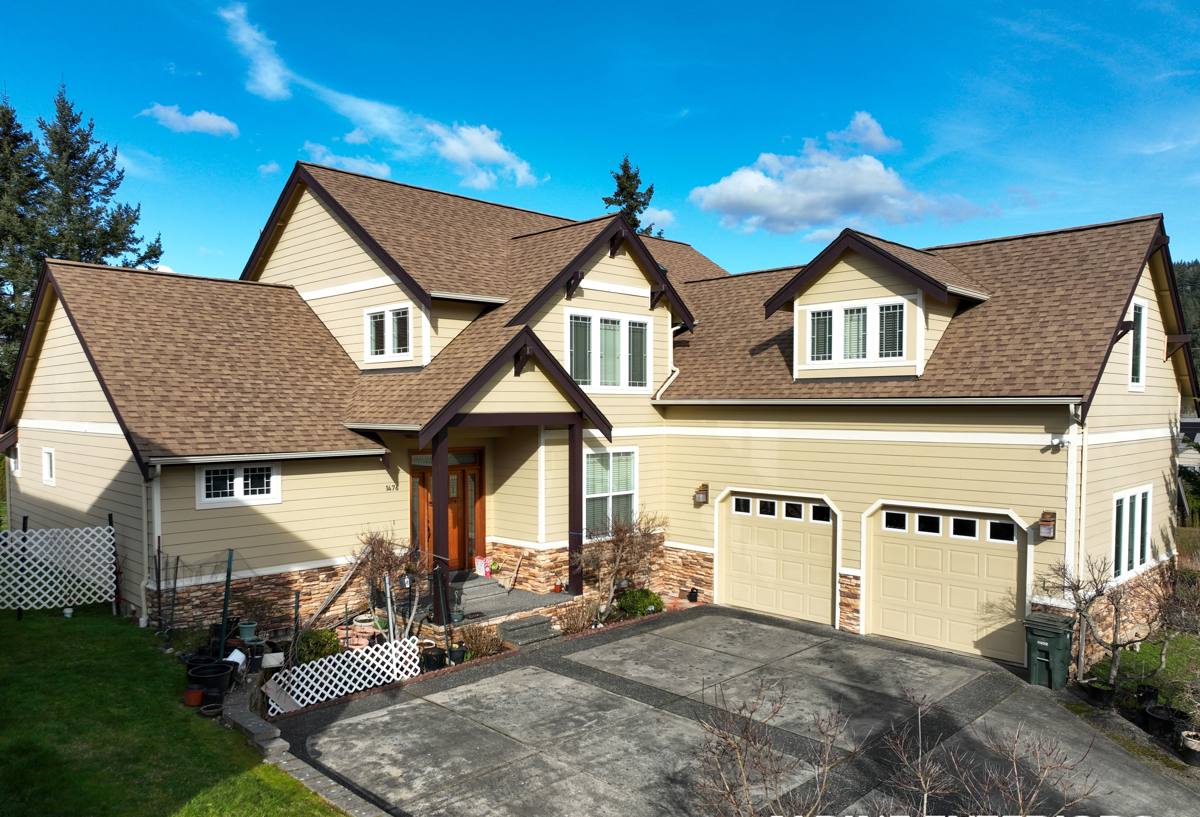
Signs a Maple Falls Home Needs a New Roof, Not Another Repair
Repairs make sense when a roof is otherwise sound and the problem is isolated. A full replacement makes sense when the roof as a system is past the point where patching buys you meaningful time. In this area, we typically see a few patterns that tip the scale toward replacement:
- Moss and algae staining that keeps coming back within a season or two of cleaning, especially on north-facing or heavily shaded slopes
- Granule loss on asphalt shingles heavy enough that you can see bare, shiny patches or find granules collecting in gutters
- Soft spots or sagging in the decking, usually a sign that moisture has been getting underneath the roofing surface for a while
- Repeated leaks around the same valley, chimney, or skylight even after flashing repairs
- A roof that's simply old enough — most asphalt roofs in this climate are into their final years by 18-22 years, sooner if ventilation was ever undersized
If a roof shows two or more of these at once, we'll usually tell you straight that patching it is a short-term fix that costs more in the long run. We'd rather give you that answer honestly than sell you a repair we know won't hold.
Choosing the Right Roofing System for This Area
Ventilation comes first
Before we talk about shingle brands or colors, we talk about airflow. A roof that can't move air through the attic space traps warm, moist indoor air against the underside of the decking. In a shaded, damp climate like this, that trapped moisture is exactly what accelerates moss growth from the inside out and shortens the life of whatever material sits on top. Balanced intake and exhaust ventilation is a non-negotiable part of any new roof we install here, not an upsell.
Underlayment matters more here than in drier regions
We install synthetic underlayment rated for long-term moisture exposure, with self-adhered membrane at valleys, eaves, and any low-slope transitions where water tends to pool or back up. In a region that sees sustained rain rather than short storms, a roof only stays watertight as long as the layer underneath the visible surface does its job.
Surface material
Most Maple Falls homes are well served by a quality architectural asphalt shingle rated for algae resistance, or a metal roofing system where the roofline, budget, or homeowner preference points that direction. We'll walk you through both honestly — including the maintenance tradeoffs of each — rather than pushing whichever is easiest for us to install.
What a Correct New Roof Installation Actually Includes
A roof replacement done right is a series of steps that each protect the next layer. Skipping or rushing any one of them is how homeowners end up with a roof that looks new but fails early.
| Step | Why It Matters in This Climate |
|---|---|
| Tear-off to bare decking | Lets us actually inspect the wood underneath instead of guessing at hidden rot or soft spots |
| Decking repair or replacement | Damp climates hide water damage; any soft or delaminated sheathing gets replaced before anything new goes down |
| Ice-and-water / self-adhered membrane at vulnerable points | Valleys, eaves, and low-slope areas are where standing water and wind-driven rain cause the most damage |
| Synthetic underlayment | A durable, moisture-resistant layer between the decking and the shingles or metal |
| New flashing at all penetrations | Old flashing is one of the most common leak sources on a "new" roof reinstalled over it |
| Balanced intake and exhaust ventilation | Reduces trapped moisture, which slows moss regrowth and extends material life |
| Final material installation | Shingles or metal installed to manufacturer spec, not shortcut nailing patterns |
Our Installation Process, Start to Finish
1. On-site assessment
We walk the roof and the attic, not just one or the other. That's the only way to catch ventilation problems, hidden moisture, or decking issues before they turn into surprises mid-project.
2. A written scope and honest options
You get a clear breakdown of what your roof needs, what materials fit your home and budget, and why. No pressure to upgrade to something you don't need, and no vague "we'll figure it out once we're up there" pricing.
3. Tear-off and decking inspection
Every board gets looked at. Any decking that's soft, delaminated, or water-damaged is replaced — this gets called out and priced clearly, not buried in the final invoice.
4. Underlayment, flashing, and ventilation installed to spec
This is the part of the job nobody sees once it's finished, which is exactly why we don't cut corners on it.
5. Final material installation and cleanup
Shingles or metal go on to manufacturer specification, job site debris and nails are cleared with a magnetic sweep, and we walk the finished roof with you before we consider the job done.
Why a Crew That Already Works Maple Falls Matters
Roofing crews who mostly work drier, more open parts of the state don't always price or plan for what this area throws at a roof. A crew that regularly works Lynden and the surrounding Whatcom County communities, including the more forested, shaded properties out toward Maple Falls, knows to size ventilation for heavier moisture loads, knows which underlayment and flashing details actually hold up to sustained wet weather rather than short downpours, and isn't guessing at how tree cover and shade patterns on a given lot will affect moss regrowth after the job is done.
It also matters for something more practical: warranty follow-through and being reachable. A local crew that plans to keep working in this area has a direct incentive to get the installation right the first time and to show up if something needs attention down the road.
Maintaining a New Roof Through Whatcom County Seasons
A correctly installed roof still needs basic upkeep to hit its full lifespan in this climate. None of this is complicated, but skipping it is how a well-installed roof ends up looking neglected within a few years.
- Keep gutters clear, especially going into fall when leaf and needle debris builds up fast under tree cover
- Have moss and algae growth addressed before it spreads across a slope, not after
- Trim back overhanging branches that keep sections of the roof shaded and slow to dry
- Schedule a walk-through inspection every couple of years, particularly after any major windstorm
- Address any small flashing or sealant issues promptly — small leaks in this climate don't stay small for long
What Affects the Cost of a New Roof in This Area
Every roof is different, so we won't quote a number without seeing yours, but a few factors consistently move the price up or down for homes in and around Maple Falls:
| Factor | How It Affects the Job |
|---|---|
| Roof size and number of facets | More valleys, hips, and transitions mean more labor and more flashing detail |
| Existing decking condition | Hidden moisture damage under tree cover often means some sheathing replacement |
| Access and site conditions | Steep driveways, tree-lined lots, or difficult staging areas add time |
| Material choice | Standard architectural shingle, premium shingle, and metal all carry different upfront costs and lifespans |
| Ventilation upgrades needed | Older homes often need added intake or exhaust vents to meet current standards |
If you're ready to get a clear, honest look at what your roof actually needs, we're glad to come out for a free, no-pressure estimate — just fill out the form below and we'll take it from there.