 Lynden Roofing
 Building New in Deming: What the Climate Actually Demands From Your Windows
If you're framing a new home out in Deming, you already know this isn't a dry-climate build. The Nooksack River valley and the foothill terrain east of Lynden hold moisture longer than the flatter ground closer to town — rain lingers, humidity stays up, and moss finds a foothold on anything that isn't shedding water properly. Add in the marine-influenced air that moves through Whatcom County off the Salish Sea, and you've got a building envelope that has to manage water intrusion from day one, not after the first callback.
Windows are one of the highest-risk penetrations in any new-construction wall assembly. A roof leak is often visible fast. A window that was flashed wrong can leak quietly into the wall cavity for years before you see staining, soft drywall, or a musty smell show up. In a climate with this much sustained rainfall and a moss season that runs long into what should be the dry months, getting the window opening right the first time isn't optional — it's the difference between a wall that lasts and one that's rotting from the inside.
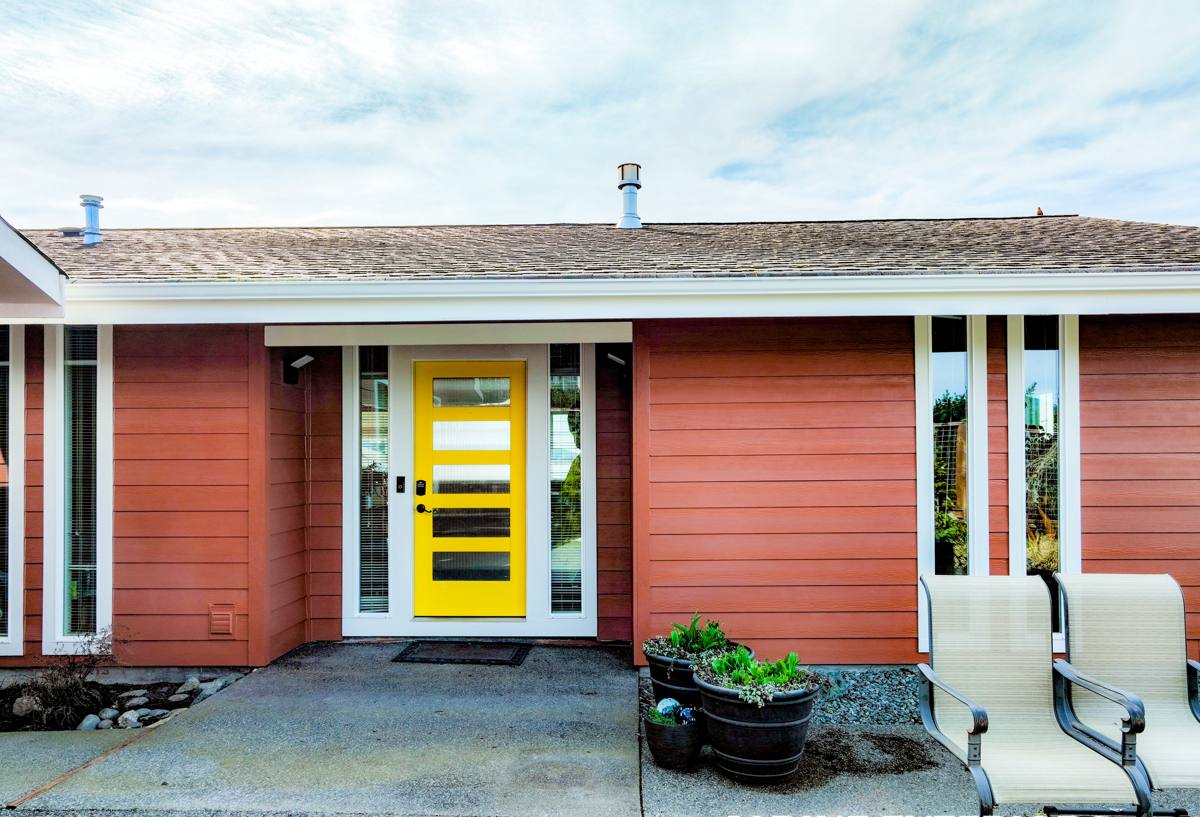
New-Construction vs. Replacement: Why the Installation Method Is Different
New-construction window installation is a different job than replacing an existing window, and it's worth understanding the distinction if you're pricing this out with your builder or general contractor.
- New-construction windows have a nailing fin and are installed before the siding goes on, integrated directly into the weather-resistive barrier (WRB) and flashing system as part of the rough wall assembly.
- Replacement (pocket) windows are sized to fit into an existing finished opening, with the old sash and frame removed but the original exterior trim and cladding left largely undisturbed.
On a new build in Deming, you have the advantage of doing it right from bare studs — full access to the rough opening, the WRB, and the flashing sequence before anything gets covered up. That's a real opportunity to build in long-term water management instead of patching around it later. We treat every new-construction window opening as a system: sheathing, flashing, WRB, window unit, and sealant all working together, not one product doing all the work alone.
Choosing the Right Frame Material for a Wet, Foothill Climate
Frame material affects how a window handles the freeze-thaw swings and sustained damp that Whatcom County winters bring. There's no single "best" option for every budget or design, but here's how the common choices compare for a Deming build:
| Frame Material | Moisture Performance | Maintenance | Typical Fit |
|---|---|---|---|
| Vinyl | Won't rot or corrode; performs well in wet climates | Low — no painting or sealing | Most new builds, budget-conscious to mid-range |
| Fiberglass | Very stable in moisture and temperature swings; low expansion/contraction | Low | Mid to upper-range builds wanting durability |
| Wood-clad | Good if detailed correctly, but exposed wood interior needs protection from interior humidity | Moderate to high | Higher-end, traditional or craftsman designs |
| Aluminum | Prone to condensation and thermal transfer unless thermally broken | Low, but condensation issues are common | Modern designs, larger glass spans |
For most Deming new builds, we lean toward vinyl or fiberglass because they hold up to the region's damp cycles without the ongoing maintenance wood-clad units require. If a homeowner wants the look of wood on the interior, a wood-interior/vinyl or fiberglass-exterior clad unit can be the right compromise — but we're honest about the trade-offs before you commit, not after the siding's already up.
A Note on Aluminum-Framed Windows
Aluminum frames conduct heat and cold efficiently, which sounds fine until you realize that's exactly what causes condensation to form on the interior frame during our cool, humid winters. Unless the unit has a proper thermal break, that condensation cycle can contribute to the same kind of moisture problems we're trying to avoid elsewhere in the build. It's a design choice we'll walk through honestly if you're considering it for a modern aesthetic.
Glass Packages and Meeting Washington's Energy Code
New construction in Whatcom County has to meet Washington State Energy Code requirements, and window glass is one of the bigger levers for hitting those targets. Beyond code minimums, the right glass package also affects comfort, condensation resistance, and how much moss-season gray light actually reaches your interior.
| Glass Feature | What It Does |
|---|---|
| Low-E coating | Reflects heat back in winter, reduces solar heat gain in summer |
| Argon or krypton fill | Improves insulating value between panes over plain air fill |
| Warm-edge spacer | Reduces heat loss and condensation risk at the glass edge |
| Triple-pane (optional) | Higher insulating value, useful on north- or wind-exposed elevations |
We'll spec glass packages to meet code as a baseline, then talk through where it makes sense to go beyond minimum — often on north-facing walls or larger window runs where comfort and condensation control matter more.
Flashing and Water Management: The Part That Actually Prevents Leaks
The window unit itself gets most of the attention, but the flashing detail around it is what actually keeps water out of the wall long-term. This is where we see the biggest difference between a window installed correctly and one that will cause problems in five to ten years.
Pan Flashing at the Sill
Every rough opening should have a sloped pan flashing at the sill that directs any water that gets past the window back outside the wall assembly, not down into the framing. In a climate that sees as much sustained rain as Whatcom County, skipping or under-detailing sill pan flashing is one of the most common causes of hidden rot we find on older homes — and one of the easiest things to get right during new construction.
Integrating the Weather-Resistive Barrier
The WRB (housewrap) has to be sequenced correctly around the window opening — lapped so water always sheds down and out, never trapped behind a seam. Head flashing above the window needs to tuck behind the WRB above it, while the WRB below the window laps over the sill flashing. Get this shingle-style layering wrong, and you've built a path for water to travel behind the cladding.
Sealant Is a Backup, Not a Strategy
Caulk and sealant have a service life — they're a secondary defense, not the primary water management system. A window that relies on sealant alone to stay dry will eventually leak once that sealant ages, shrinks, or cracks. We build the flashing and WRB integration to work even if the sealant fails down the road, which matters in a climate where UV and moisture cycling both wear on exterior sealants faster than in drier regions.
Our New-Construction Window Installation Process
- Rough opening review — we check that openings are square, plumb, and correctly sized before any window arrives on site.
- Sill pan flashing installation — sloped and sealed to direct incidental water outward.
- WRB integration — housewrap sequenced and taped in the correct shingle-lap order around the opening.
- Window setting — unit shimmed, leveled, and fastened per manufacturer specs to keep the frame from racking or binding.
- Head and jamb flashing — completed and integrated with the WRB above and beside the unit.
- Interior and exterior sealing — low-expansion foam and sealant applied where appropriate, without over-filling the shim space.
- Final inspection — operation, seal, and flashing checked before siding crews close the wall up.
That last step matters more than it sounds like. Once siding goes on, a bad flashing detail is invisible until it fails. We build in a check before that happens, because fixing it after the wall is closed means tearing into finished work.
Coordinating With Your Builder or General Contractor
On most new-construction jobs in and around Deming, we're one trade in a sequence — framers, then window and door installation, then siding and exterior trim. Timing matters. Windows need to go in after the WRB is up but before siding starts, and delays in one direction can back up the whole crew schedule. We work directly with your GC or builder to slot into that sequence cleanly, flag any rough opening issues early (before they become a framing change order), and keep the water management details consistent with whatever siding and trim system is planned for the exterior.
Mistakes We Catch on Foothill and River-Valley Job Sites
A lot of window problems in this region trace back to a handful of repeatable issues. Here's what we watch for on every Deming build:
- Missing or flat (non-sloped) sill pan flashing that lets water pool instead of drain
- WRB lapped in the wrong order around the opening, creating a path for water to get trapped
- Windows fastened before they're properly shimmed, causing frame racking and operational problems
- Over-reliance on caulk instead of proper flashing sequencing
- Rough openings cut oversized "to be safe," leaving gaps that are hard to insulate and seal correctly
- Glass packages chosen without regard to orientation, leaving north-facing rooms colder and more prone to interior condensation
Why a Crew That Already Works Deming and the Nooksack Valley Matters
Deming's mix of river-valley moisture, tree cover, and foothill weather patterns isn't identical to a build closer to the water or out on open flat ground. A crew that already works this specific area knows what the sustained wet season does to an unprotected rough opening, how long moss season really runs here, and why a flashing detail that's "good enough" in a drier region isn't good enough on a Whatcom County foothill lot. That local pattern recognition is what catches problems before they're built into the wall — not after the siding's up and the only fix is tearing it back out.
If you're planning a new build in Deming and want windows installed with the flashing, sequencing, and glass specs suited to this climate — not a generic install — reach out for a free, no-pressure estimate. We'll walk the plans with you, talk through frame and glass options honestly, and coordinate directly with your builder to keep the schedule moving.