 Lynden Roofing
 Metal Roofing Built for the Aldergrove Border Climate
Aldergrove sits right on the line between Whatcom County and British Columbia, in the same weather belt that shapes Lynden and the rest of the Nooksack Valley. That means long wet winters, driving rain that comes in sideways off the Strait of Georgia and Puget Sound air masses, and a moss season that can stretch from October through May. Homes here also pick up a faint but real dose of salt-laden air carried inland from the Sound, which slowly works on fasteners, flashing, and any metal that wasn't specified with this climate in mind.
A metal roof installed correctly for this area can outlast two or three asphalt roofs and shrug off the moss, moisture, and wind that wear down lesser systems. A metal roof installed generically — with the wrong fastener coating, the wrong underlayment, or flashing details borrowed from a drier climate — will show rust streaks, loosened panels, and leaks well before its time. The difference is almost entirely in the details, not the metal itself.
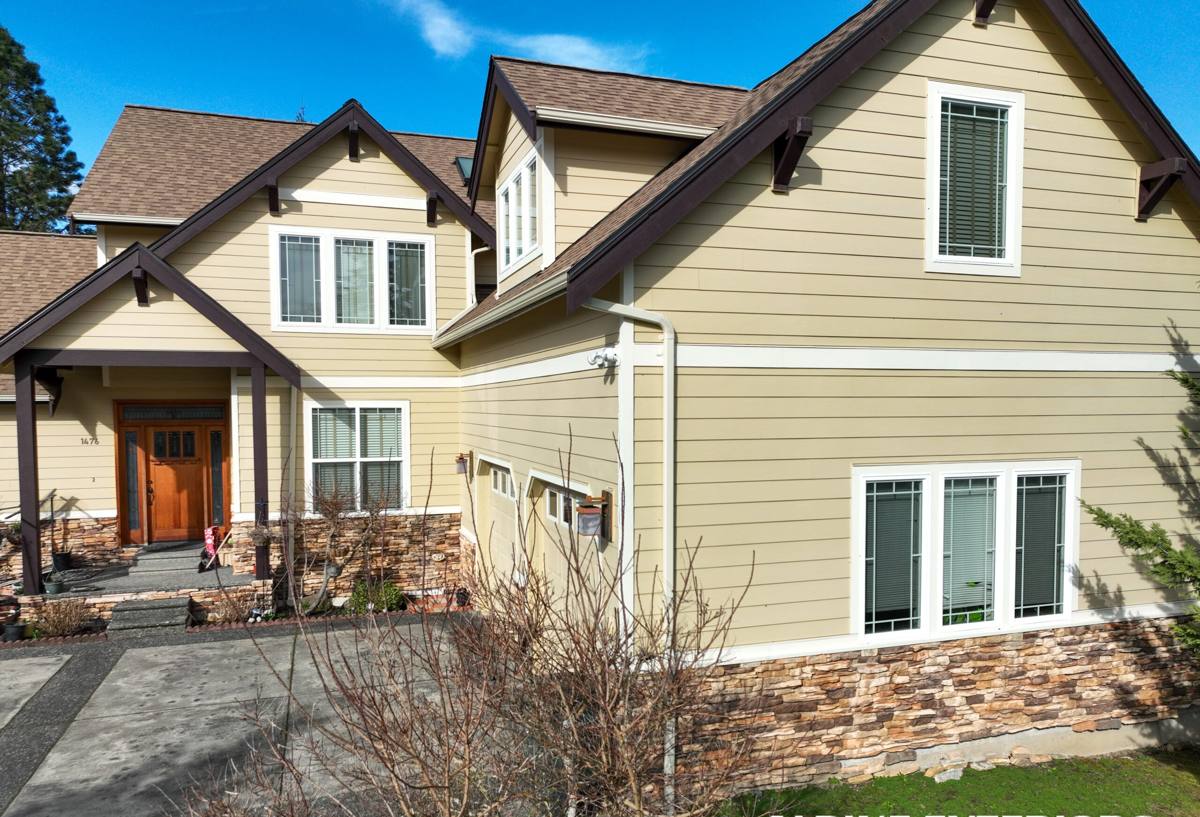
What Local Homes Actually Need From a Metal Roof
Before talking panel types or price, it helps to understand what this specific climate demands of a roofing system:
- Moisture shedding, not just moisture resistance. Near-constant damp air means a roof needs steep enough slope transitions, properly lapped panels, and flashing that actively directs water away rather than just tolerating it.
- Corrosion-resistant fasteners and trim. Salt-tinged air corrodes ordinary steel screws and cut edges faster than people expect, even this far from open saltwater. Fastener spec matters more here than in a dry inland climate.
- Moss and organic growth resistance. Shaded roof planes under fir and cedar cover, common on rural Aldergrove-area lots, stay damp longer and grow moss faster. Panel profile and finish affect how well a roof sheds debris and resists growth.
- Wind uplift resistance. Open farmland and river-valley wind funnels mean fastening patterns and panel-to-structure attachment need to be sized for real gusts, not the regional minimum.
- Freeze-thaw tolerance at the margins. Whatcom County doesn't see deep winter, but it does see repeated freeze-thaw cycling on cold, damp roof decks, which stresses poorly sealed penetrations over time.
Metal Panel Options: What Fits This Climate
Not every metal roofing product performs the same way in a wet, moss-prone, semi-coastal climate. Here's how the common options compare for a home in this area:
| System | Best For | Climate Fit Here | Trade-Off |
|---|---|---|---|
| Standing seam (concealed fastener) | Main roofs, steeper pitches, long-term low-maintenance ownership | Excellent — no exposed fastener heads to corrode or back out, sheds moss and debris well | Higher upfront cost, requires skilled installation |
| Exposed-fastener panel | Outbuildings, shops, lower-slope secondary roofs | Good if fasteners and washers are properly specified and re-checked over time | Fastener seals and heads are the weak point in a wet climate; needs periodic inspection |
| Stone-coated steel | Homeowners wanting a shingle-like appearance with metal durability | Good, but coating integrity at cut edges needs careful detailing | More expensive; repairs can be harder to blend |
| Aluminum panel systems | Properties closer to open water or with heavier salt exposure history | Very good corrosion resistance, doesn't rust | Softer material, more careful handling during install |
For most Aldergrove-area homes, a properly detailed standing seam steel or aluminum system offers the best long-term balance of moisture performance, moss resistance, and appearance. Exposed-fastener panels still have a legitimate place on shops, barns, and secondary structures where cost matters more than a fully concealed look.
Coatings and Finishes Matter as Much as the Panel
The paint or coating system on a metal panel is doing real work in this climate — it's the first line of defense against UV breakdown, moisture cycling, and the mild salt exposure this area sees. We spec finishes rated for coastal or near-coastal use rather than the cheapest available coating, because the cost difference over a 30-40 year roof life is small compared to the cost of an early repaint or panel replacement.
What a Correct Metal Roof Installation Involves
Metal roofing is unforgiving of shortcuts in a way asphalt shingles aren't — a poorly installed metal roof will announce its problems with leaks, oil-canning, or loosened panels far sooner than a poorly installed shingle roof will. A correct installation for this climate includes:
- High-temp, self-adhering underlayment at eaves, valleys, and penetrations, not just a standard synthetic felt across the whole deck.
- Proper deck ventilation so trapped moisture from the damp local air doesn't condense against the underside of the panels.
- Correctly lapped and sealed flashing at every valley, chimney, skylight, and wall transition — this is where the large majority of metal roof leaks actually originate, not in the field of the panels.
- Matched fastener metallurgy so screws, washers, and panels don't set up galvanic corrosion against each other over time.
- Correct panel expansion allowance, since metal moves with temperature swings and a roof fastened too rigidly will oil-can or eventually crack sealant joints.
- Snow and ice management details where roof lines dump onto walkways, entries, or lower roofs — even in a mild-winter climate, a sudden freeze on a wet metal roof needs to be planned for.
How Our Process Works
1. On-Site Inspection and Assessment
We walk the roof and attic space, note existing moss growth patterns, shaded areas, current flashing condition, and any signs of past moisture intrusion. This tells us where the roof has actually been struggling, not just its age.
2. Straightforward, Itemized Quote
We spec the panel system, gauge, fastener type, and underlayment package clearly, so you know exactly what you're paying for and why it's specified that way for this climate — not a vague lump-sum number.
3. Installation
Deck repair or replacement where needed, correct underlayment layering, panel installation to manufacturer and climate-appropriate spec, and full flashing detail at every transition point.
4. Final Walkthrough and Cleanup
We walk the finished roof with you, confirm flashing and trim details, and do a full magnetic sweep and site cleanup before we consider the job done.
Why a Crew That Already Works This Area Matters
Roofing crews that mostly work drier or more urban markets tend to under-spec for what Aldergrove and the surrounding Lynden-area properties actually face — heavier tree cover, longer damp seasons, and the periodic wind events that come through the valley. A crew that regularly works this specific area already knows:
- Which roof orientations and tree-shaded planes in this area develop moss fastest, and how to detail them accordingly.
- How local wind patterns through the valley affect fastening schedules on exposed roof planes.
- What permitting and inspection expectations apply on both the Whatcom County side and, where relevant, coordinating with property owners near the border on BC-side considerations.
- Realistic weather windows for scheduling installation, so panels aren't fastened down over a damp deck or during a stretch of rain that compromises the seal.
That local familiarity shows up as fewer callbacks, fewer surprises mid-install, and a roof that's actually detailed for the conditions it will face for the next several decades.
Maintenance: Keeping a Metal Roof Performing in This Climate
Metal roofing is low-maintenance compared to asphalt, but "low-maintenance" doesn't mean "no maintenance" in a climate this damp. A short annual routine goes a long way:
- Clear debris and organic buildup from valleys and roof-to-wall transitions before it holds moisture against the panel.
- Check gutters and downspouts are clear so water isn't backing up under the eave edge.
- Look for early moss or algae growth in shaded areas and address it before it establishes and holds moisture against the finish.
- Have flashing and sealant joints checked periodically, since these — not the panels themselves — are where leaks typically start.
- Watch for loosened fasteners on exposed-fastener systems, especially after high-wind events.
Cost Factors for Aldergrove-Area Metal Roofing
Metal roofing costs more upfront than asphalt shingles, but the gap narrows considerably when you factor in lifespan and reduced maintenance. Rather than quote a single number that won't fit every roof, here's what actually drives the cost on a project in this area:
| Factor | Why It Matters Here |
|---|---|
| Roof complexity (valleys, dormers, penetrations) | More flashing detail means more labor, and this is where leak risk concentrates in a wet climate |
| Panel system chosen | Standing seam runs higher than exposed-fastener panel due to labor and material |
| Existing deck condition | Long-term moisture exposure on older roofs sometimes means deck repair is needed before panels go on |
| Access and roof pitch | Steeper or harder-to-access roofs, common on some rural properties in the area, add labor time |
| Coating and finish grade | Coastal-grade finishes cost somewhat more than base-grade but pay off over the life of the roof |
We'll walk through these factors specifically for your roof during the on-site assessment, so the quote reflects your actual property rather than a generic estimate.
Get an Honest Look at Your Roof
If you're weighing a metal roof for a home or outbuilding in the Aldergrove or greater Lynden area, we're happy to come take a look and give you a straightforward, no-pressure assessment of what your roof actually needs. Use the form below to request a free estimate.