 Lynden Roofing
 Storm Damage Roof Repair for Maple Falls Homes
Maple Falls sits up against the foothills, tucked into heavy conifer cover on the way toward Mt. Baker. That setting is part of what makes the community a great place to live, and it's also exactly why roofs out here take a different kind of beating than roofs closer to town. Wind funnels through the tree line during winter storms, rain sits longer under the canopy, and shaded roof sections stay damp for days after a system passes through. When storm damage happens here, it usually isn't a single obvious event — it's wind, water, and debris working together, and the damage doesn't always show itself right away.
Lynden Roofing Co works storm damage calls throughout Whatcom County, and Maple Falls is a regular part of that route. We're not guessing at what a foothill roof needs based on a general playbook — we've been up on enough of them to know where the water actually goes and what typically fails first.
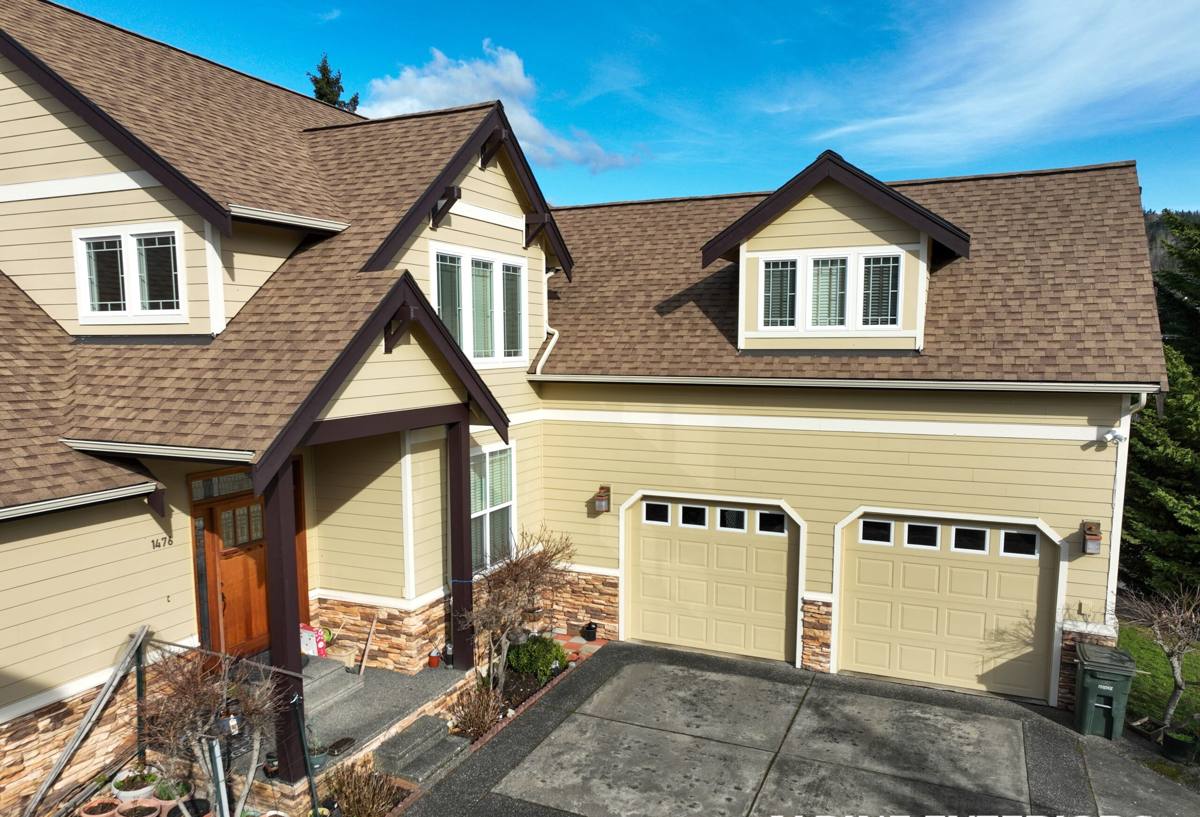
Why Maple Falls Roofs Take Extra Punishment
Tree Cover and Wind
Dense tree cover cuts both ways. It breaks up straight-line wind, but it also means falling limbs, cones, and needle debris are a constant part of the load a roof carries. A single wind event can snap branches loose that land on a roof weeks or months later, and the damage from that impact isn't always visible from the ground.
Moisture That Doesn't Dry Out
Whatcom County sits under a marine-influenced weather pattern that pushes driving rain through the Nooksack valley and up into the foothills for much of the fall, winter, and spring. In open, sunnier areas, roofs get a chance to dry between storms. In shaded pockets like Maple Falls, that drying window shrinks. Shingles, moss, and debris stay wet longer, and that extended dampness is what turns ordinary storm wear into rot, granule loss, and moss colonization if it's not addressed.
A Long Moss Season
Moss doesn't need much to get established — shade, moisture, and time. Maple Falls has all three for a good part of the year. Moss holds water against the roofing material, works into shingle edges and butt joints, and can lift tabs enough to let wind-driven rain underneath. It's rarely the direct cause of a storm-damage claim, but it's almost always a contributing factor in how fast a small storm injury turns into a real leak.
What Storm Damage Actually Looks Like
Homeowners often expect storm damage to look dramatic — a torn-off section, a visible hole. Most of what we find is quieter than that.
Wind and Impact Damage
- Shingles creased, lifted, or missing tabs, especially along ridges, hips, and roof edges where wind uplift is strongest
- Cracked or displaced shingles from branch or debris impact
- Bent, lifted, or blown-off flashing at chimneys, vents, and roof-to-wall transitions
- Loosened or missing fasteners that let a shingle work back and forth in the next windstorm
Water Intrusion and Hidden Leaks
- Staining or discoloration on interior ceilings, often well away from where the actual roof breach is
- Soft or spongy decking felt underfoot during inspection
- Saturated insulation in the attic
- Granule buildup in gutters, a sign shingles are aging faster than they should
The gap between where water enters and where it shows up inside is usually the biggest surprise for homeowners. Water follows the path of least resistance along decking and rafters before it ever reaches drywall, which is why a leak over the kitchen might trace back to a flashing failure on the opposite side of the roof.
Our Storm Damage Repair Process
We run the same process on every storm call, because skipping steps is how small repairs turn into repeat visits.
- Ground and roof-level inspection. We walk the roof, not just look at it from the driveway. Storm damage hides in valleys, under ridge caps, and behind chimneys — spots you can't judge accurately from the ground.
- Interior check. We look at the attic and ceilings for signs of moisture that haven't reached the surface yet, since catching a slow leak early is far cheaper than repairing rotted decking later.
- Documentation. We photograph the damage in detail before touching anything. This matters for insurance claims and gives you a clear record of what was actually found.
- Scope and explanation. We walk you through what we found, what caused it, and what repair options make sense — no pressure to upsell a full replacement if a targeted repair will hold.
- Repair. Matching materials where possible, replacing compromised decking, re-flashing where needed, and re-securing anything the wind loosened.
- Final check. We confirm water is shedding properly and that the repair blends with the surrounding roof field instead of standing out as an obvious patch.
What a Correct Repair Actually Involves
A storm repair that's done right addresses more than the visible damage. Replacing a handful of shingles without checking the decking underneath, or without addressing the flashing that likely contributed to the leak, tends to produce a repair that fails again in the next season.
Decking Comes First
If water has been sitting under damaged shingles for any length of time, the decking underneath needs to be checked for soft spots before new material goes down. Installing new shingles over compromised decking just hides the problem for another storm cycle.
Flashing Gets Real Attention
Flashing failures around chimneys, vents, and roof-to-wall joints are one of the most common sources of storm leaks, and they're also one of the most commonly rushed repairs. We reseat or replace flashing rather than relying on sealant alone to bridge a gap, since sealant is a short-term fix, not a long-term one.
Matching and Blending
Where the existing roof is still in good shape overall, we match shingle type and, where possible, color and lot so the repair doesn't stand out as a patch. Where the surrounding material is aged enough that a perfect match isn't realistic, we'll tell you that up front rather than promise something we can't deliver.
Repair vs. Replacement: What Drives the Decision
| Factor | Leans Toward Repair | Leans Toward Replacement |
|---|---|---|
| Extent of damage | Isolated to one section or slope | Spread across multiple slopes or the whole field |
| Roof age | Less than half its expected service life | Already near or past typical lifespan |
| Decking condition | Solid, no soft spots found | Rot or moisture damage in multiple areas |
| Moss and granule loss | Minor, surface-level only | Widespread, with visible granule loss in gutters |
| Prior repair history | First storm event in years | Repeated repairs to the same areas |
Most storm calls in Maple Falls end up being straightforward repairs. Replacement usually comes into the picture when the roof was already near the end of its service life and the storm accelerated a problem that was coming anyway. We'll tell you honestly which situation yours is — a repair that's likely to need redoing in a year isn't a favor to you or to us.
Moss, Debris, and Preventing the Next Round of Damage
Because moss and needle debris build up faster in shaded, tree-covered areas, a storm repair in Maple Falls is a good time to deal with contributing conditions, not just the immediate damage. Clearing moss growth, treating for regrowth, and cleaning debris out of valleys and gutters reduces how much water gets trapped against the roofing material during the next stretch of driving rain. None of this is a substitute for a proper repair, but skipping it means the next moss cycle starts working against the repair almost immediately.
Simple Maintenance That Extends the Repair's Life
- Keep gutters and valleys clear of needles and cones, especially heading into fall
- Trim back branches that overhang the roof to reduce impact risk and shade
- Address moss growth before it spreads rather than after tabs start lifting
- Have the roof looked at after any significant wind event, even if nothing looks obviously wrong from the ground
Why a Local Crew Matters for This Kind of Work
Storm damage repair rewards familiarity with the specific conditions of an area. A crew that works Maple Falls regularly already knows that shaded valleys hold moisture longer, that moss shows up earlier in the season here than it does closer to Lynden proper, and that flashing details around masonry chimneys in older homes in this area tend to need extra attention. That's not something you get from a crew driving in from outside the county for a one-time job. It also means we're available for the follow-up check a few months later, or the next storm season, without starting the relationship from zero.
We're a Whatcom County crew, based out of Lynden, and Maple Falls is part of our regular service area — not a stretch job we take occasionally.
Before You Call: A Quick Storm-Damage Checklist
- Check ceilings and attic spaces for new staining or dampness after any significant storm
- Look at gutters from the ground for shingle granules, which signal accelerated wear
- Note the date and rough conditions of the storm — wind direction and intensity help us diagnose the likely damage pattern
- Avoid walking the roof yourself after a storm; wet, moss-covered surfaces are a fall hazard even for a quick look
- Get an inspection before the next rain event if you suspect any damage, since a small leak gets more expensive the longer water sits
Insurance and Documentation
Many storm-related repairs are covered under homeowner's insurance, depending on your policy and the cause of damage. We document what we find with clear photos and a written scope before any repair work begins, which gives you what you need if you choose to file a claim. We're happy to walk through what we found with you in plain terms, but the decision to file, and the conversation with your insurer, is between you and your provider — we won't pressure you either way.
If a recent storm has you wondering about your roof, we're glad to take a look. We offer free, no-pressure estimates for Maple Falls homeowners — no obligation, just an honest read on what your roof actually needs. The form below is the easiest way to get on our schedule.