 Lynden Roofing
 Deck Repair Built for Everson's Climate
Everson sits in the heart of Whatcom County, close enough to Lynden that homes here deal with the same weather pattern year-round: long stretches of rain, heavy marine air moving in off the Salish Sea and Bellingham Bay, and short, cool summers that never quite dry the ground out before the next system rolls in. A deck built anywhere else might tolerate a few years of neglect. A deck in Everson doesn't get that grace period. Wood, hardware, and even composite decking all age differently here than they do in a dry climate, and repairs that look cosmetic on the surface are often standing on structural problems underneath.
We've worked on decks throughout Lynden and the surrounding Whatcom County communities, including Everson, long enough to know what fails first, what fails quietly, and what a repair actually needs to include to hold up through another wet season instead of just looking better for a summer.
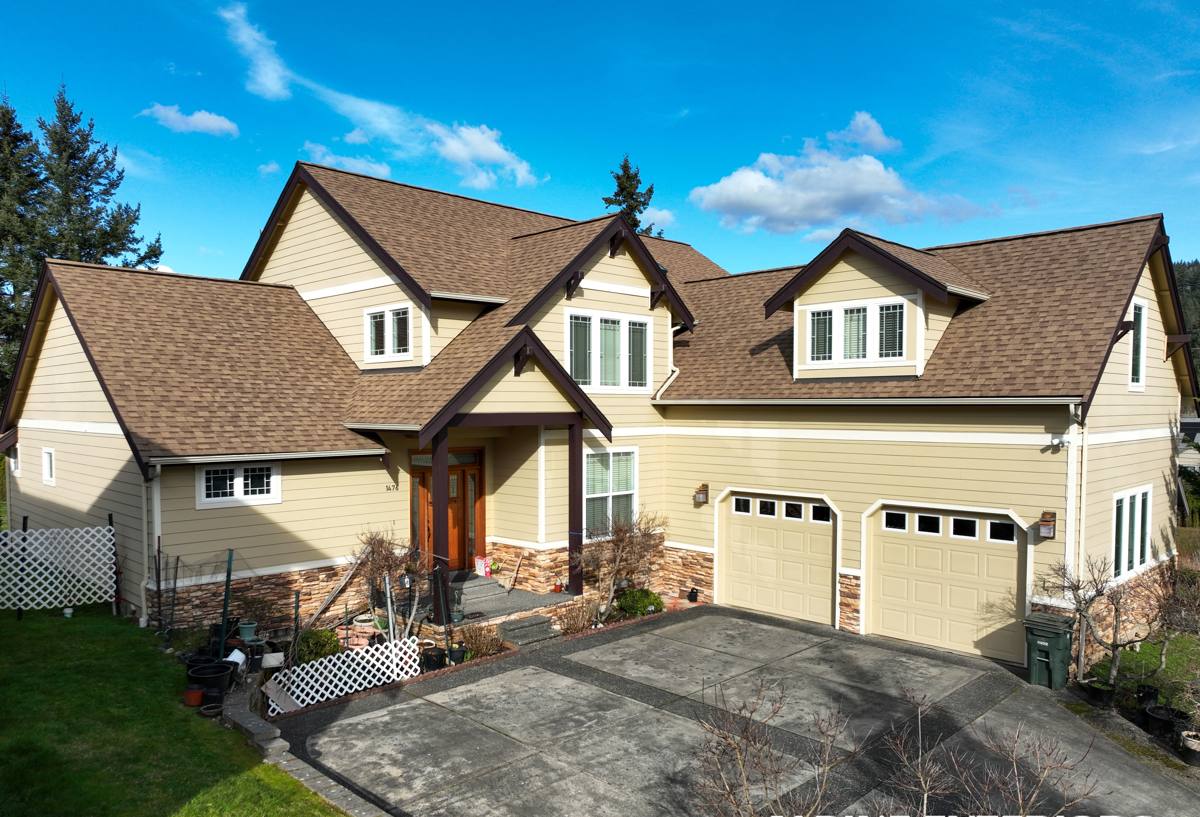
What the Local Climate Does to a Deck
A deck failure in Everson almost never comes from one dramatic event. It's slow, cumulative damage from the same conditions repeating every year.
Driving Rain and Standing Moisture
Rain here doesn't just fall straight down and drain off. Wind-driven rain gets pushed sideways under railings, into ledger board connections, and along the underside of decking boards where it can sit for days without direct sun to dry it out. Moisture that gets trapped against wood or fasteners is what starts rot and corrosion, not moisture that runs off cleanly.
Salt Air and Corrosion
The marine air that moves inland from the bay carries fine salt content that accelerates corrosion on any exposed metal — screws, joist hangers, bolts, and flashing. Once a fastener starts rusting, it loses holding strength gradually, which is why a board that looks fine can still be loose or unsafe underneath.
Moss and Organic Growth
Whatcom County's long, mild, damp season is ideal for moss and algae. On a deck, moss holds moisture directly against the wood surface far longer than open air would, and it makes boards slick and dangerous underfoot long before it does visible structural damage. By the time moss is thick enough to see clearly, it's usually already contributing to surface decay.
Freeze-Thaw Cycling
Whatcom County doesn't get extreme cold most winters, but it does get repeated freeze-thaw swings. Water that's worked its way into a crack, a fastener hole, or a joint expands when it freezes and widens that opening a little more each time. Over several winters, that's enough to turn a hairline crack into a structural weak point.
Common Deck Problems We Find on Everson Homes
Most of the repair calls we get in this area fall into a handful of recurring categories:
- Ledger board rot — where the deck attaches to the house, often from missing or failed flashing that let water run behind the connection for years.
- Post base and footing deterioration — posts that sit in or near standing water at ground level, especially on decks without proper post base hardware keeping wood off the concrete.
- Corroded fasteners and hardware — older decks built with standard galvanized screws or hangers instead of corrosion-resistant hardware rated for coastal/marine exposure.
- Soft or spongy decking boards — usually from moisture trapped between boards spaced too tightly, or from moss and debris left to sit in the gaps.
- Loose or wobbly railings — post connections that have loosened as the wood around the fasteners softens.
- Stair stringer wear — stairs take constant foot traffic and full weather exposure, so they often show damage before the rest of the deck does.
Repair or Replace? What We Actually Look At
Not every deck problem means a full rebuild, and not every "just a few boards" job is actually a simple fix once we get underneath the surface. The honest answer depends on where the damage is and how far it's spread.
| Factor | Usually Repairable | Usually Needs Replacement |
|---|---|---|
| Decking boards | A few isolated soft or cracked boards | Widespread soft spots across most of the deck surface |
| Framing/joists | Localized rot near one connection point | Rot found at multiple joists or the ledger itself |
| Fasteners/hardware | Hardware upgrade during a board repair | Structural hangers failing or missing entirely |
| Posts/footings | Sound footing, deteriorated post base only | Footing has shifted, cracked, or sits below grade |
| Railings | Loose posts with sound wood underneath | Posts rotted at the base or code-noncompliant spacing |
| Deck age | Under 15 years, built to current code | Original construction predates current code, aging hardware throughout |
The table above reflects general patterns, not a diagnosis — the only way to know for certain is to get underneath the deck and check the framing directly, which is part of every estimate we do.
What a Correct Deck Repair Actually Involves
A repair that only addresses the visible surface tends to fail again within a season or two, because the underlying moisture path was never fixed. A repair done right addresses both the damage and the reason the damage happened.
Structural Inspection First
Before any board comes off, we check the ledger connection, the joists, the post bases, and the footings. Surface damage is often a symptom of a structural issue, not the whole story, and we want to know what we're dealing with before quoting the job.
Fixing the Water Path, Not Just the Symptom
If rot is present, we look at why water got there in the first place — missing flashing, poor board spacing, a low spot holding water, or a post sitting directly on wet ground. Replacing rotted wood without correcting the water path just delays the same failure.
Hardware Matched to the Climate
Given the corrosion issues that marine air causes over time, we use fasteners and structural hardware rated for exterior, corrosion-prone environments rather than standard galvanized hardware. It costs a little more upfront and saves a repeat repair down the line.
Proper Board Spacing and Airflow
Decking boards need consistent gaps to let water drain and air circulate underneath. Boards installed too tight — a common shortcut — trap moisture and accelerate the exact rot and moss growth that this climate already encourages.
Our Deck Repair Process
- On-site inspection. We walk the full deck, check underneath where accessible, and identify both visible damage and its likely cause.
- Clear, written estimate. We explain what needs to be repaired, what's optional, and what we'd recommend keeping an eye on going forward.
- Repair the structure first. Framing, ledger connections, and post bases get addressed before any cosmetic work, since everything else depends on a sound structure underneath.
- Replace damaged boards and hardware. Matched as closely as possible to the existing deck, with corrosion-resistant fasteners throughout.
- Final check. Railings tested for stability, stairs checked, and the work area cleaned up before we call it done.
Materials: What We Use and Why
Homeowners often ask whether to repair with matching wood or switch sections to composite decking. Both have a place, and the right choice depends on the rest of the deck and the homeowner's priorities.
Wood repairs are usually the right call when the rest of the deck is wood and in good condition — matching material keeps the look consistent and costs less for a partial repair. Composite makes more sense when a larger section is being rebuilt, since it resists moisture and moss buildup better over time and needs less maintenance in a climate like this one. Either way, we don't cut corners on the fasteners and hardware underneath, since that's what actually determines how long the repair lasts — the visible decking material matters far less than what's holding it together.
Signs Your Deck Needs Attention
A quick self-check can catch problems early, before they turn into a bigger repair.
- Boards that feel soft, spongy, or flex noticeably when you walk on them
- Visible moss, algae, or dark staining on the deck surface
- Railings or posts that wobble when pushed
- Gaps or cracks where the deck meets the house
- Rust streaks below screws, bolts, or metal hardware
- Standing water that doesn't drain within a few hours of rain stopping
- A musty smell coming from underneath the deck
- Stairs that feel less solid than the rest of the deck
If more than one or two of these apply, it's worth having someone check the framing underneath rather than waiting for the damage to become obvious from above.
Why Hire a Crew That Already Works in Everson
Deck repair isn't unique to this area in principle, but the specific combination of driving rain, marine air, and moss pressure that Whatcom County homes deal with rewards experience with these exact conditions. A crew that's used to drier climates may not think to check flashing details or hardware grade as carefully, because in their normal work it doesn't matter as much. We've repaired decks throughout Lynden and nearby communities like Everson enough times to know the failure patterns specific to this weather, and we build every repair to hold up against it — not just to pass a quick visual inspection.
Working locally also means we're not guessing at permit requirements or code details for Whatcom County, and we're not far away if a question comes up after the work is done.
Get a Free Estimate
If your deck in Everson or the surrounding Lynden area has soft boards, loose railings, moss buildup, or you're just not sure whether it needs a repair or a rebuild, we're happy to take a look. There's no pressure and no obligation — just a straightforward assessment and a clear estimate. Use the form below to get started.