 Lynden Roofing
 Building a Deck That Actually Holds Up in Maple Falls
Maple Falls sits in a part of Whatcom County where tree cover is heavy, humidity lingers, and the weather swings from driving winter rain to damp, shaded summers. That combination is hard on outdoor structures in a way that a lot of generic deck advice doesn't account for. A deck built the same way you'd build one in a dry, open subdivision will show problems here faster than it should — soft spots in the decking, corroded fasteners, slick moss buildup, and railings that loosen before the wood even finishes weathering.
This page is specifically about deck building for homes in and around Maple Falls, not a general overview of decks. The goal is to explain what actually needs to be different about a deck built for this climate, what a correct build looks like from the footings up, and how we approach the work when we're on your property.
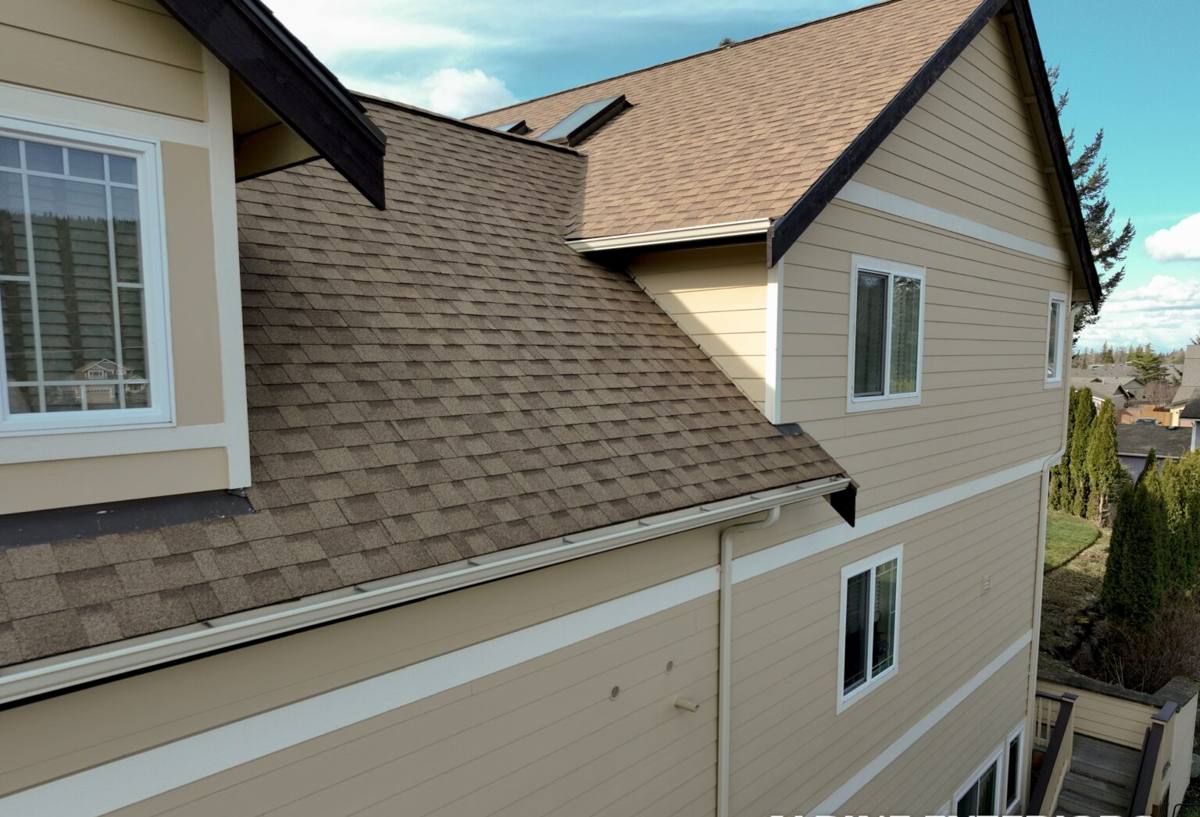
What Whatcom County's Climate Does to a Deck
Three things drive most of the deck problems we see out this way, and they compound each other over time.
Persistent Moisture
Driving rain off and on for months at a time means wood, hardware, and framing rarely get a full chance to dry out between storms. Any place where water can pool, get trapped, or wick into end grain becomes a long-term failure point — even if the deck looks fine the first year or two.
Shade and Airflow
Wooded lots and tree-covered yards, common around Maple Falls, mean decks often sit in partial shade most of the day. Less direct sun and airflow means slower drying, which extends how long surfaces stay damp after rain and creates ideal conditions for moss and algae growth.
Long Moss Season
Moss doesn't just make a deck look neglected — it holds moisture against the decking surface, turns walking surfaces slippery, and can work into seams and fastener heads where it accelerates rot and corrosion. In this region, moss season isn't a few weeks in fall; it's a long stretch of the year, and a deck built without that in mind will need moss treatment far more often than it should.
What a Correctly Built Deck Involves Here
A deck that's going to perform well in Maple Falls conditions needs a few things prioritized that get skipped in cheaper or rushed builds:
- Ledger board flashing that fully sheds water away from the house band board, not just a bead of caulk
- Joist tape or a comparable flashing membrane on top of every joist to stop water from soaking into end grain and fastener holes
- Stainless steel or high-grade coated fasteners rated for ground contact and moisture exposure, not standard exterior screws
- Footings set below frost depth and sized for our soil, with proper drainage so they don't sit in standing water
- Decking gaps and airflow beneath the deck sufficient for drying, not tight-packed boards that trap moisture
- Railing posts through-bolted into properly blocked framing, not just lag-screwed into a rim joist
None of this is exotic. It's standard good practice — but it's exactly the set of details that get shortchanged when a deck is built fast and cheap, and it's the difference between a deck that needs real repair in five years and one that's still solid in twenty.
Choosing Decking Material for This Climate
There's no single "best" decking material — there's a best fit for your budget, how much upkeep you want to do, and how much shade and moisture your specific site sees. Here's how the common options actually compare under Maple Falls conditions:
| Material | Moisture Performance | Moss/Algae Resistance | Maintenance |
|---|---|---|---|
| Pressure-treated wood | Good if sealed regularly; end grain and fastener holes are vulnerable | Low — needs regular cleaning and moss treatment | Annual cleaning, periodic staining/sealing |
| Cedar | Naturally moisture-resistant, but still needs sealing in shaded, wet spots | Moderate — better than treated pine but still needs care in heavy shade | Regular sealing to maintain color and resistance |
| Capped composite (e.g., Trex, TimberTech-type products) | Excellent — the cap layer sheds water and doesn't absorb moisture into the core | Higher resistance, though moss can still grow on the surface film in deep shade | Occasional washing, no staining or sealing |
| PVC decking | Best moisture performance — no wood fiber to absorb water at all | Highest resistance of the common options | Occasional washing only |
For heavily shaded, damp lots — which describes a lot of Maple Falls properties — we lean toward recommending capped composite or PVC decking, not because wood is a bad product, but because a natural wood deck in constant shade needs a maintenance commitment most homeowners underestimate. If you want a wood deck, we'll build it correctly and tell you honestly what upkeep schedule it needs to actually last.
Where Deck Failures Actually Start
When we're called out to look at a failing deck, the surface boards are rarely the real problem — the substructure is. A few patterns we see repeatedly:
Undersized or Poorly Placed Footings
Footings that are too shallow, too small, or poured without proper drainage around them shift over seasons of freeze-thaw and saturated soil, which throws the whole frame out of level and stresses every joint above it.
Standard Fasteners in a Wet Climate
Regular galvanized screws and nails corrode faster than people expect in a climate this consistently wet. Corroding fasteners lose holding strength long before they visibly rust through, which shows up as squeaking, slight movement, or boards working loose.
No Flashing at the Ledger Board
The ledger board — where the deck attaches to the house — is the single most common point of rot we find on older decks. Without proper flashing, water runs behind the board and into the house rim joist, where it can sit unnoticed for years.
Our Deck Building Process
Every deck we build in the Maple Falls area follows the same disciplined sequence, whether it's a small platform deck or a large multi-level build:
- On-site consultation. We walk your property, look at drainage, shade patterns, sun exposure, and how the deck will connect to your house before any design work starts.
- Design and material selection. We talk through decking material, railing style, and layout based on your budget and how much maintenance you actually want to take on.
- Permitting. Whatcom County requires permits for most deck construction above a certain height or attached to the home. We handle the permit application and coordinate inspections.
- Footings and framing. Footings are set below frost depth with drainage considered, and framing is built with moisture-rated fasteners and full ledger flashing from the start.
- Decking and railing installation. Boards are spaced and fastened for proper drying airflow; railing posts are blocked and through-bolted, not just surface-mounted.
- Final walkthrough. We go over the finished deck with you, including what maintenance it needs and how often, so there are no surprises down the road.
Permits, Code, and Railing Requirements
Washington building code sets minimum requirements for things like guardrail height, stair rise and run, footing depth, and how a deck attaches to the house — and Whatcom County's building department inspects these points on any permitted deck project. Skipping the permit process might save time up front, but it leaves you without an inspection record, which can matter at resale and can leave real structural issues unfound until something fails. We pull permits as a standard part of the job, not an upsell.
What to Ask Before You Hire a Deck Builder
Whether you use us or someone else, these are the questions worth asking before you sign a contract for deck work in this area:
- Will the ledger board be properly flashed, and can you explain how?
- What fastener grade will be used, and is it rated for ground contact and constant moisture?
- Will footings be set below frost depth with drainage accounted for?
- Is a permit being pulled, and who's responsible for scheduling inspections?
- What's the realistic maintenance schedule for the decking material we choose, given how much shade my yard gets?
- Have you built decks specifically in this area before, and do you know how the local soil and drainage behave?
If a contractor can't answer these clearly, that's worth noticing before work starts, not after.
Why Local Experience in Maple Falls Matters
A deck built for a dry-climate subdivision and a deck built for a shaded, moss-prone Whatcom County lot are not the same project, even if they look identical when finished. Knowing how water moves across a specific piece of ground, how much shade a yard actually holds through the seasons, and which fastener and material choices hold up here isn't something you get from a general contracting checklist — it comes from having built and maintained decks in this specific area. That's the experience we bring to every deck we build for Maple Falls homeowners.
If you're planning a new deck or need an honest assessment of one that's already showing problems, we're happy to walk your property and give you a straightforward, no-pressure estimate using the form below.