 Lynden Roofing
 Composite Decking for the Kendall Area
Kendall sits in Whatcom County's wetter, greener stretch, and decks out here take a different kind of beating than decks in a drier climate. It isn't one big storm that does the damage — it's months of driving rain, damp air off the coast, and long stretches of shade and moisture that never fully dry out between weather systems. Add a long moss season on top of that, and a deck built with the wrong materials or the wrong details underneath starts showing problems well before it should. This page covers what we actually do when we build a composite deck for a Kendall-area home: the material trade-offs, the build details that matter in this climate, and what to expect from working with a crew that already knows the area.
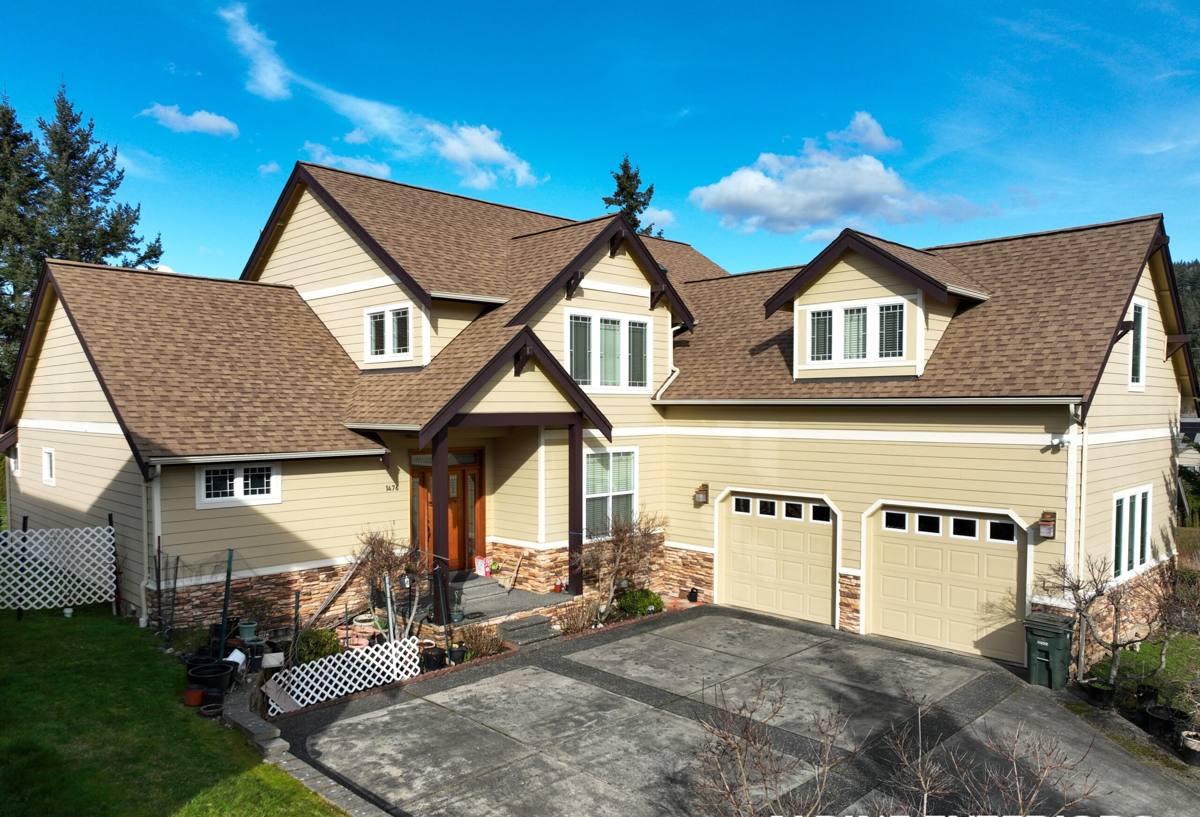
Why Local Climate Should Drive the Material Choice
A lot of composite decking marketing talks about looks and low maintenance. Those are real benefits, but in this part of Whatcom County the bigger issue is moisture management over years, not just appearance in year one. Salt-tinged marine air, driving rain, and humidity that lingers under tree cover all push moisture into wood fibers, fastener holes, and end grain. Traditional wood decking can handle that if it's maintained on a strict schedule — stripped, sealed, and re-coated regularly. Most homeowners don't keep up that schedule, and that's when wood decks start to cup, splinter, and rot at the framing connections.
Composite boards, especially capped composite, resist moisture absorption at the board level. That doesn't mean the whole system is maintenance-free — it means the board itself isn't the weak link. The weak link becomes whatever is underneath it, which is why the substructure and installation details matter more with composite than the marketing usually admits.
What a Correct Composite Deck Build Actually Involves
The Substructure Still Has to Be Built for Wet Ground
Composite boards are only as good as what they sit on. In this climate, we treat joist protection as non-negotiable, not an upsell. That means joist tape or an equivalent moisture barrier over every joist top, proper flashing where the deck ties into the house, and post bases that keep wood off standing water or damp soil. A composite deck built on an unprotected wood frame will still rot from underneath — the boards on top just hide it longer, which is worse, not better.
Spacing and Airflow
Composite boards expand and contract with temperature and moisture more than people expect. Gapping between boards, at the perimeter, and around any obstructions needs to follow the manufacturer's spec, not a "close enough" eyeball measurement. Too tight, and boards can buckle or bind. Too loose, and you get an uneven surface and debris collection that holds moisture against the board edges — a real problem when the deck sits under tree cover for months at a time.
Fasteners and Ledger Attachment
We use hidden fastener systems rated for the specific board profile, and we don't cut corners on the ledger board connection, since that's the single most common point of hidden water intrusion on any attached deck. Flashing there has to shed water away from the house, not just sit behind the siding and hope.
Composite Board Types: Honest Trade-offs
Not all composite decking is the same, and we'll walk homeowners through the real differences rather than just pushing whatever has the best margin. Here's how the main options generally compare for a home in this climate:
| Material | Moisture Behavior | Maintenance | Typical Lifespan |
|---|---|---|---|
| Uncapped composite | Absorbs some moisture at cut edges; can fade and stain over time | Occasional cleaning; more prone to mold in constant shade | Good, but shorter than capped versions |
| Capped composite | Moisture-resistant shell around a composite core | Periodic washing; resists staining better | Longer, with a stronger stain/fade warranty in most product lines |
| PVC (cellular) | Essentially non-absorbent | Lowest maintenance; still needs cleaning where moss and algae can grow | Long, often with the longest manufacturer warranty terms |
| Traditional wood | Absorbs moisture readily unless sealed and re-sealed | High — regular sealing/staining required to prevent rot | Shortest without disciplined upkeep; longest if maintained perfectly |
We don't tell homeowners wood is a bad product — it isn't. It just demands a maintenance commitment that doesn't fit most people's actual schedules, and in a climate this damp, skipped maintenance shows up fast. For most Kendall-area homeowners, capped composite hits the best balance of upfront cost, appearance, and realistic upkeep. PVC is worth discussing for decks with heavy shade or constant ground moisture, since it has essentially nothing for mold and moss to take hold in at the board surface.
Our Process, Start to Finish
- On-site walkthrough — we look at drainage, sun/shade exposure, existing framing (if it's a rebuild), and how the deck connects to the house.
- Material selection — we go over board options and trade-offs honestly, including where a cheaper board makes sense and where it doesn't.
- Framing and moisture protection — joist tape, flashing, and post bases go in before a single deck board is placed.
- Board installation — correct spacing, hidden fasteners, and attention to picture-framing or pattern details if requested.
- Railing, stairs, and trim — matched to the board system and built to current code for guard height and baluster spacing.
- Final walkthrough — we check every board, fastener line, and edge before we call it done.
Problems We See on Older or Poorly Built Decks in This Area
- Moss and algae film building up on boards that sit in constant shade, especially near tree lines
- Rot at the ledger board where flashing was missing or installed incorrectly
- Joists rotting from underneath while the composite boards on top still look fine
- Boards buckling or gapping unevenly because expansion spacing wasn't followed
- Standing water pooling on low spots due to inadequate slope away from the house
Most of these aren't material failures — they're installation shortcuts that don't show up until a few wet seasons in. That's the gap we're trying to close by building the substructure right the first time.
Living With a Composite Deck Through a Long Moss Season
Composite decking cuts down maintenance significantly, but "low maintenance" doesn't mean "no maintenance" in a climate like ours. A periodic wash with a soft-bristle brush and a mild cleaner keeps moss and algae from getting a foothold, especially on shaded sections. Pressure washing is generally discouraged on composite boards — too much pressure can damage the surface texture or cap layer. Keeping gutters and nearby drainage clear also matters more here than in a drier climate, since a deck that stays wet longer after each rain gives moss more time to establish.
For decks with heavier shade cover, a slip-resistant board texture is worth discussing at the material stage rather than dealt with after the fact. It's a small decision up front that matters every wet month afterward.
Cost Factors to Expect
We don't publish flat pricing because every deck is different, but these are the main factors that move the number up or down:
| Factor | Why It Affects Cost |
|---|---|
| Deck size and shape | More square footage and more corners/cuts mean more material and labor |
| Substructure condition | A full rebuild costs more than resurfacing an existing, sound frame |
| Board tier chosen | Uncapped, capped composite, and PVC carry different material costs |
| Railing and stair complexity | Multi-level decks and custom railing add labor and material |
| Height above grade | Taller decks may need engineering review and additional permitting |
| Site access | Difficult access for materials and equipment adds labor time |
Why a Crew That Already Works Kendall Matters
Building decks in a coastal, high-rainfall climate isn't the same trade everywhere. A crew that regularly works the Lynden and Kendall area already knows how the local weather pattern actually behaves through the year — how long boards stay wet after a storm, which orientations collect moss fastest, and where standing water tends to become a problem on a typical lot. That's the kind of judgment that shows up in the small decisions during a build: where to add extra flashing, how much slope to build in, which board finish will actually hold up under the tree cover most homes here have. It also means we're a known, reachable crew if a warranty question or maintenance question comes up years down the road — not a name that only shows up for the sale.
If you're weighing options for a composite deck in the Kendall area, we're happy to walk the site, talk through material trade-offs honestly, and put together a straightforward estimate — no pressure, no pushy upsell. Use the form below to get started.