 Lynden Roofing
 Custer's Climate Is Harder on Siding Than Most Homeowners Realize
Custer sits close enough to Puget Sound and the Strait of Georgia that salt-laden air is a real, daily factor on exterior materials here — not just an occasional coastal storm event. Combine that with Whatcom County's long stretch of driving, wind-pushed rain each fall and winter, and a moss and algae season that can run eight months or more in shaded, north-facing areas, and you have a climate that actively tests every seam, fastener, and finish on a home's exterior. Siding in Custer isn't just a weather barrier — it's fighting a slow, constant chemical and moisture battle that inland siding never has to deal with.
Wood-based products swell, absorb moisture at cut edges, and give moss a foothold. Vinyl can chalk and become brittle faster under salt exposure and UV cycling. Paint film on traditional wood siding breaks down years ahead of its rated life once salt air gets into the mix. Homeowners in Custer often replace siding sooner than they expected, not because the original product was defective, but because it was never engineered for this specific combination of stressors.
Why James Hardie Is the Right Match for This Environment
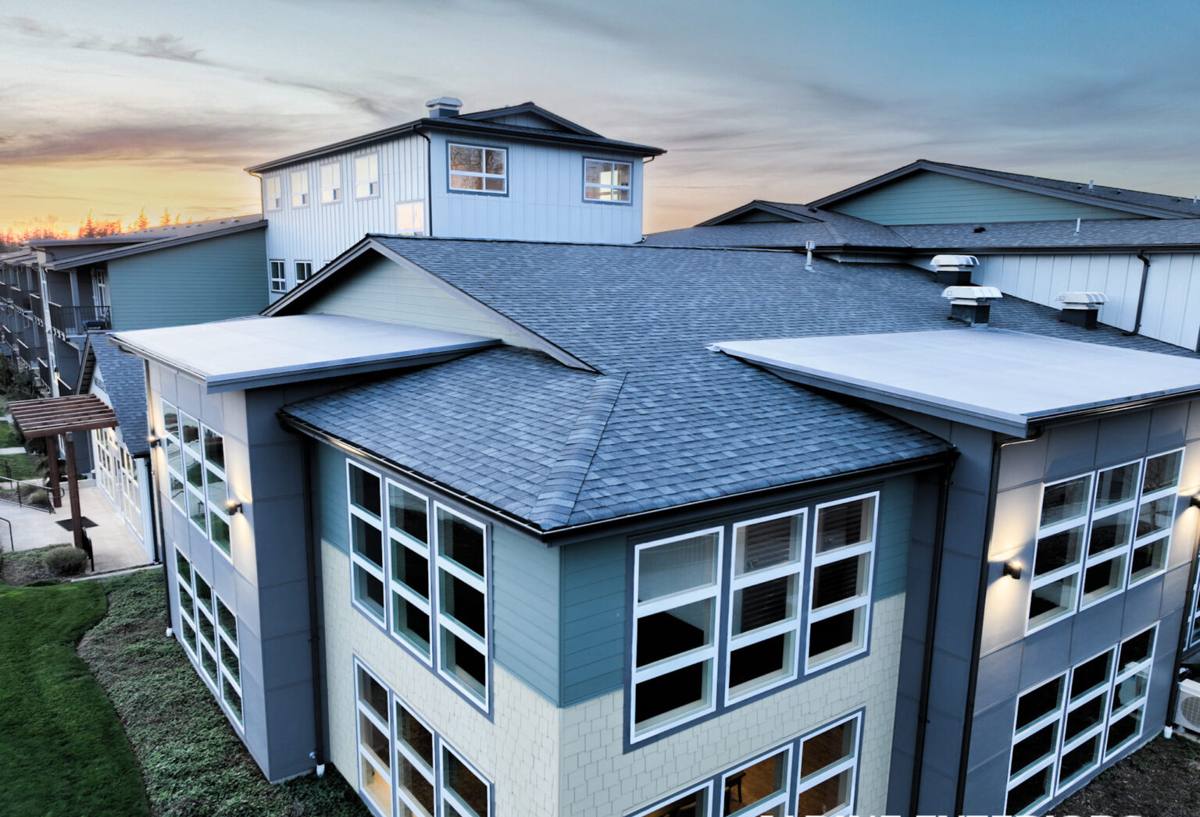
James Hardie fiber cement siding is engineered specifically around climate zones, and that engineering is the reason we install it exclusively. For homes in the Custer and greater Lynden area, that means Hardie's HZ5 product line — formulated for regions with damp, moderate climates where moisture management and durability against organic growth matter more than extreme freeze-thaw cycling. It's non-combustible, resists moisture intrusion far better than wood-based alternatives, and its factory-applied ColorPlus finish is baked on under controlled conditions rather than field-applied, which means far less chalking, fading, and peel risk from salt air over time.
That factory finish matters more here than in a lot of other markets. Field-applied paint on wood or engineered wood siding has to cure and bond in whatever weather shows up that week — not ideal in a county where rain interrupts painting schedules for months at a time. Hardie's ColorPlus coating is cured in a factory environment before it ever reaches your home, so the bond and the finish quality aren't at the mercy of a rainy Whatcom County install window.
What This Means Day to Day for a Custer Homeowner
- Less repeat pressure-washing and scraping to keep moss and algae staining under control
- No repainting cycle every 5-8 years like traditional wood siding typically needs in this climate
- A material that doesn't swell, cup, or rot at butt joints and cut ends the way wood-based sidings can when moisture gets in
- A non-combustible exterior layer, which matters for insurance consideration and peace of mind
What a Correct Installation Actually Involves
The material is only half the equation. Fiber cement siding fails prematurely almost exclusively because of installation mistakes, not product defects — and in a high-moisture climate like this one, those mistakes show up faster and worse. A correct Hardie installation on a Custer home includes:
- Proper weather-resistive barrier and flashing behind the siding, integrated correctly at windows, doors, and any roof-to-wall transitions
- Kick-out flashing at every roofline-to-sidewall intersection, directing water away from the wall plane instead of behind the siding
- Correct clearances — a minimum gap between the bottom of the siding and roof surfaces, decks, and grade, so wicking moisture and splash-back don't sit against the material
- Fastening per James Hardie's published installation manual, including proper fastener type, spacing, and depth — over-driven or under-driven nails are one of the most common causes of early failure
- Correct joint treatment — factory-mitered corners or properly caulked and primed field joints, using sealants rated for the application
- Ventilation behind the cladding where the wall assembly calls for it, so incidental moisture can dry out instead of being trapped
Skip any one of these and you can install genuine James Hardie board and still end up with moisture problems, premature caulk failure, or staining within a few years — which is exactly what we see when we're called out to inspect or repair another crew's work in this area.
Problems We Regularly Find on Existing Siding in This Area
Because we work in and around Custer regularly, certain issues come up again and again on homes with siding that wasn't installed to spec — regardless of what product was used:
| Issue | What Causes It | Why It's Worse Here |
|---|---|---|
| Dark staining and moss growth at shaded wall sections | Poor drying conditions, no gap for air movement | Long, damp moss season gives it months to take hold each year |
| Caulk cracking and pulling away at joints | Wrong sealant, or applied to a dirty/wet surface | Frequent rain cycles stress joints more than drier climates |
| Soft or swollen trim and starter boards | Wood-based products absorbing moisture at cut edges | Salt air accelerates moisture uptake at exposed grain |
| Rust streaking below fasteners | Wrong fastener material for coastal exposure | Salt-laden air corrodes standard fasteners faster |
Most of these are preventable at the install stage. Once they've set in, they usually mean partial or full re-siding rather than a simple patch.
Our Process for a Custer James Hardie Project
We keep the process straightforward and don't skip steps to move faster:
- On-site inspection — we look at existing siding, trim, flashing, and any signs of moisture intrusion before quoting anything
- Tear-off and sheathing check — removing old siding lets us confirm the wall sheathing and weather barrier underneath are sound before covering them back up
- Flashing and moisture barrier correction — we fix or upgrade any flashing details that don't meet code or Hardie's requirements, rather than siding over existing problems
- Installation to manufacturer spec — correct fastening, clearances, and joint treatment throughout, following James Hardie's published guidelines for this climate zone
- Trim, caulking, and finish detail work — the details that determine how the job looks and performs five and ten years out
- Final walkthrough — we go over the finished work with you directly before considering the job done
How James Hardie Compares to Other Siding Options in a Climate Like This
| Material | Moisture Behavior | Maintenance in Salt Air / Moss Climate |
|---|---|---|
| James Hardie fiber cement (HZ5) | Engineered for damp climates; doesn't rot or swell | Occasional wash; factory finish holds color long-term |
| Vinyl siding | Doesn't absorb water, but can warp under heat/cold cycling and gaps allow moisture behind panels | Chalks and becomes brittle faster under salt/UV exposure |
| LP SmartSide / engineered wood | Wood-based core is vulnerable at cut edges and butt joints if any moisture gets in | Requires diligent caulk and finish maintenance to stay ahead of moisture |
| Cedar / primed spruce | Natural wood movement, absorbs moisture readily | Repainting or staining cycle every several years; more prone to moss staining |
Every one of these products has a legitimate place in the market. Our decision to install only James Hardie comes down to what performs with the least long-term maintenance burden in exactly the conditions Custer homes face — not a knock on any single alternative.
Maintaining Your Hardie Siding Once It's Installed
James Hardie siding is low-maintenance, not zero-maintenance. A little attention goes a long way in this climate:
- Rinse the exterior with a garden hose (not a pressure washer aimed directly at joints) once or twice a year to clear salt residue and organic buildup
- Keep gutters clear so overflow doesn't run down the face of the siding repeatedly in one spot
- Trim back vegetation and tree limbs that keep wall sections shaded and damp longer than the rest of the house
- Check caulked joints annually, especially around windows and trim, and have any cracking addressed before winter rains set in
- Watch for any soft spots at the base of walls near grade, decks, or downspouts — early signs of a drainage or clearance issue
Why Local Experience in Custer Matters
A crew that already works this specific pocket of Whatcom County knows what to plan for before the first board goes up — where wind-driven rain typically hits hardest on a given lot orientation, which wall sections stay shaded and damp longest, and what flashing details tend to get missed on older Custer-area homes. That familiarity shows up in fewer surprises during tear-off, fewer callbacks, and a finished install that's built for the specific conditions of your property rather than a generic textbook installation. It also means we're a known, reachable crew if you ever have a question about your siding down the road, not a company that did one job in the area and moved on.
If you're weighing siding options for a Custer home or want a straight answer on whether your current siding is holding up the way it should, we're happy to take a look. Reach out for a free, no-pressure estimate using the form below.