 Lynden Roofing
 Fiber Cement Siding Built for What Ferndale's Climate Actually Does to a Wall
Ferndale sits close enough to open water and the low-lying farmland around the Nooksack that its homes take a specific kind of exterior beating: salt-tinged marine air, rain that arrives sideways more often than it falls straight down, and a moss season that can run most of the calendar year on shaded walls. We work this part of Whatcom County out of our shop in Lynden, and fiber cement siding, specifically James Hardie fiber cement, is the material we've settled on as the one that holds up under all three of those pressures at once, rather than solving one problem while quietly creating another.
This page is about that one product, in this one town: what Ferndale's climate asks of fiber cement siding, what a correct installation actually involves, and why a crew that already works this area on a regular basis tends to get better long-term results than one driving in from farther out.
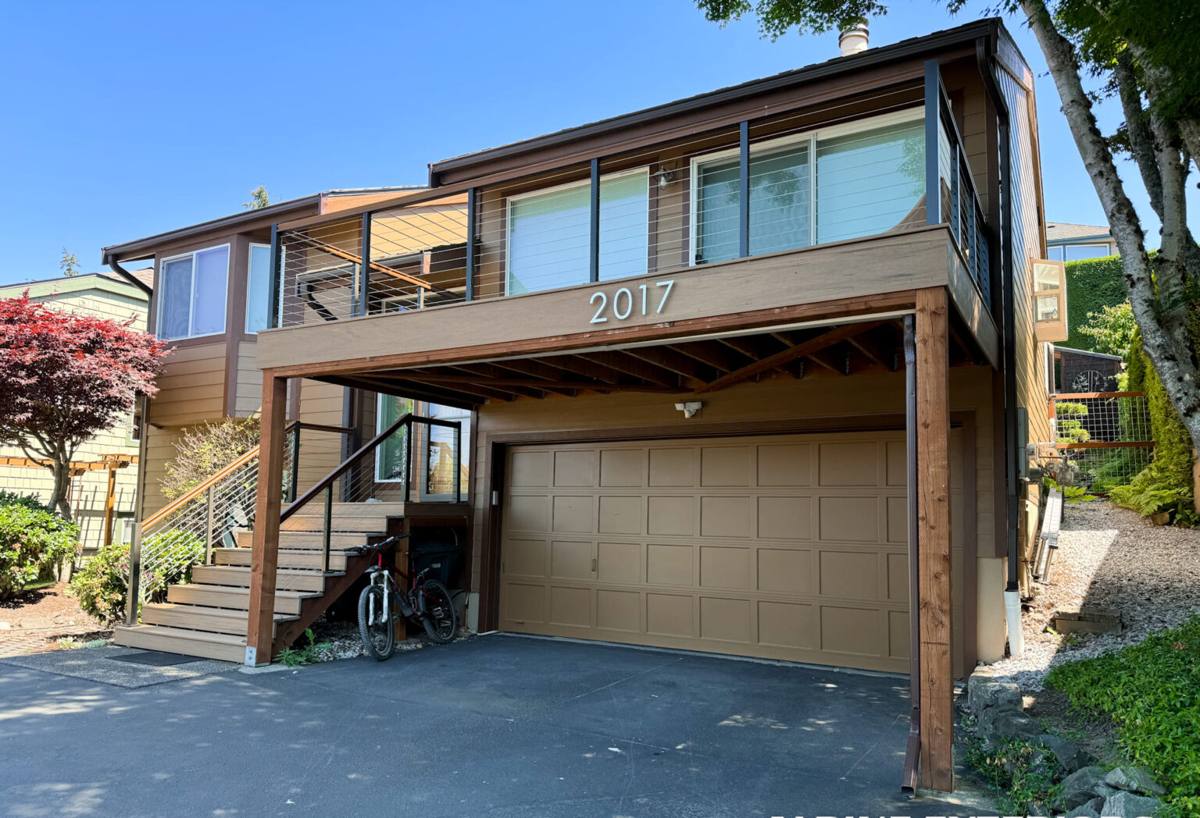
What Fiber Cement Siding Needs to Handle in Ferndale
Salt Air and Corrosion
Homes here don't need to sit right on the shoreline to pick up a steady dose of salt-laden air. That salt exposure accelerates corrosion in fasteners, flashing, and trim hardware, and it can break down lower-grade paint and finishes faster than you'd see in a drier, more inland part of the state. Fiber cement itself doesn't corrode, but the hardware and trim details around it need to be chosen with that same exposure in mind, or the siding ends up looking fine while the fasteners holding it fail underneath.
Sideways, Wind-Driven Rain
Rain in this part of Whatcom County rarely falls straight down. Wind pushes it into wall assemblies at an angle, which puts real stress on lap joints, trim intersections, and anywhere two pieces of siding meet. A siding system that would perform fine in a calm, dry climate can still fail here specifically because water is finding its way in sideways, not from directly above. Fiber cement's dimensional stability helps, but only when the laps, gaps, and sealant details are done correctly in the first place.
A Moss Season That Doesn't Really End
Mild temperatures, tree cover, and consistent moisture add up to a long moss and mildew season across this stretch of the county. North-facing walls and anything shaded by trees or a neighboring structure will grow moss and mildew faster than a homeowner usually expects, and any siding surface that stays damp against the substrate becomes a growth surface over time. Fiber cement resists that kind of surface breakdown far better than porous or wood-based products, but proper drainage behind the siding still matters.
Why We Install James Hardie and Nothing Else
We used to install a broader range of siding products. We narrowed that down to James Hardie fiber cement exclusively, and the reason was practical rather than promotional: it's the system we could keep standing behind, job after job, in this exact climate.
- Non-combustible core: fiber cement doesn't feed a fire the way wood-based siding products can.
- Factory-applied ColorPlus finish: color is baked on under controlled conditions rather than brushed on in the field, so it resists fading and moisture damage far longer than field-applied paint.
- HZ5 formulation: engineered for regions with heavy moisture exposure and freeze-thaw cycling, which fits coastal Whatcom County well.
- Dimensional stability: it doesn't swell, cup, or warp the way engineered wood siding can after repeated wet-season moisture cycles.
- Strong transferable warranty: backed by one of the more robust warranty structures in the industry, provided the installation follows spec.
We won't install LP SmartSide, vinyl siding, Cemplank, Allura, primed spruce, or cedar. Those products all have a legitimate place in the market, and plenty of homeowners are satisfied with them elsewhere. But we made a professional call that in a climate with this much sustained moisture and salt exposure, one system we trust completely beats offering a menu of options that quietly shifts maintenance risk onto the homeowner down the road.
What Correct Fiber Cement Installation Involves
Clearance, Fastening, and Flashing
Fiber cement performs the way it's designed to only when it's installed to spec. That means correct clearance from grade and roof lines so the bottom edge isn't sitting in standing water or splash-back, a fastening pattern that matches the product and substrate, and flashing details at windows, doors, and penetrations that actually direct water out and away rather than trapping it against the wall.
Joints, Laps, and Sealant Details
Given how much of Ferndale's rain arrives at an angle, the lap joints and seams are where a job succeeds or fails over time. Correct overlap, properly gapped and sealed joints, and house wrap that integrates with the siding rather than fighting it are what keep wind-driven rain from tracking behind the wall. These are also the details that are easiest to rush and hardest to inspect once the job is finished, which is exactly why we treat them as seriously as the material choice itself.
| Installation Step | Why It Matters Here | What Goes Wrong If Skipped |
|---|---|---|
| Grade and roofline clearance | Keeps siding out of standing water and roof splash-back common in a wet climate | Bottom courses wick moisture and deteriorate years ahead of schedule |
| Correct fastener pattern and material | Resists loosening and corrosion from salt-tinged marine air | Panels work loose or rust-stain around fastener heads |
| Properly lapped, gapped joints | Sheds wind-driven rain that hits siding at an angle | Water tracks behind the siding at seams and corners |
| Integrated house wrap and flashing | Directs any intruded moisture back out instead of trapping it | Hidden sheathing rot that isn't visible until siding is removed |
| Ventilation and drainage gap | Lets shaded, moisture-prone walls dry out between rain events | Extended dampness that accelerates moss and mildew growth |
How a Fiber Cement Project Runs, Start to Finish
- An in-person walk-through of the home to assess current siding condition, wall orientation, and any moisture-prone areas specific to the lot.
- A substrate check, especially on tear-off jobs, since older siding in this climate often hides sheathing or framing damage that needs to be addressed before new siding goes on.
- Product and ColorPlus color selection, matched to the home and, where relevant, the HZ5 formulation appropriate for this region's moisture and freeze-thaw exposure.
- Installation following manufacturer fastening, clearance, and flashing specifications, not a shortcut version of them.
- A final walkthrough so you can see the completed work and ask questions before we consider the job done.
Signs a Ferndale Home's Siding Needs Attention
- Moss or dark staining that comes back quickly after cleaning, especially on shaded or north-facing walls
- Soft, spongy, or delaminating siding, particularly near the bottom of the wall or around window trim
- Paint that's peeling, bubbling, or chalking well before you'd expect a repaint to be due
- Visible warping, cupping, or gaps opening up at seams and corners
- Cracked or missing sections after a windstorm or wind-driven rain event
- Musty smells or rising energy bills that point to a wall assembly no longer sealing the way it should
Why Being Based in Lynden Actually Matters for a Ferndale Job
We're not driving in from across the state to work in Ferndale. Lynden is a neighboring Whatcom County town, and working this whole area regularly means we see how salt air, wind-driven rain, and moss actually behave on real houses over a full year, not just how a product performs on a spec sheet. That shows up in practical ways: knowing which wall orientations stay wet longest, which flashing details deserve extra time, and how local permitting and inspection expectations run in this county. It also means that if something needs a second look after the job is done, we're a short drive away, not a call center routing you to a subcontractor we've never worked with.
Roofing and Siding, Looked at Together
Siding problems rarely start with the siding itself. A leaking roof valley, a poorly flashed window, or a gutter that's overflowing onto a wall can all show up as siding damage even though the siding is just where the symptom appears. Because we handle roofing alongside siding, we can look at a Ferndale home as one connected exterior system and trace water back to where it's actually getting in, instead of replacing siding that was never the real problem.
Get a Free, No-Pressure Estimate
If your Ferndale home needs new fiber cement siding, repair work, or an honest opinion on what's actually happening behind an aging wall, we're glad to take a look. Use the form below to schedule a free estimate with a crew that already knows this stretch of Whatcom County, no pressure and no upsell script.