 Lynden Roofing
 Building Decks for Custer's Coastal-Influenced Climate
Custer sits close enough to the water and open farmland that homes here take a different kind of weather beating than decks built further inland. You get salt-tinged air rolling off the bay, long stretches of driving rain through fall and winter, and short daylight windows that keep wood surfaces damp for days at a time. A deck built without that reality in mind will show problems within a few seasons: soft spots at the ledger, black streaking on the boards, and hardware that rusts long before the structure underneath actually wears out.
We build and repair decks throughout the Custer area with those conditions as the starting assumption, not an afterthought. That means different fastener choices, different flashing details, and a framing approach that assumes the deck will spend a good part of the year wet.
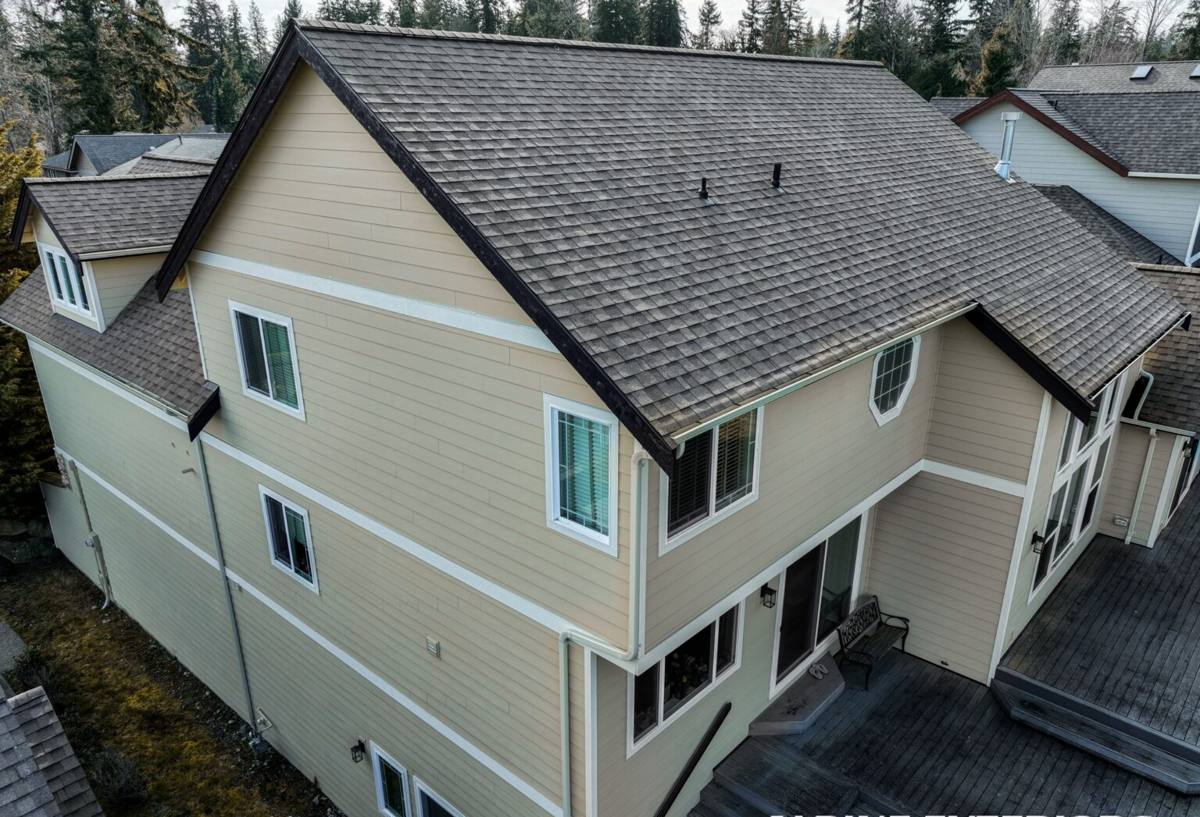
What Local Conditions Actually Do to a Deck
Salt Air and Metal Hardware
Salt-laden air accelerates corrosion on anything metal — joist hangers, screws, bolts, and post bases. Standard electro-galvanized hardware can start showing rust within a couple of years in a coastal-influenced spot like Custer. Once hardware corrodes, it loses holding strength long before it looks bad enough to notice from a casual glance, which is exactly why so many older decks fail at the connections rather than in the boards themselves.
Driving Rain and Water Intrusion
Rain here doesn't just fall straight down — wind-driven rain gets pushed sideways into ledger boards, stair stringers, and any spot where the deck meets the house. If flashing and gapping details aren't done correctly, water works its way behind the ledger and into the rim joist, which is one of the more expensive things to repair because the damage is hidden until the wood is already soft.
Moss, Algae, and a Long Wet Season
Whatcom County's wet season runs long, and shaded or low-airflow decks in Custer can stay damp for weeks without a real drying stretch. That's what feeds moss and algae growth on decking surfaces, and it's not just cosmetic — a mossy deck surface holds moisture against the wood or composite cap, gets slick underfoot, and accelerates surface wear if it's never cleaned off.
Choosing Decking Material for a Custer Property
There's no single "best" decking material — the right call depends on how much upkeep you want to do, your budget, and how exposed the deck is to sun, shade, and wind. Here's how the common options compare for this specific climate:
| Material | How It Handles This Climate | Maintenance | Typical Lifespan |
|---|---|---|---|
| Pressure-treated fir/hem-fir | Good rot resistance when sealed; needs re-staining to shed water and resist moss | Annual cleaning, re-seal every 2-3 years | 15-25 years with upkeep |
| Cedar | Naturally rot- and insect-resistant, ages gracefully in wet weather | Cleaning and oil/stain every 1-2 years to hold color and repel moisture | 20-30 years with upkeep |
| Composite decking | Won't rot or absorb water into the core; caps resist staining but still need cleaning to prevent moss buildup | Periodic wash-down, no sealing/staining required | 25-30+ years, manufacturer warranty backed |
| PVC decking | Fully synthetic, essentially immune to moisture damage; can be slicker when mossy if neglected | Occasional wash-down | 25-30+ years, manufacturer warranty backed |
For a shaded, low-airflow lot — which describes a fair number of Custer properties tucked among trees or outbuildings — we often steer homeowners toward composite or PVC decking, simply because it removes one of the two things (a porous wood surface) that lets moss get a foothold in the first place. On open, sunnier lots, cedar or a well-maintained treated wood deck performs fine and costs less up front.
What a Correctly Built Deck Actually Involves
Footings and Framing
Everything starts below the decking boards. Footings need to be sized and set to local frost and soil conditions, posts need to bear on solid footings rather than resting on grade, and joist spacing has to match the actual decking material — composite and PVC boards typically require tighter joist spacing than solid wood to avoid flexing over time.
Ledger Attachment
Where the deck ties into the house is the single most common failure point we see on older decks in this area. A correct ledger installation uses proper flashing (not just caulk), a gap or drainage plane behind the ledger board so water can escape rather than pool, and structural fasteners rated for the load — not just deck screws.
Fasteners and Connectors
Given the salt air in Custer, we use stainless steel or heavy-coated corrosion-resistant hardware at every structural connection — joist hangers, hurricane ties, post bases, and ledger bolts. It costs more than standard galvanized hardware, but replacing corroded structural hardware later means tearing into a finished deck, so it's worth getting right the first time.
Railings and Stairs
Railing posts need solid blocking behind the rim joist, not just lag bolts into thin decking material. Stair stringers need to be sized for the actual rise and run of the site — Custer lots aren't always flat, and a poorly calculated stair run is both a code issue and a trip hazard.
Drainage and Layout Details That Prevent Moss
A lot of moss and rot problems trace back to layout decisions made before a single board is installed. We design decks in this area with a few specific habits:
- A slight slope away from the house so water sheds off the deck surface instead of pooling near the ledger
- Board spacing sized to let air move underneath and between boards, especially in shaded yards
- Gap or drainage systems under the decking on lower or ground-level decks so water and debris don't collect in the joist bay
- Keeping decking clear of dense overhead foliage where possible, or planning for extra airflow underneath when it isn't
- Post bases set above grade and clear of standing water, not buried in soil or mulch
Our Process for Custer Deck Projects
1. On-Site Assessment
We walk the property, look at sun and shade exposure, existing drainage patterns, and how the new or replacement deck ties into the house. If we're replacing an existing deck, we check the ledger and framing for hidden water damage before quoting anything.
2. Design and Material Selection
We talk through material options honestly, including the maintenance trade-offs, and put together a layout that accounts for drainage, railing code requirements, and how the space will actually be used.
3. Permitting
Most deck projects in Whatcom County require a building permit, particularly for anything attached to the house or built above a certain height. We handle the permit process as part of the job so homeowners aren't left figuring out county requirements on their own.
4. Construction
Footings and framing go in first and get inspected before decking goes down. We don't cover up structural work without it being sound — that's true whether it's getting inspected by the county or not.
5. Final Walkthrough
Before we call a project done, we walk the finished deck with the homeowner, cover basic care for whatever material was installed, and make sure railings, stairs, and gates are solid.
Permits and Whatcom County Requirements
Deck permitting requirements vary by height, size, and whether the structure is attached to the house, so it's worth confirming before assuming a project is exempt. Setback requirements also matter for decks near property lines, which comes up regularly on the smaller, tighter lots you'll find in and around Custer. We factor permit and setback requirements into the design phase rather than treating it as a separate hurdle after the fact.
Deck Maintenance Checklist for This Climate
Whatever material you choose, a little seasonal attention goes a long way toward keeping a Custer deck safe and good-looking through the wet months:
- Sweep debris out of board gaps before fall rains start — trapped leaves and needles hold moisture against the surface
- Scrub down mossy or algae-prone spots at least once a year, more often on shaded decks
- Check and re-seal wood decking on the manufacturer or product's recommended schedule
- Inspect railing posts and stair connections annually for movement or soft wood
- Look at the ledger board area where the deck meets the house for staining, soft wood, or gaps in flashing
- Keep gutters and downspouts near the deck clear so roof runoff isn't dumping extra water onto the structure
Why a Crew That Already Works in Custer Matters
Deck building isn't just carpentry — it's carpentry that has to survive a specific climate. A crew that regularly works in Custer and the surrounding Lynden area already knows which hardware holds up against the salt air, which layouts dry out fastest after a wet week, and which materials are worth the extra cost on a shaded lot versus an open one. That local pattern recognition is hard to replicate from a general contractor who doesn't build here regularly, and it shows up years later in which decks are still solid and which ones needed early repairs.
If you're planning a new deck or replacing one that's showing its age, we're happy to take a look and put together a straightforward, no-pressure estimate — just fill out the form below.