 Lynden Roofing
 Asphalt Shingle Roofing Built for Abbotsford's Climate
Abbotsford sits in the Fraser Valley, close enough to the coast that homes here deal with a steady mix of moisture-laden Pacific air, long stretches of driving rain, and short winter freezes that can catch a poorly maintained roof off guard. Add in the tree cover common to many Whatcom County and Fraser Valley neighborhoods, and you get exactly the conditions that grow moss fastest: shade, dampness, and roofs that rarely get a full day to dry out between storms. Asphalt shingle roofing remains the most practical, cost-effective option for most homes in this area, but only when it's installed with this specific climate in mind, not a generic install job pulled from a warmer, drier region.
We work on homes throughout this part of the Fraser Valley regularly, and the roofs that last the full lifespan of their shingles almost always share the same traits: correct ventilation, careful flashing work, and a shingle spec that matches the exposure of that particular roof, not just whatever's cheapest at the yard that week.
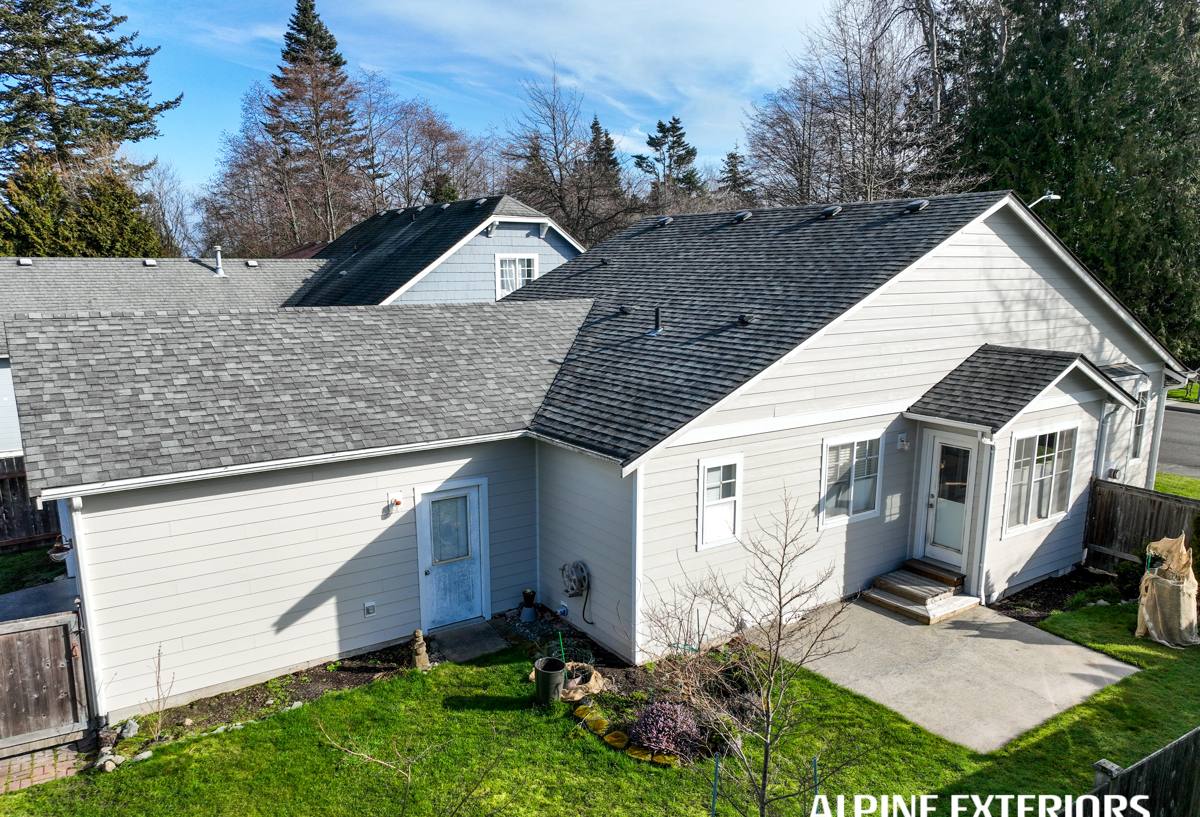
What Driving Rain and a Long Moss Season Do to a Shingle Roof
Wind-Driven Rain
Storms coming through the valley don't always fall straight down. Wind pushes rain sideways and up under shingle edges, which is why proper overlap, sealant strips, and underlayment matter more here than in climates with gentler weather. A roof that looks fine from the ground can still be taking on water at the eaves, valleys, or around penetrations if the original install cut corners on these details.
Moss and Prolonged Dampness
North-facing slopes and roof sections shaded by mature trees stay damp far longer after a rain event than sun-exposed areas. Moss takes hold in that dampness, and once established it does two things: it holds water against the shingle surface longer than the shingle was designed to tolerate, and its root structure works its way under shingle tabs and granules, lifting edges and accelerating wear. Left unaddressed for a full moss season, this shortens the effective life of an asphalt shingle roof noticeably compared to a roof kept clear.
Salt-Tinged Coastal Air
Air moving inland off the coast carries some salt content even this far into the valley, and that moisture combines with metal flashing, fasteners, and vents to accelerate corrosion over time if lower-grade materials were used. It's a slower factor than rain or moss, but it's part of why we spec corrosion-resistant flashing and fasteners as standard, not an upgrade.
What a Correctly Installed Asphalt Shingle Roof Actually Includes
A shingle roof is a system, not just a layer of shingles nailed to plywood. Every layer underneath the visible shingle does specific work, and skipping or shortcutting any of them is where most premature failures start.
- Deck inspection and repair — any soft, delaminated, or water-damaged sheathing gets replaced before anything goes back down, not covered over.
- Ice-and-water shield at vulnerable areas — eaves, valleys, and around chimneys or skylights get a self-adhering waterproof membrane, since these are the spots wind-driven rain and ice find first.
- Synthetic underlayment across the full deck — a second line of defense if wind ever drives moisture past the shingle layer itself.
- Proper flashing at every penetration and transition — chimneys, vent pipes, sidewalls, and valleys are where the majority of leaks actually originate, far more often than the open field of shingles.
- Balanced intake and exhaust ventilation — without this, attic moisture condenses against the underside of the deck, which rots sheathing from the inside and voids most manufacturer shingle warranties outright.
- Correct nailing pattern and fastener count — manufacturer specs exist for wind resistance; under-nailing is one of the most common causes of shingles lifting in a storm.
- Starter strip and ridge cap installed to spec — these are the first and last lines of defense against wind uplift and edge leaks.
Ventilation Deserves Its Own Mention
We see more roofs fail early from poor attic ventilation than from bad shingles. In a climate this damp, a roof deck that can't breathe stays wet longer, which invites rot, mold, and moss growth from underneath as much as from above. Balanced ventilation — enough intake at the soffits and exhaust at the ridge — is not optional in this region; it's part of what makes an asphalt shingle roof perform the way it's supposed to.
Choosing the Right Shingle for a Fraser Valley Roof
Not every asphalt shingle product is built the same, and the right choice depends on the roof's exposure, slope, and how much upkeep the homeowner wants to take on.
| Shingle Type | Typical Lifespan | Best Suited For |
|---|---|---|
| 3-tab (standard) | 15–20 years | Budget-conscious projects, lower-slope simple roofs |
| Architectural (laminate) | 25–30 years | Most Abbotsford-area homes; better wind rating and moss resistance |
| Impact-resistant / algae-resistant blend | 25–30+ years | Shaded lots, north-facing slopes, or homes with a history of moss buildup |
For most properties in this area, we recommend architectural shingles with algae-resistant granules as a baseline. The upfront cost difference over standard 3-tab shingles is modest, and the added wind rating and moss resistance pay for themselves over a damp Pacific Northwest lifespan. On heavily shaded roofs, the algae-resistant granule treatment is worth the small upgrade — it won't stop moss entirely, but it slows regrowth meaningfully.
Our Asphalt Shingle Roofing Process
- On-site inspection — we walk the roof and attic, checking deck condition, existing ventilation, flashing points, and any moss or moisture damage already present.
- Honest scope and written estimate — you get a clear breakdown of what's needed and why, not just a total number.
- Tear-off and deck check — old material comes off completely so we can inspect and repair the deck itself, not install over hidden problems.
- Underlayment, flashing, and ventilation installed to spec — the layers most homeowners never see are the ones we're most careful about.
- Shingle installation with correct fastening and coursing — following manufacturer specifications keeps your warranty valid and your roof performing as designed.
- Final walkthrough and cleanup — including a magnetic sweep for stray nails and a review of the completed work with you.
Maintenance That Actually Extends Roof Life Here
A well-installed asphalt shingle roof in this climate still needs occasional attention. None of it is complicated, but skipping it is how a 25-year shingle underperforms its rating.
- Keep gutters and valleys clear so water has a clean path off the roof, especially before the fall rain season starts.
- Have moss growth treated and removed before it spreads under shingle tabs — early, light treatment is far cheaper than dealing with lifted shingles later.
- Trim back overhanging branches to cut down on the shade and debris that keep sections of roof damp longer than the rest.
- Get flashing around chimneys, vents, and skylights checked periodically — these fail quietly, often without an obvious leak until water damage has already started.
- After any major windstorm, a quick visual check for lifted or missing shingles catches small problems before the next rain gets underneath them.
What Affects the Cost of an Asphalt Shingle Roof
| Factor | Why It Matters |
|---|---|
| Roof size and pitch | Steeper, more complex roofs take longer and require more safety setup |
| Number of layers to remove | Tear-off of multiple existing layers adds labor and disposal cost |
| Deck condition | Rotted or soft sheathing found during tear-off needs replacement before shingles go down |
| Shingle grade chosen | Architectural and algae-resistant products cost more upfront but hold up longer here |
| Ventilation and flashing needs | Older homes often need ventilation corrected or flashing upgraded, not just replaced in kind |
We don't quote a job without seeing the roof in person — a fair estimate depends on the actual condition of your deck, flashing, and ventilation, not just square footage.
Why Hiring a Crew That Already Works Abbotsford, BC Matters
A roof built for a dry climate and shipped as a generic install won't hold up the same way here. Crews who work this stretch of the Fraser Valley regularly know which slopes hold moss longest, where wind-driven rain tends to find its way in during a fall storm, and which flashing and ventilation details actually matter for a roof that has to handle this much sustained moisture year after year. That familiarity shows up in fewer callbacks and a roof that performs the way its warranty promises, not just on install day but a decade in.
If you're weighing a repair against a full replacement, or just want a straight answer about what your current roof needs, we're happy to take a look. Reach out for a free, no-pressure estimate — we'll walk the roof, give you an honest assessment, and lay out your options clearly using the form below.