 Lynden Roofing
 Building New Near the Border: Why Window Installation Timing Matters
Aldergrove, BC sits just across the line from Lynden, and we cross that border regularly for new-construction work. New windows on a new build are a different job than a replacement. On a replacement, the opening already exists and the goal is to work around what's there. On new construction, the window is going into a raw rough opening, and every layer around it — sheathing, house wrap, flashing, siding, interior trim — gets built around the window rather than patched to fit it. Get that sequence wrong and you're not just risking a drafty window; you're risking water finding its way into the wall assembly for years before anyone notices.
That's a bigger deal in the Fraser Valley than it is in a lot of places. Aldergrove gets the same wet-season weather pattern we see on the Whatcom County side of the line, and new-construction windows here need to be installed with that in mind from the first opening, not corrected for later.
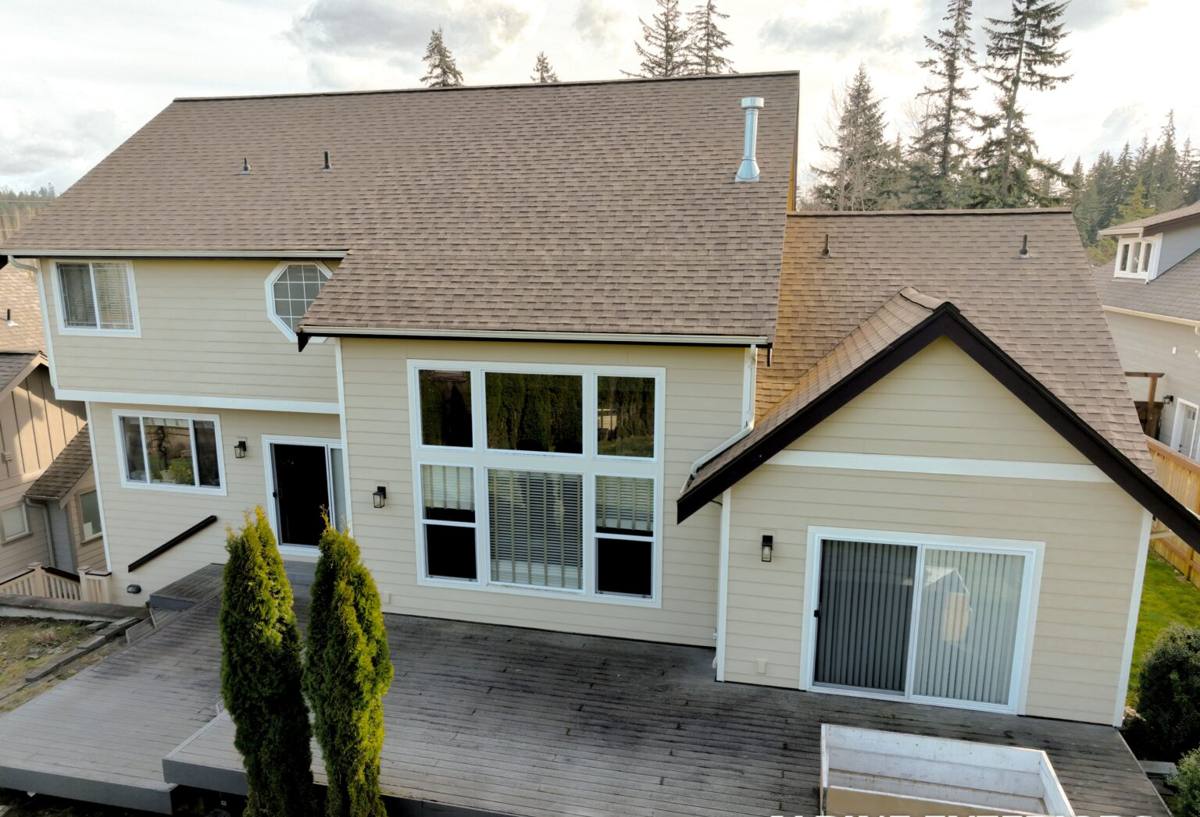
The Local Climate Your Windows Have to Survive
Whatcom County and the Fraser Valley share a climate, not just a border. Marine air moving in off the Salish Sea carries salt content that slowly works on unprotected metal — hinges, screen frames, cheap fasteners — even well inland from open water. Combine that with a wet season that runs long and a rain pattern that's frequently driving and wind-blown rather than straight-down, and you get moisture pushed sideways against the building envelope, not just falling onto the roof.
Then there's moss. On north-facing walls, under eaves, and anywhere sun doesn't reach a window sill or trim board for months at a time, moss and algae take hold. It's mostly cosmetic on siding, but on a window it holds moisture against the sill and trim longer than it would otherwise sit, which shortens the life of caulking, finishes, and any wood trim that isn't properly back-primed or capped.
None of this means Aldergrove needs exotic window products. It means the installation details — flashing laps, sill pans, sealant choice, drainage paths — have to be right, because this climate doesn't forgive shortcuts the way a drier region might.
What a Correct New-Construction Window Install Actually Involves
Rough Opening and Flashing
Before a window ever goes in, the rough opening gets checked for square and level, and the sill gets a sloped or pre-formed sill pan so any water that gets past the window has somewhere to go besides down into the wall framing. Flashing tape goes on in a specific order — sill first, then jambs, then head — so each layer laps over the one below it like shingles. That order is what actually sheds water; installed backwards, flashing tape can trap water instead of directing it out.
House Wrap Integration and Sealants
The window's nailing flange has to be integrated into the house wrap, not just taped over the top of it. The head flashing needs a drip cap or head flashing detail that keeps water from ever reaching the top of the window in the first place, and the sealant used around the exterior needs to be compatible with both the window frame material and the house wrap — the wrong sealant can fail to bond or degrade faster in a wet, cool climate like this one.
Nailing Fin vs. Block Frame Methods
Most new-construction windows in this region use a nailing-fin (flange) frame, which gets fastened directly to the sheathing before siding goes on. Some larger openings or specific wall assemblies call for a block-frame or receptor system instead. Which method is right depends on the wall design and siding type, and it's a decision that has to be made before framing is finalized, not after the fact.
Choosing Window Materials for This Climate
New construction is the right time to think past the sticker price and consider how a frame material handles years of coastal moisture and salt-laced air. Here's how the common options compare for a build in this area:
| Frame Material | How It Handles This Climate | Maintenance |
|---|---|---|
| Vinyl | Good moisture resistance, no corrosion risk from salt air; can expand/contract with temperature swings | Low — occasional cleaning |
| Fiberglass | Very stable in wet, variable climates; strong resistance to warping and corrosion | Low |
| Wood, clad exterior | Interior warmth with a protected exterior face; performs well if cladding and flashing details are correct | Moderate — interior finish upkeep |
| Wood, unclad | Most exposed to driving rain and moisture cycling; needs consistent exterior maintenance | High |
| Aluminum | Durable frame, but more prone to condensation and slower to insulate without a thermal break | Low, but watch for condensation |
We don't push one brand or material on every job. What we do is steer new-construction clients away from unclad wood exteriors and bare aluminum in this specific climate unless there's a strong design reason for it, because the maintenance burden shows up faster here than it would in a drier region.
Coordinating With Your Builder: Our Process
On a new build, windows aren't an isolated project — they have to land in the right slot in the construction schedule. Our process on Aldergrove-area new construction generally runs like this:
- Review the window schedule and rough opening sizes against the architectural plans before anything is ordered, catching sizing conflicts early.
- Confirm frame material, glazing package, and flashing method with the builder so everyone on site is working from the same detail.
- Time delivery so windows arrive after rough framing is inspected but before siding starts, avoiding weather exposure on either end.
- Install with sill pans, flashing tape, and sealants sequenced correctly, checking each opening for square and plumb as we go.
- Walk the exterior with the builder once siding is complete to confirm flashing laps and trim details are undisturbed.
Working directly with the general contractor at each of these steps is what keeps a window install from becoming the reason drywall gets delayed or siding has to be pulled back off later.
Mistakes We Catch on New Builds Before They Become Problems
Most window failures on new construction don't show up for a year or two — by which point the drywall, insulation, and siding are all closed up around the problem. These are the issues worth checking for before that happens:
- Flashing tape applied out of sequence, so water gets directed into the wall instead of out of it
- No sill pan, or a flat sill with no slope to drain water away from the frame
- Sealant applied over dirty or wet surfaces, which prevents proper adhesion
- Nailing fins fastened without enough shims, letting the frame bow under its own weight
- House wrap taped over the flange instead of integrated under and over it in the correct order
- Windows installed before the opening was checked for square, leaving operable sashes that bind or won't seal evenly
Every one of these is invisible from inside a finished house. Catching them requires someone checking the work at the rough-opening and flashing stage, not just at final walkthrough.
What New-Construction Windows Cost — and What Drives the Price
Pricing on new-construction windows depends more on the number and size of openings than almost anything else, but a few factors consistently move the number up or down on Aldergrove-area builds:
| Cost Factor | Effect on Price |
|---|---|
| Frame material (vinyl vs. fiberglass vs. clad wood) | Fiberglass and clad wood run higher than standard vinyl |
| Glazing package (double vs. triple pane, low-E coatings) | Triple pane and upgraded coatings add cost but improve comfort and condensation resistance |
| Window size and configuration (picture windows, large sliders, custom shapes) | Larger and custom units cost more per opening than standard sizes |
| Number of openings on the build | Per-window cost typically drops slightly with larger total orders |
| Flashing and sill pan detailing complexity | Modest added labor cost, offset by far lower risk of moisture problems later |
We'd rather walk through actual numbers for your specific plan set than quote broad ranges that don't mean much without seeing the openings involved.
Why Hiring a Crew That Already Works Aldergrove, BC Matters
Crossing the border for a new build isn't just a logistics detail — it changes what has to be planned ahead of time. Building codes, permitting requirements, and inspection processes on the Canadian side aren't identical to what we follow on jobs in Whatcom County, and a crew that only works one side of the line can miss those differences until they cause a delay. We coordinate window specs, flashing methods, and scheduling with that in mind before the first window is ordered, not after an inspector flags something.
There's also the climate knowledge that only comes from doing this work in the area repeatedly. Knowing which walls on a given lot take the worst of the driving rain, which orientations grow moss fastest, and which sealants actually hold up through a full Fraser Valley wet season isn't something you get from a spec sheet — it's something you learn from doing new-construction installs here, build after build.
Get a Free, No-Pressure Estimate
If you're planning new construction in Aldergrove, BC and want the window package done right the first time — flashed correctly, sequenced with your builder's schedule, and matched to a material that holds up in this climate — we're glad to walk through your plans. Use the form below to request a free estimate, no pressure and no obligation.