 Lynden Roofing
 Roofing Built for the Abbotsford Side of the Border
Abbotsford, BC sits close enough to Lynden that the two share a roof: same weather systems, same soggy winters, same fight against moss. A new roof installation here isn't a generic job you can copy from a dry-climate spec sheet. It has to account for salt-laden air drifting in from the Strait of Georgia, long stretches of driving rain off the Pacific, and a moss season that in some years barely takes a break. Homeowners looking into a full roof replacement in this area need a contractor who treats those conditions as the starting point of the design, not an afterthought.
This page is about one job specifically: new roof installation for Abbotsford, BC properties. Not repairs, not inspections — a full replacement done right for this exact climate.
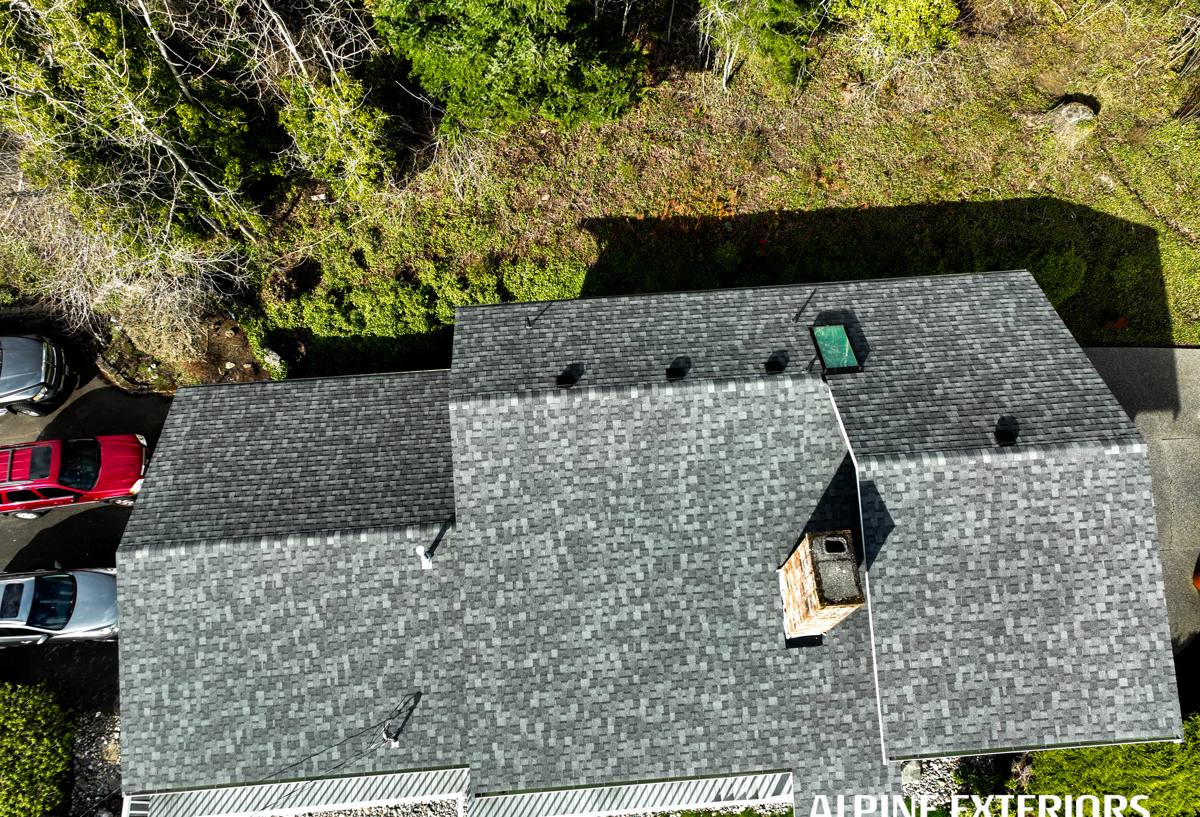
What This Climate Actually Does to a Roof
Understanding the failure patterns first tells you what a correct installation needs to prevent.
Salt Air and Metal Fatigue
Coastal-influenced air carries fine salt particles that accelerate corrosion on unprotected or poorly coated metal — flashing, fasteners, drip edge, vent stacks. A roof spec'd for an inland climate often uses standard-grade metal components that corrode faster here than the shingle field around them, which is how you end up with a roof that looks fine from the ground but is leaking at every metal transition.
Driving Rain, Not Just Rainfall Totals
Whatcom County and the adjacent BC side don't just get a lot of rain — a good share of it comes in sideways during winter windstorms. That matters because driving rain finds weaknesses that straight-down rain never tests: under-lapped shingle courses, exposed nail heads, poorly sealed valleys, and gaps around penetrations. A roof can pass a dry-weather visual check and still fail the first real atmospheric river event of the season.
Moss as a Structural Problem, Not Just Cosmetic
Moss thrives in the shaded, moisture-retentive conditions common under mature evergreen canopy in this region. Left unchecked, moss mats hold water against the roof surface, lift shingle edges, and hold moisture in place long after the rest of the roof has dried. Over a few seasons that constant dampness degrades shingle granules and rots the decking underneath — a much more expensive problem than the moss itself.
What a Correct New Roof Installation Includes
A roof that's actually built for this climate isn't one product choice — it's a stack of decisions that each address a specific failure mode.
Deck Inspection and Repair
Before anything goes down, the decking gets checked for soft spots, delamination, and rot — most often found around old vent penetrations, valleys, and eaves where moisture has been sitting the longest. Any compromised sheathing gets replaced. Skipping this step is the single most common reason a "new" roof leaks within a few years.
Ice-and-Water Barrier at Vulnerable Zones
Self-adhering waterproof membrane belongs at eaves, valleys, and around penetrations — the spots most exposed to wind-driven rain and, during cold snaps, ice damming. This is a small material cost relative to the protection it buys.
Corrosion-Resistant Metal Components
Flashing, drip edge, and fasteners specified for coastal-adjacent exposure rather than generic inland-grade hardware. This is one of the easiest places for a rushed installation to cut corners because the difference isn't visible until years later.
Ventilation Sized for Moisture Control
Balanced intake and exhaust ventilation keeps moist air from condensing against the underside of the deck. In a climate this damp, ventilation isn't optional trim — it's part of what keeps the deck dry from the inside as much as the roofing keeps water out from the outside.
Underlayment That Handles Prolonged Wetting
Synthetic underlayment rated for extended moisture exposure, installed with proper laps oriented to shed wind-driven rain rather than trap it.
Material Choices for This Region
There's no single "best" roofing material — the right choice depends on the home's roof pitch, budget, and how much moss and moisture resistance the owner wants to prioritize.
| Material | How It Handles This Climate | Maintenance Reality |
|---|---|---|
| Architectural asphalt shingle | Good performance when installed with proper underlayment and metal detailing; algae-resistant granules help slow moss and staining | Periodic moss removal recommended; most common choice regionally |
| Metal roofing (standing seam) | Sheds driving rain and moss buildup very well due to smooth, low-friction surface; long service life | Low ongoing maintenance; higher upfront cost |
| Cedar shake | Traditional look but holds moisture longer than other options in shaded, damp conditions, which increases moss and rot risk | Requires more frequent treatment and moss management to hold up here |
| Synthetic composite shingle | Resists moisture absorption well; consistent performance across wet seasons | Moderate maintenance; newer to the market than asphalt or metal |
We'll walk through these trade-offs against your specific roof — pitch, tree cover, sun exposure, and budget all factor into which material actually makes sense for your property.
Our Installation Process
- On-site assessment. We look at the existing roof, decking condition, ventilation, and specific exposure factors — tree cover, prevailing wind direction, drainage patterns around the home.
- Written estimate and material walkthrough. You get a clear scope of work and honest material options, not a one-size-fits-all quote.
- Tear-off and deck inspection. Full removal of the old roofing so the deck can actually be inspected, not just assumed sound.
- Deck repair as needed. Any rotted or soft sheathing is replaced before new roofing goes down.
- Waterproofing and metal work. Ice-and-water membrane at vulnerable zones, corrosion-resistant flashing and drip edge installed correctly at every transition.
- Ventilation check. Intake and exhaust ventilation confirmed or upgraded to balance airflow.
- Roofing installation. Underlayment and finish material installed to manufacturer spec, with attention to nailing patterns and exposure — the details that matter most in driving rain.
- Final walkthrough. We review the completed work with you before calling the job done.
Why a Crew That Already Works Abbotsford, BC Matters
Roofing crews that mostly work drier or more inland markets don't always default to coastal-grade detailing unless asked — it's not their daily habit. A crew that regularly works this specific area, spanning Whatcom County and the Abbotsford side of the border, treats salt-air metal specs, driving-rain detailing, and moss-resistant material choices as standard practice rather than an upsell. That familiarity also means a more accurate estimate the first time, because we've seen how roofs in this exact area actually age, not just how a spec sheet says they should.
Signs Your Current Roof May Need Full Replacement
- Shingles that are cupping, curling, or losing granules across large sections rather than a single spot
- Persistent moss or algae staining that returns quickly after cleaning
- Soft or spongy spots when walked on, indicating deck damage underneath
- Daylight visible through the roof deck from inside the attic
- Leaks that show up in more than one location, especially near valleys or penetrations
- A roof approaching or past the upper end of its material's expected service life
- Rising energy bills tied to poor attic ventilation or insulation performance
Any one of these can sometimes be addressed with a repair. Several together, especially on an older roof, usually point toward full replacement being the more cost-effective long-term move.
What Affects the Cost of a New Roof Here
| Factor | Why It Matters in This Area |
|---|---|
| Roof size and pitch | Steeper pitches and larger roof areas require more material and labor time |
| Number of layers to remove | Multiple existing layers add tear-off time and disposal cost |
| Deck condition | Rot from long-term moisture exposure means sheathing replacement, which adds material and labor |
| Material selection | Asphalt, metal, and composite options carry different upfront costs and long-term maintenance needs |
| Ventilation upgrades | Homes with inadequate ventilation may need added intake or exhaust components |
| Tree cover and access | Heavy canopy common in this region can affect moss buildup history and job site access |
We give straightforward, written estimates so you know exactly what's driving the number — no vague allowances hiding in the fine print.
Timing a Roof Replacement Around the Weather
Roofing can be done through most of the year here, but scheduling around the wettest stretches of winter reduces weather delays and gives new materials better conditions to seal properly during installation. If your roof is showing signs of trouble, it's worth getting an assessment before the next round of driving rain finds every weak point for you.
If you're weighing a new roof for your Abbotsford-area home, we're happy to take a look and give you a straightforward, no-pressure estimate. Use the form below to get started.