 Lynden Roofing
 Window Replacement in Deming: Built for the Nooksack Foothills
Deming sits along the North Fork Nooksack River corridor in the Whatcom County foothills, on the route that carries traffic up toward Mount Baker. It's a different setting than the open farmland and valley floor closer to Lynden — more tree cover, more shade, more properties tucked against timber and riverbank. That difference matters for windows specifically. Deming doesn't take direct ocean spray, but it sits inside the same marine-influenced weather system that moves damp, salt-tinged air up the valley from the Sound, and the added forest canopy around many Deming properties creates shade patterns that keep window frames and sills wet longer after a storm than they'd stay on a sun-exposed lot closer to town.
Lynden Roofing Co works roofs, siding, and windows throughout this part of Whatcom County, and windows get the same standard we hold roofs to: the product matters less than whether water is actually being managed correctly at every seam. A roof and a window face the same basic problem — keeping a house dry under sustained wind-driven rain — and a lot of what we know about flashing, lapping, and drainage on a roof carries directly into how we approach a window opening. On a Deming home, where trees hold moisture against the building longer than they would on an open lot, that installation discipline is what actually determines whether a window lasts.
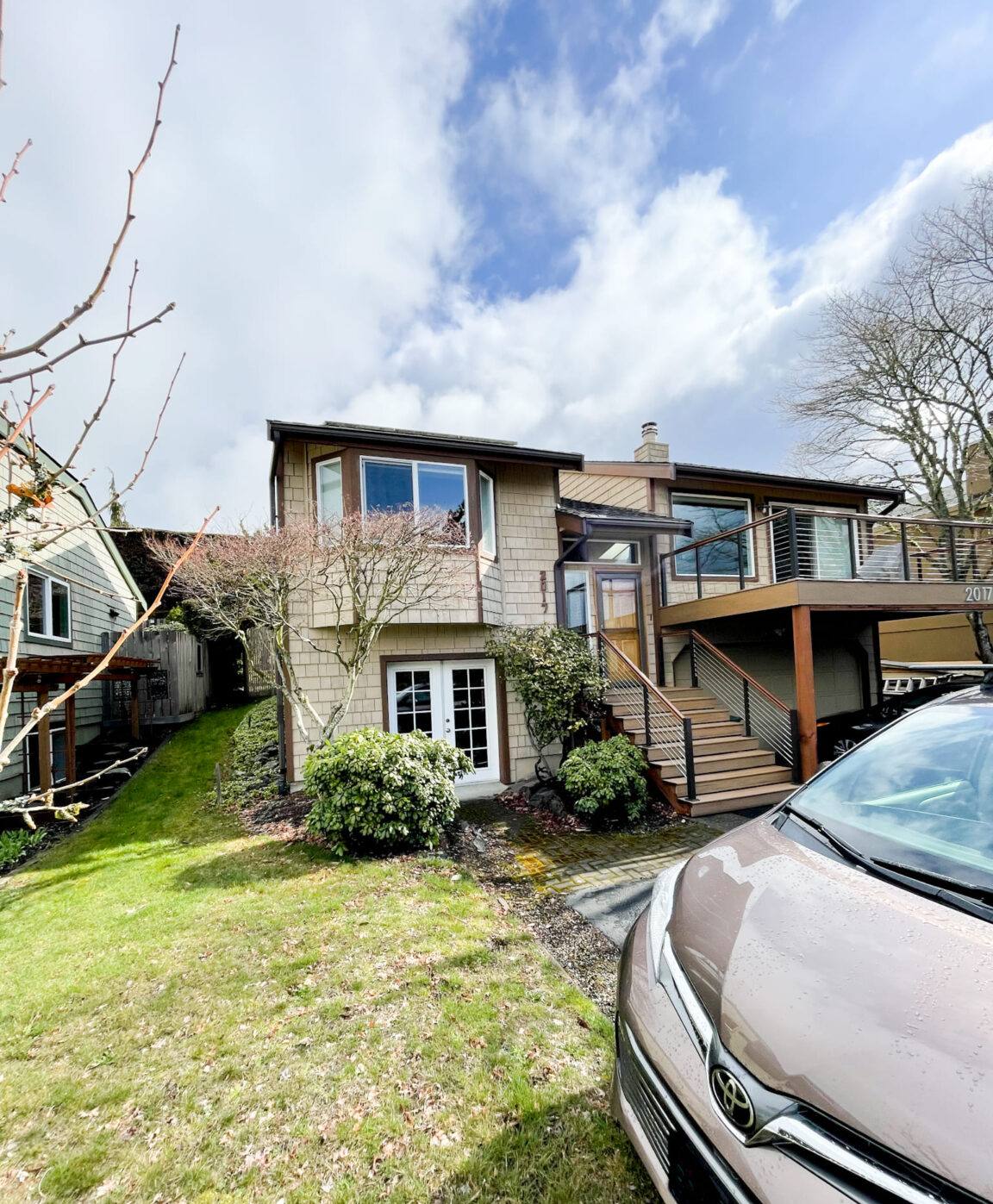
What Deming's Climate Does to Windows
Salt-Tinged Air, Diluted but Still Present
Deming is well inland and up in elevation compared to Whatcom County's waterfront communities, so it doesn't see the same direct salt exposure a Birch Bay or Drayton Harbor property does. But the marine air mass that defines this region's weather doesn't stop at the coastline — it moves up the Nooksack valley on the same storm systems that bring the county's rain. Over years, that steady low-level exposure still accelerates corrosion on lower-grade window hardware, screen frames, and fasteners, especially on window elevations that face prevailing weather.
Wind-Driven Rain Off the Foothills
Rain moving up a river valley toward higher ground tends to get pushed and funneled by the terrain, and Deming's position closer to the foothills means storms often arrive with more sustained wind than they would on flatter ground closer to the coast. That wind drives rain sideways into window flashing and sill details rather than letting it fall straight down and shed away cleanly. It's a heavier test of installation quality than a simple rainfall number suggests.
A Long, Shaded Moss Season
The tree cover that gives many Deming properties their character also works against window durability. Shaded walls and window openings under mature evergreens stay damp far longer after a storm than an open, sun-exposed wall does, and that extended dampness is exactly what moss, algae, and mildew need to establish themselves. On older windows, that shows up as green or black growth in sill corners and frame joints, areas that rarely get direct sun long enough to dry out between wet spells.
Temperature Swings and Interior Condensation
Whatcom County's damp, mild winters create a real gap between warm interior air and cold, wet glass, and that gap drives condensation on window panes and frames. In a heavily wooded setting like Deming, homes often run a bit cooler and shadier through the day, which can make interior condensation on aging or poorly sealed windows worse rather than better. Persistent fogging or moisture on interior sills is usually a sign of a failed seal, not just a humidity problem to ignore.
Signs a Deming Home Needs Window Attention
Most window problems in this climate build slowly, over several wet seasons, before they become obvious. Worth checking for:
- Fogging or visible moisture trapped between the panes of a double-pane window
- Soft, discolored, or visibly rotted wood at the sill or lower frame corners
- Green or black staining in shaded frame joints and sill corners that doesn't wash off
- Drafts or cold spots near the frame even with the window fully closed and locked
- Hardware that's stiff, corroded, or harder to operate than it used to be
- Visible gaps or daylight where the frame meets the surrounding siding or trim
- Paint or finish failing faster on shaded, tree-covered elevations than on sun-exposed ones
Repair vs. Replacement: How We Make the Call
Not every window on a Deming property needs to come out. We look at frame condition, hardware function, and how much moisture damage has actually reached the framing before recommending anything, and we'll say so plainly when repair is the more sensible answer.
| Condition | Repair Usually Makes Sense | Replacement Usually Makes Sense |
|---|---|---|
| Fogged glass, sound frame and hardware | Yes — reglaze or seal replacement | Only if the frame is also compromised |
| Moss or mildew staining on an otherwise sound frame | Yes — cleaning and finish restoration | Not on its own |
| Soft or rotted wood at the sill or jambs | Rarely a lasting fix | Yes |
| Persistent drafts traced to flashing, not the sash | Sometimes, if flashing can be corrected in place | Yes, if the frame itself is the source |
| Single-pane glass with no storm window | Short-term option only | Yes, for real comfort and efficiency gains |
What a Correct Installation Actually Involves
Flashing Is the Job, Not an Add-On
We spend more time on flashing detail than on window brand, because in a shaded, wind-exposed setting like Deming, flashing is what separates a window that stays dry for decades from one that starts leaking within a few wet seasons. That means a sill pan pitched to shed water outward instead of letting it pool under the frame, head flashing lapped correctly into the housewrap above the opening, and jamb flashing tied into the surrounding wall assembly rather than relying on caulk as the only barrier. Caulk has a place in this work, but it's a supplement to proper flashing, never a substitute for it — caulk alone cracks and fails well before a properly lapped flashing detail does.
Common Mistakes We Find on Older Deming Homes
On repair calls in this area, the water damage we find almost never traces back to the window unit itself failing. It traces back to flashing that was never lapped correctly when the window went in, weep holes that got sealed shut during a past re-caulking, or a sill pan that was skipped entirely. Those are installation shortcuts, and they're avoidable with the right sequence of work — which is exactly why we treat flashing and drainage as standard practice on every window we install, not something a homeowner has to specifically ask for.
Choosing Windows for a Foothills Property
There's no single right window for every Deming home — sun exposure, how sheltered or exposed the lot is, and budget all factor in. What matters most is understanding the real trade-offs before deciding, not picking a name off a brochure.
- Frame material: Vinyl and fiberglass both resist rot in a way uncladded wood frames don't, which matters on a shaded lot where moisture sits against the frame longer between dry spells.
- Glazing package: Double or triple-pane glass with a low-E coating helps with both energy performance and reducing the interior condensation that shows up more on cooler, shaded homes.
- Hardware grade: Corrosion-resistant hardware holds up longer against the marine-influenced air that reaches this far up the valley than standard-grade hardware does.
- Finish and maintenance: On a heavily treed lot, a low-maintenance frame finish matters more than it would on an open, easy-to-access wall — you don't want a window that needs annual attention you can't easily get to.
- Warranty structure: A manufacturer's product warranty is only as good as the installation behind it. We stand behind our installation work separately from whatever coverage the window manufacturer provides.
Why a Crew That Already Works Deming Matters
A contractor who only works the open, flatter parts of Whatcom County doesn't necessarily plan for how differently water behaves on a shaded, wind-exposed foothills property. Trees change how long a wall stays wet after a storm. Elevation and terrain change how hard wind-driven rain hits a window opening. Those are decisions that show up in the small details — how much lap a flashing gets, whether a sill pan is pitched correctly, which hardware grade gets specified — and they're the details that determine whether a window installation holds up for one wet winter or several decades. We handle roofs, siding, and windows across this same corridor, which means the crew doing your window flashing understands how it needs to tie into the roof and wall system around it, not just how to set a window square in an opening.
Our Process
We start with an on-site look at the existing windows — checking frame condition, seal integrity, hardware function, and how the current flashing ties into the siding and trim around each opening. From there we give a straightforward read on which windows are reasonable repair or restoration candidates and which make more sense to replace, along with a written scope before any work begins. Flashing, sill pans, and drainage detailing are standard on every job we do, not an upsell.
Window orders for custom-sized openings can take several weeks to arrive once measured, so we build that lead time into the schedule up front rather than letting it surprise anyone partway through a project. Installation itself is usually a single day per window on most homes, with larger multi-window jobs taking a bit longer depending on scope.
If you're dealing with drafty, foggy, moss-stained, or hard-to-operate windows on a Deming property — or you're just not sure whether repair or replacement is the right call for your situation — we're happy to take a look and give you an honest read. Reach out below for a free, no-pressure estimate.