 Lynden Roofing
 Composite Decking Built for Everson's Weather, Not Against It
Everson sits in the same wet, moss-prone corner of Whatcom County as the rest of our service area, and decks here take a beating that homeowners in drier climates never have to think about. Long stretches of drizzle, heavy moss growth on anything shaded, and the marine-influenced air that rolls through this part of Washington all work against a deck's finish and structure year-round. Composite decking was built for exactly this kind of punishment, but only when it's installed correctly. A composite deck put together the wrong way will still trap moisture, still grow moss in the seams, and still fail early — the material is only as good as the installation underneath it.
We work on homes throughout Everson and the surrounding Lynden area, and the decks we see failing early almost always have the same root causes: poor drainage under the boards, framing that wasn't treated or spaced for ventilation, and fastening systems that trap water instead of shedding it. This page covers what a composite deck actually needs to hold up here, what our installation process looks like, and what you should expect to maintain once it's built.
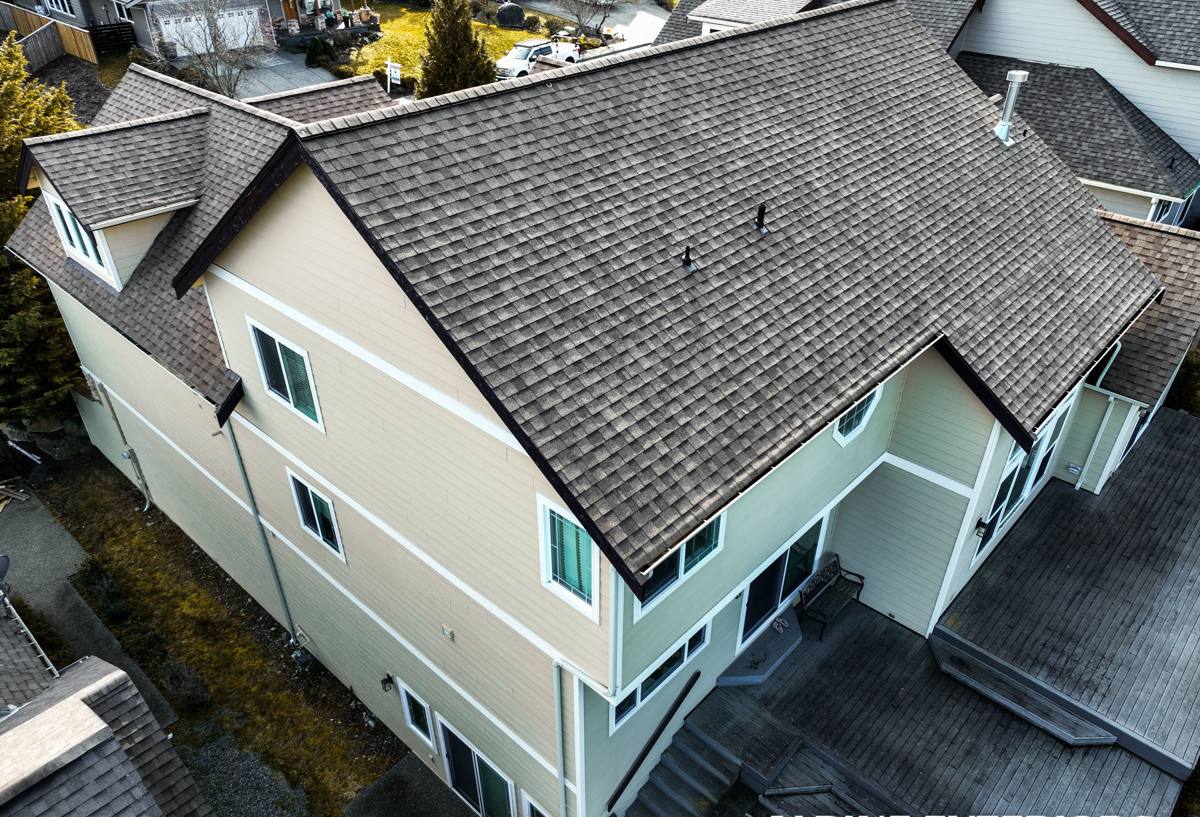
What Whatcom County Weather Does to a Deck Over Time
Moss and Algae in the Shade
Everson gets the same long, damp shoulder seasons as the rest of Whatcom County — wet falls that run into wet springs with limited sun to dry things out in between. Any deck surface that sits in shade for part of the day, whether from the house itself, fencing, or nearby trees, will collect moss and algae if the material and the airflow underneath aren't working together. On wood decks this moss holds moisture directly against the boards and accelerates rot. On composite decking, moss mostly grows on the surface and in the grooves between boards, which is easier to manage but still needs the right board profile and regular cleaning to stay ahead of.
Moisture Cycling and Freeze-Thaw
Whatcom County doesn't get brutal winters, but it does get repeated cycles of rain, cold snaps, and thaw through the winter months. Water that gets into a board, a fastener hole, or a joist connection and then freezes will expand and work joints loose over several seasons. This is less of a concern with solid composite boards themselves, but it's a real concern for the framing, ledger connections, and any wood components underneath a composite deck if they aren't detailed for drainage.
Driving Rain and Wind-Blown Moisture
Storms coming through this part of Washington often bring rain at an angle, not just straight down, which pushes moisture into places a simple roof or overhang wouldn't normally protect. Deck ledger boards where they meet the house, stair stringers, and any area near a wall are especially exposed to this. Flashing and gapping details matter more here than they would in a climate with mostly vertical rainfall.
Composite Decking vs. Wood: What Actually Matters in This Climate
We install both wood and composite decking, and we're straightforward with homeowners about the trade-offs rather than pushing one product over the other. For Everson's climate specifically, composite tends to hold up with less ongoing work, but it isn't automatically the right call for every budget or every homeowner's preferences. Here's how the two compare on the factors that matter most given our weather:
| Factor | Composite Decking | Pressure-Treated Wood |
|---|---|---|
| Moisture absorption | Very low — most boards are capped and don't swell or cup | Absorbs water; can cup, warp, or split as it dries and re-wets |
| Moss and algae | Grows on the surface only; rinses or scrubs off relatively easily | Moss holds moisture against the wood, accelerating rot in shaded areas |
| Refinishing needs | None — no staining or sealing required | Needs re-staining or sealing every 1-3 years to stay protected |
| Upfront cost | Higher material cost | Lower material cost |
| Long-term cost | Lower over 15-20 years — little to no annual maintenance spend | Higher over time once repeated refinishing and repairs are factored in |
| Appearance consistency | Color and texture stay consistent for the life of the product | Grays and weathers unless maintained on schedule |
The honest summary: if you're willing to stay on top of annual staining and accept some board replacement over time, treated wood can work fine here. If you'd rather not think about the deck once it's built, composite is the better fit for this climate.
What a Correct Composite Deck Installation Involves
Framing and Substructure
Composite boards are only as good as what's underneath them. We use framing lumber rated for ground contact or exposure where appropriate, and we pay close attention to ledger board attachment and flashing where the deck meets the house — this is the single most common point of hidden water damage on decks in our area, composite or wood. Joist spacing also matters more with composite than with wood; composite boards have their own deflection characteristics, and manufacturers specify tighter joist spacing in many cases, especially for boards installed at an angle or in high-traffic areas.
Drainage and Ventilation Underneath
A deck that sits low to the ground or over a patio needs a real plan for where water goes once it passes between the boards. We build in the gapping, slope, and airflow the substructure needs so moisture doesn't pool and sit against joists or ledger connections through the wet months. This is one of the details that separates a deck that lasts 20+ years from one that starts showing framing problems in five.
Fastening and Board Layout
Most composite systems use hidden fastener clips rather than face-screwing, which keeps water from sitting in screw heads and gives a cleaner look. Board direction, seam placement, and picture-framing around the perimeter all affect both the finished look and how well the deck sheds water at the edges. We lay boards out to minimize butt joints in high-visibility areas and to keep end grain protected where it's exposed to weather.
Choosing the Right Composite Product
Composite decking isn't one product — there's a real range in quality and construction, and it affects how a deck performs here specifically.
- Capped composite: boards with a protective outer shell over a composite core. This is what we recommend for most Everson installations because the cap resists moisture absorption, staining, and fading better than uncapped material.
- Uncapped composite: older-style composite without the protective shell. It costs less but absorbs more moisture over time and is more prone to surface mold in consistently damp, shaded spots — a real consideration given how much shade and moisture this area gets.
- Board profile and grain texture: deeper embossed textures hide dirt and light moss buildup better than smooth boards, which matters on decks that don't get much direct sun.
- Warranty structure: most manufacturers offer meaningfully longer warranties on capped products than uncapped ones — a good signal of how the manufacturer itself views long-term performance in wet climates.
We'll walk you through the specific product options and their trade-offs during your estimate rather than pushing one line — the right choice depends on your budget, how much shade the deck gets, and how the space will be used.
Our Process, From Estimate to Finished Deck
We keep this straightforward. A crew member comes out to look at the site, takes measurements, and talks through what the space needs to hold up — ledger condition, drainage, sun exposure, and how you plan to use the deck. From there we put together a written estimate with material options so you can compare capped versus uncapped, and different price points, without pressure. Once you approve the scope, we handle permitting where required, demo of any existing structure, framing, and installation, then a final walkthrough before we consider the job done. We clean up the site fully before we leave — no leftover fasteners or debris sitting in the yard.
Maintenance: What Everson Homeowners Actually Need to Do
Composite decking is low-maintenance, not no-maintenance. Given the moss and moisture this area sees, a simple seasonal routine keeps a composite deck looking and performing the way it should for decades:
- Sweep debris and fallen leaves off the deck regularly, especially in fall — trapped organic matter is what feeds moss and algae growth
- Rinse the deck surface with a garden hose every few weeks during wet months to keep spores from taking hold
- Use a soft-bristle brush and a mild soap-and-water solution (or a composite-safe cleaner) on any spots where moss or algae have started — avoid pressure washers on high settings, which can damage the board's cap
- Check gaps between boards once or twice a year and clear out any built-up debris so water keeps draining properly
- Inspect fastener clips, railing connections, and stair treads annually for any movement or looseness
- Keep gutters and downspouts near the deck clear so runoff isn't dumping directly onto or under the deck surface
Why Hiring a Crew That Already Works in Everson Matters
A lot of decking problems we get called out to fix started with a crew that installed the deck the same way they would in a dry climate — tight board spacing, no real drainage plan, ledger flashing that was an afterthought. That approach might hold up fine somewhere with less rain and less moss pressure, but it doesn't hold up here. Working across Whatcom County day in and day out means we're building in the drainage, ventilation, and flashing details that this specific climate demands, not applying a generic installation and hoping it holds. We also know the permitting expectations and inspection process for decks in this part of the county, which keeps projects moving without surprises.
If you're weighing composite decking for a home in Everson, we're happy to come take a look, walk the site with you, and put together a straightforward, no-pressure estimate using the form below.