 Lynden Roofing
 Window Installation Built for Deming's Weather
Deming sits inland from Lynden, back toward the Mount Baker foothills in Whatcom County, and while it doesn't take the direct spray that our waterfront service areas see, it still sits inside the same marine-influenced weather system that shapes exterior work across this whole corner of Washington. Salt-tinged air moves up the valley, rain arrives wind-driven more often than it falls straight down, and mild, damp conditions give moss a long season to settle into anything shaded or slow to dry. A window sits right at the seam between the inside of a house and all of that weather, so how it's installed matters at least as much as which window you buy.
This page covers window installation specifically for Deming homes — what the local climate demands from an installation, what a correct job actually involves, and how our process works from first look to final walkthrough.
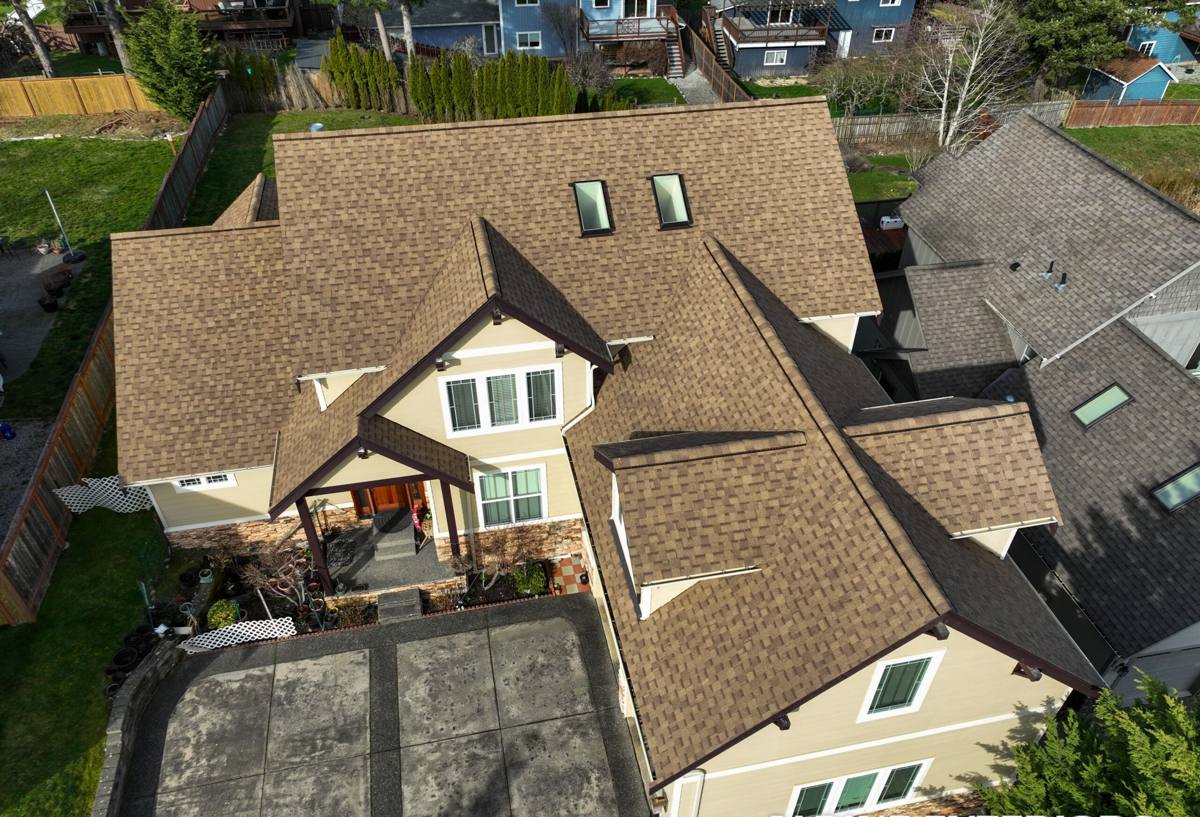
What Deming's Climate Demands From a Window Installation
Salt-Tinged Air and Hardware Corrosion
Even well inland, this part of Whatcom County gets a steady dose of salt-carrying marine air working on window hardware, screen frames, and fasteners over time. Budget hardware finishes tend to show pitting or stiffness first, especially on elevations that face prevailing weather, which is why we specify corrosion-resistant hardware and fasteners as a default rather than an upgrade.
Wind-Driven Rain and Sill Drainage
Rain in this region rarely falls straight down onto a window. Wind pushes it sideways and sometimes upward into the gap between the frame and the wall, which means the sill beneath every window needs a real drainage path outward, not just a bead of caulk holding things together. A sill that's flat instead of pitched will eventually let water sit against the frame.
A Long Moss Season and Trapped Moisture
Shaded walls and window sills that don't drain well hold moisture longer here than they would in a drier climate, which feeds moss and mildew growth and, over years, slow rot at the sill and lower corners of the frame. Trees and hillside shade common around Deming properties can keep some window sills damp well after the rest of the house has dried out, which is exactly the kind of detail a local crew learns to watch for.
Signs a Deming Home's Windows Need Attention
Windows fail slowly, and most homeowners notice the symptoms years before they connect them to the window itself. Watch for:
- Drafts you can feel near the frame even when the window is fully latched
- Fogging or a milky haze between the panes of a double-pane window (a sign the seal has failed)
- Wood trim, sills, or the framing around the window that feels soft or shows staining
- Windows that are hard to open, close, latch, or that have started sticking
- Visible daylight or gaps between the frame and the wall
- Paint or caulk around the frame that's cracked, peeling, or pulling away
- A noticeable jump in heating costs with no other clear explanation
Any one of these on its own isn't necessarily an emergency, but a window showing two or three of them is usually past the point where a repair makes more sense than a replacement.
Replacement Options for an Existing Home
Insert (Pocket) Replacement
When the existing frame is still square, solid, and free of rot, a new window can often be installed inside the old frame, leaving the surrounding siding and trim undisturbed. It's faster, less invasive, and usually less expensive, which makes it the right call for a lot of Deming homes where the original construction was sound and the only real problem is an aging window unit.
Full-Frame Replacement
When the old frame shows rot, the opening has shifted out of square, or there's evidence of water having gotten behind the siding, a full-frame replacement is the honest recommendation even though it costs more and takes longer. This approach removes the window down to the rough opening, which is the only way to actually inspect and repair any hidden damage and rebuild the flashing correctly rather than sealing a new window against a compromised opening.
We'll tell you plainly which category your windows fall into once we've opened things up enough to see the framing, rather than defaulting to whichever option is faster to sell.
What a Correct Window Installation Involves
The install sequence is where most long-term window problems actually get decided, long before anyone notices a leak.
Removing the Old Window and Inspecting the Opening
The old unit comes out carefully, and the opening gets inspected for rot, water staining, or framing damage before anything new goes in. This is the point where hidden problems either get caught and fixed or get sealed up behind a new window to resurface later.
Sill Pan and Flashing
A properly pitched sill pan goes in first, sloped to carry any water that gets past the window outward and away from the framing rather than letting it pool. Flashing at the jambs and head gets layered in the correct shingle-lap order so water draining down the wall moves past the window, not behind it.
Setting, Shimming, and Fastening
The new window gets set level, plumb, and square, shimmed correctly so it isn't racked or under stress, and fastened per the manufacturer's specification.
Air Sealing and Insulation
The gap between the window frame and the rough opening gets sealed and insulated from the inside without trapping moisture against the framing, which keeps the assembly both efficient and dry.
Exterior Trim, Caulking, and Finish
Exterior trim gets reset or replaced, and caulking goes only where it belongs in the system, not as a substitute for flashing that was skipped underneath.
Comparing Frame Materials
Budget, sun exposure, and how long you plan to stay in the home all factor into the right choice. Here's how the common options hold up in this climate.
| Frame Material | Moisture & Corrosion Behavior | Typical Maintenance | Realistic Lifespan Here |
|---|---|---|---|
| Vinyl | Won't rot; performs well when installation is correct | Low; occasional track and weep-hole cleaning | 20-30 years |
| Fiberglass | Dimensionally stable, resists moisture and corrosion well | Low | 30-40+ years |
| Wood, clad exterior | Attractive interior finish; clad exterior protects the wood from direct weather exposure | Moderate; interior finish upkeep only if unclad | 20-30+ years depending on cladding |
| Aluminum | Conducts cold and can corrode over time in salt-influenced air unless well-finished | Moderate | 20-30 years |
Both vinyl and fiberglass hold up well against the moisture load this region delivers; fiberglass tends to be more dimensionally stable over time, while vinyl is usually the more budget-friendly option with a solid track record when it's installed correctly. We'll walk you through which one fits your home and budget rather than pushing whichever is easiest to sell.
Energy Performance and Washington Code
Replacement and new windows installed in Washington have to meet the U-factor requirements set out in the Washington State Energy Code, and that applies to Deming homes the same as anywhere else in the state. Beyond the code minimum, it's worth thinking about which low-E glazing package suits a given elevation's actual sun and shade exposure rather than putting the same glass on every window in the house. We'll go over the U-factor and NFRC ratings on whatever window package we install so you know exactly what you're getting, and confirm it meets current code before the job is called finished.
How Our Process Works
- Free on-site assessment: We look at each window's condition, the framing behind it, and how the home is exposed to sun, wind, and shade before recommending insert or full-frame replacement.
- Measuring and window selection: Openings get measured precisely, and we walk you through frame material, glazing, and hardware options suited to your home and budget.
- Scheduling around weather: Openings are only exposed for as long as necessary, and we plan install days around the forecast rather than gambling on a dry window that doesn't show up.
- Removal and opening inspection: Old windows come out carefully, and any rot or damage in the opening gets identified and addressed before the new unit goes in.
- Flashing, setting, and sealing: Sill pan, flashing, and the new window go in following the correct sequence at every single opening, not just the easy ones.
- Interior and exterior finish: Trim, caulking, and insulation are completed, and the work area is cleaned up before we leave.
- Final walkthrough: We check operation, hardware, and visible seals with you before calling the job done.
Why Hiring a Crew That Already Works Deming Matters
A crew that regularly installs windows around Deming and the rest of Whatcom County has already seen how salt-tinged air corrodes underspecified hardware, how wind-driven rain finds its way through a poorly pitched sill, and how shaded, tree-covered lots common in this area keep certain window sills damp longer than an open, sunnier property would. That's practical knowledge that shows up in small decisions throughout the job, decisions a crew unfamiliar with this specific climate and terrain might not think to make at all. It also means someone who's still around and reachable years later if a warranty question comes up, not a name you only hear from once.
If your Deming home has windows that are drafty, foggy, hard to operate, or just old enough that you're wondering, we're glad to take a look and give you an honest read on what it needs. Use the form below to request a free, no-pressure estimate.