 Lynden Roofing
 Windows Built for the Deming Stretch of Whatcom County
Deming sits back from town in the shadow of the foothills, where the weather behaves a little differently than it does on a flat, open lot. Homes here catch more shade, hold more moisture in the air around them, and go through long stretches of damp, gray weeks where surfaces rarely get a chance to fully dry out. Add in the driving rain that comes through Whatcom County in the fall and winter, and the marine-influenced air that moves through the whole region, and you've got a climate that is genuinely tough on windows — not because any single storm is extreme, but because the exposure is constant and drawn out over months.
Energy-efficient windows are marketed everywhere, but what actually matters for a Deming home is narrower than the marketing suggests: can the window keep water out through a long wet season, can it hold its seal through repeated temperature swings, and does it actually cut down on the heat loss that drives up your winter heating bills. Those three things are what we build around.
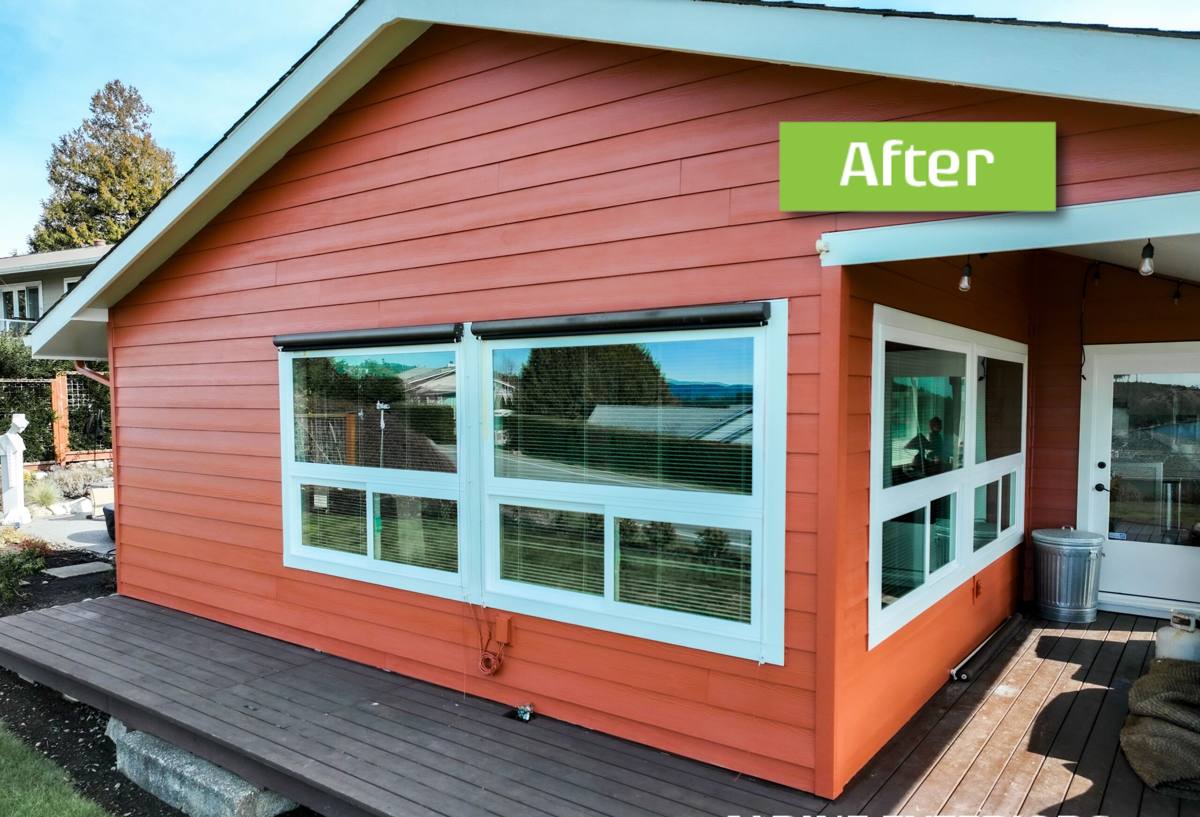
What "Energy-Efficient" Actually Means Here
The term gets used loosely, so it's worth being specific. In our climate, the numbers that matter most are the U-factor (how much heat the window lets through — lower is better) and the Solar Heat Gain Coefficient, or SHGC. Because the Pacific Northwest doesn't deal with the same intense summer sun load as the Southwest or Southeast, we're not chasing the lowest SHGC possible — we're balancing it so you keep some of the low-angle winter sun's warmth without losing efficiency in the shoulder seasons.
The Glass and Gas Fill
Dual-pane windows with low-E coatings and an argon gas fill are the practical standard for this area. Triple-pane glass exists and does perform better on paper, but for most Deming homes the added cost doesn't pencil out against the marginal efficiency gain — argon-filled dual-pane low-E glass gets you the vast majority of the benefit at a more reasonable price point. We'll walk through the difference honestly if you're curious, rather than upselling you into glass your house doesn't need.
Frame Material Matters More Than People Expect
In a climate with sustained moisture exposure, the frame is doing as much work as the glass. Here's how the common options compare for a Deming-area install:
| Frame Type | Moisture Behavior | Maintenance | Typical Fit |
|---|---|---|---|
| Vinyl | Doesn't absorb water, won't rot | Low — occasional cleaning | Most homes, best value |
| Fiberglass | Very stable, minimal expansion/contraction | Low | Homes wanting a longer-term frame with less flex |
| Wood-clad | Needs correct flashing and finish upkeep to avoid moisture intrusion | Higher — periodic finish maintenance | Homes prioritizing a specific interior wood look |
| Aluminum | Conducts cold, prone to condensation without thermal breaks | Low | Generally not our first recommendation for this climate |
We're not against wood-clad windows — some homeowners want that interior look and are fine with the upkeep. But we'll tell you plainly if a frame choice is going to fight the climate instead of working with it.
The Part Most Installers Get Wrong: Flashing and Water Management
This is where our background matters. We're a roofing crew first, which means water management is the thing we think about all day, every day — not just at the window opening. A window is only as good as the flashing detail around it. Get that wrong, and you can install the most expensive glass on the market and still end up with rot in the wall cavity within a few wet seasons.
In a driving-rain climate like ours, the header flashing above the window has to shed water out and away from the opening, the side flashing has to integrate correctly with the weather-resistive barrier behind the siding, and the sill pan has to be sloped and sealed so that any water that does get past the outer defenses drains back out instead of pooling against the framing. This is standard building science, but it gets rushed constantly — especially by installers who only do windows and don't spend the rest of their time thinking about how water moves across an entire building envelope.
Why This Shows Up Later, Not Right Away
A bad flashing job rarely fails in the first year. It fails two, three, five years down the road, after repeated wet seasons have worked moisture behind the trim and into the sheathing. By the time it's visible — soft trim, peeling paint, a musty smell near the window — the damage is already inside the wall. That's why getting the install right the first time matters more here than in a drier climate, where a shortcut might just never get tested hard enough to fail.
Signs Your Current Windows Are Working Against You
- Visible condensation or fogging between the panes — the seal has failed and the gas fill is gone
- Cold drafts near the frame even when the window is fully latched
- Wood trim or sills that feel soft, spongy, or show dark staining
- Paint or caulk cracking and separating from the frame year after year
- Rooms near windows that are noticeably colder or harder to heat evenly
- Higher heating bills than neighboring homes of a similar size
- Difficulty opening, closing, or locking windows that used to operate smoothly
Any one of these can be minor on its own. Several together usually mean the windows — or the flashing behind them — have reached the end of their useful service life.
How We Approach a Deming Window Install
- On-site assessment — we look at existing window condition, framing, and any signs of past moisture intrusion before quoting anything
- Product selection — we recommend frame and glass options based on your home's exposure, not a one-size-fits-all package
- Removal — old units come out carefully, with the opening checked for hidden rot or damage before anything new goes in
- Repair as needed — any compromised framing or sheathing gets addressed before the new window is set, not covered up
- Correct flashing sequence — sill pan, side flashing, and head flashing installed in the right order to integrate with your existing weather barrier
- Insulation and air-sealing — the gap around the frame is properly insulated and sealed, not just stuffed with foam
- Interior and exterior trim finish — completed to match your home and sealed against the elements
- Final walkthrough — we check operation, seals, and finish work with you before we consider the job done
What Drives the Cost
| Factor | Why It Matters |
|---|---|
| Number and size of windows | Larger openings and full-house replacements scale cost accordingly |
| Frame material | Vinyl, fiberglass, and wood-clad carry different material costs |
| Condition behind the existing window | Rot or framing repair adds labor beyond the window itself |
| New construction vs. retrofit | Retrofits into existing openings require more careful flashing integration |
| Trim and finish work | Custom interior trim matching adds time and material |
| Access and second-story work | Height and access affect labor time and equipment needs |
We don't quote a per-window number off a phone call — every home's exposure and existing condition is different enough that it's worth an actual look before we put a figure in front of you.
Why a Crew That Already Works This Area Matters
Whatcom County's climate isn't uniform. A home tucked back near Deming's tree cover deals with more shade, more retained moisture, and more moss and algae growth than a home out in the open. A crew that works this specific area regularly has already seen how these conditions play out on real houses — which details fail first, which materials hold up, and which shortcuts show up as problems two winters later. That's not something you can fully substitute with a general contractor who mostly works elsewhere and treats every job as a first encounter with the local conditions.
Because we're a roofing company first, we're also already thinking about how your windows interact with your roof's drainage, your gutters, and your siding as one connected system — not as an isolated product install.
Living With Windows in a Wet Climate
Even a correctly installed window benefits from basic upkeep in this region. Keep weep holes clear of debris so water can drain out of the frame. Check caulking annually, since UV and repeated wet-dry cycles break it down faster here than in drier climates. Trim back vegetation that keeps a window in constant shade and moisture — that's the same condition that drives moss growth on rooflines, and it affects window trim the same way. None of this is heavy maintenance, but skipping it shortens the life of even a good installation.
If your windows are drafty, fogged, or just older than they should be, we're happy to take a look and give you a straightforward, no-pressure estimate — no obligation, just an honest read on what your home actually needs. The form below is the easiest way to get started.