 Lynden Roofing
 Roofing Built for Aldergrove's Climate, Not Just Any Climate
Aldergrove sits right on the Washington-British Columbia border, close enough to Lynden that many of the same weather patterns move through both communities. That means the same roofing challenges too: long stretches of steady rain, damp air carrying a hint of salt off the nearby coastal lowlands, and a moss season that can run most of the year if a roof isn't set up to shed moisture properly. A roof replacement here isn't just about swapping old material for new material. It's about choosing a system and installing it in a way that actually holds up to how wet this part of the world stays, season after season.
We work on roofs on both sides of the border in this area, and the homes we see in Aldergrove tend to have the same failure points: shingles that have gone soft and granular from years of standing moisture, moss colonies lifting shingle edges, and flashing that was never detailed well enough to keep driving rain out of valleys and wall intersections. A correct replacement addresses all of that, not just the shingles on top.
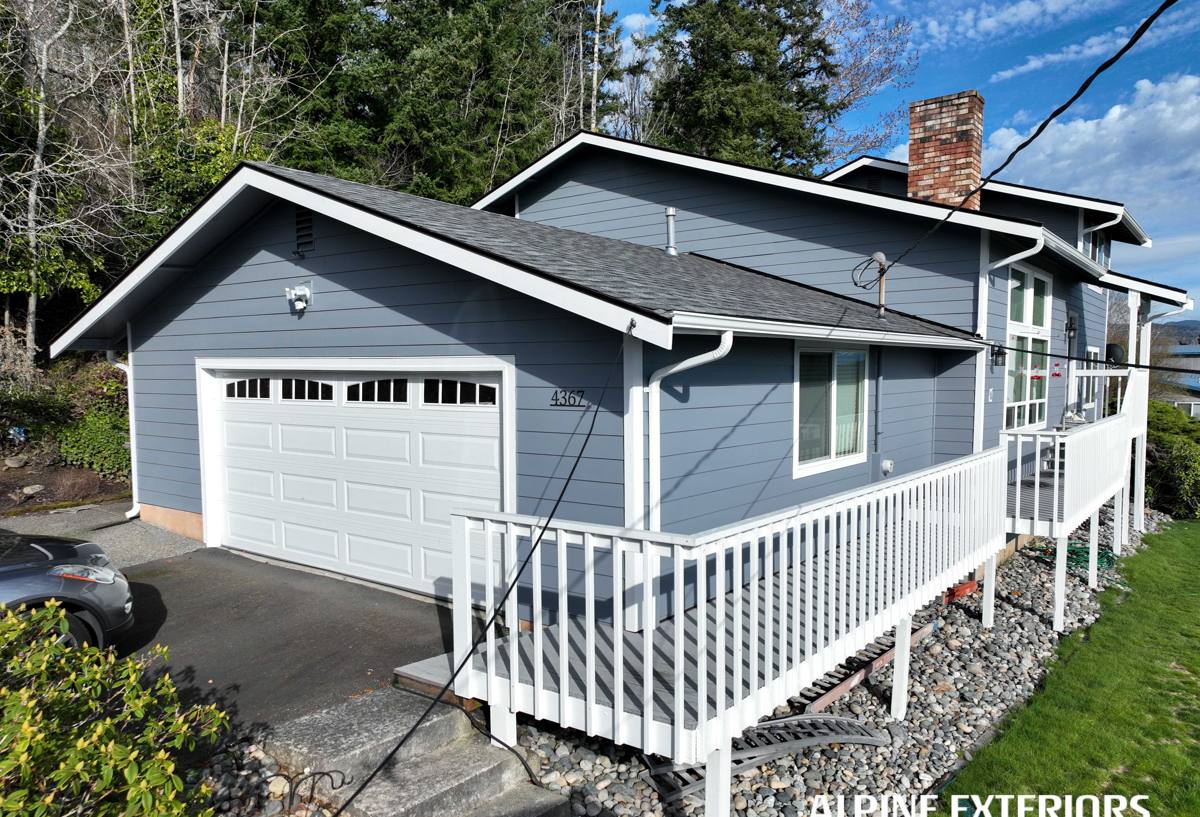
Signs an Aldergrove Roof Needs Replacement, Not Another Repair
Repairs make sense when a roof has years of life left and the problem is isolated. Replacement makes sense when the roofing system as a whole is wearing out. Here's how we tell the difference on a typical visit:
- Granule loss and bald patches — asphalt shingles losing their protective granules across large areas, not just one spot, usually means the whole roof is aging out together.
- Moss establishing in the shingle mat itself, not just sitting on the surface — once moss roots into the shingle, cleaning it off does more damage than leaving it.
- Curling, cupping, or cracking shingles spread across multiple slopes, especially on north-facing or shaded sections that stay damp longest.
- Soft spots in the decking found during inspection, which usually means moisture has been getting past the shingles for a while.
- Repeated leaks in different spots after previous patch repairs — a sign the underlayment and flashing system, not just the top layer, has failed.
- A roof approaching or past its expected service life, even if it looks okay from the ground — the underlayment and nail integrity degrade before visible damage always shows.
What a Correct Roof Replacement Actually Involves
Full Tear-Off and Deck Inspection
We remove the old roofing down to the deck rather than layering new material over old. That's the only way to actually inspect the plywood or OSB sheathing underneath for soft spots, delamination, or rot — problems that are common on homes in wetter climates where moisture has been finding its way in over years. Any damaged decking gets replaced before anything new goes down; skipping this step is the single biggest reason roofs fail early.
Underlayment That Matches the Climate
In an area with this much sustained rain, the underlayment layer matters as much as the shingles themselves. We use synthetic or ice-and-water underlayment in vulnerable areas — eaves, valleys, and low-slope sections — to give the roof a second line of defense if wind-driven rain ever gets under the primary roofing material.
Ventilation That Actually Works
Poor attic ventilation is one of the quieter causes of premature roof failure in the Pacific Northwest. Trapped moisture in the attic condenses on the underside of the deck, which rots sheathing from the inside out — a problem you won't see from the roof surface. Every replacement is a chance to correct intake and exhaust venting so the new roof isn't fighting moisture from both directions.
Flashing and Detail Work
Most leaks don't happen through the field of the shingles — they happen at transitions: chimneys, skylights, sidewalls, and valleys. We rebuild flashing at every one of these points rather than reusing old, corroded pieces, since this is where driving rain finds its way in during the region's wetter, windier storms.
Choosing the Right Roofing Material
There's no single "best" material for every home — the right choice depends on your roof's slope, your budget, and how much long-term maintenance you're willing to take on. Here's how the common options compare for a climate like Aldergrove's:
| Material | Typical Lifespan | Moss & Moisture Behavior | Maintenance Needs |
|---|---|---|---|
| Architectural asphalt shingles | 25–30 years | Good with proper ventilation; algae-resistant granules help but don't eliminate moss risk | Periodic moss removal and gutter clearing |
| 3-tab asphalt shingles | 15–20 years | More prone to curling and moss lift in sustained damp conditions | More frequent inspection and upkeep |
| Standing seam metal | 40–50+ years | Sheds water fast, very moss-resistant on steep slopes | Low; occasional fastener and sealant checks |
| Cedar shake | 20–30 years with upkeep | Attractive but needs active moss and moisture management | High; regular treatment and cleaning required |
For most Aldergrove homes we recommend a quality architectural shingle or metal roofing, paired with proper ventilation and moss-resistant detailing. We're happy to walk through the trade-offs for your specific roof and slope during an estimate — what looks right in a brochure doesn't always perform the same way on a roof that sees this much rain.
How We Handle a Roof Replacement
- On-site inspection — we walk the roof (not just look from the ground) to check decking, flashing, ventilation, and the extent of moss or moisture damage.
- Written estimate — a clear scope of work and material options, with honest pros and cons for your specific roof, not a one-size-fits-all pitch.
- Scheduling around the weather — in a climate with this much rain, timing matters. We plan tear-offs to minimize the window your home is exposed.
- Full tear-off and deck repair as needed, with photos of anything replaced so you know exactly what was found.
- Installation of underlayment, flashing, ventilation, and the new roofing material to manufacturer specification.
- Cleanup and magnetic sweep for nails and debris — your yard and driveway should look untouched when we're done.
- Warranty documentation covering both materials and our workmanship, explained plainly before we leave.
Why Hire a Crew That Already Works in Aldergrove
Aldergrove sits just across the border from Whatcom County, close to the Aldergrove–Lynden crossing, and homes here face the same coastal, moss-heavy weather pattern that shapes how we build roofs on the Washington side. A crew that already works this stretch of border communities knows what moss growth looks like at this rainfall level, how wind off the lowlands tends to drive rain up under poorly flashed valleys, and what ventilation setups actually keep attics dry through a wet winter — not generic textbook answers, but what actually holds up here.
There's also a practical side to working across the border: permit and code requirements can differ between Washington and British Columbia, and scheduling a project that crosses jurisdictions takes some coordination. We walk homeowners through what's needed for their specific job rather than assuming a Canadian project works exactly like a U.S. one, so there are no surprises partway through.
After Your New Roof Is Installed
A correct installation is most of the battle, but a little seasonal attention keeps a new roof performing for its full lifespan in a wet, moss-prone climate:
- Clear gutters and downspouts at least twice a year — clogged gutters back water up under the shingle edge.
- Keep overhanging branches trimmed back so shaded, damp areas don't become moss magnets.
- Have moss treated early, before it roots into the shingle surface, rather than waiting until it's visibly thick.
- Check attic ventilation isn't blocked by insulation, stored items, or nesting debris.
- Schedule a quick visual inspection after major windstorms to catch lifted shingles or flashing before they leak.
- Don't pressure-wash the roof — it drives water under shingles and strips protective granules.
What to Ask Before Hiring Anyone for This Work
A roof replacement is a significant investment, and the quality of the crew matters as much as the material on top. Before signing anything, it's worth asking:
- Will the deck actually be inspected and repaired if needed, or just re-covered?
- What underlayment and ventilation approach do they recommend for a roof like yours, and why?
- Is the estimate itemized, or a single lump number with no breakdown?
- What does the workmanship warranty cover, separate from the manufacturer's material warranty?
- Have they worked on homes in this specific area and climate before?
If a contractor can't answer these clearly, that's worth noting before you commit.
If your Aldergrove roof is showing its age, or you just want an honest opinion on whether repair or replacement makes more sense, we're glad to take a look. Fill out the form below for a free, no-pressure estimate — no obligation, just a straight answer about what your roof actually needs.