 Lynden Roofing
 Storm Damage Roof Repair Built for the Acme Area
Homes in the Acme area, just east of Lynden in Whatcom County, take a different kind of beating than roofs closer to town. You're tucked nearer the foothills, which means more direct exposure to the wind funneling down from the Cascades during winter storms, plus the same lowland moisture and moss pressure that affects the rest of Whatcom County. When a windstorm rolls through, or weeks of driving rain finally find the weak point in a roof system, you need someone who can tell the difference between a repair that actually solves the problem and one that just patches the symptom until the next storm.
We work on roofs in and around Acme regularly, and storm damage repair is one of the calls we get most after any significant weather event. This page covers what that repair actually involves, what we look for, and why the details matter more than most homeowners realize until something goes wrong twice.
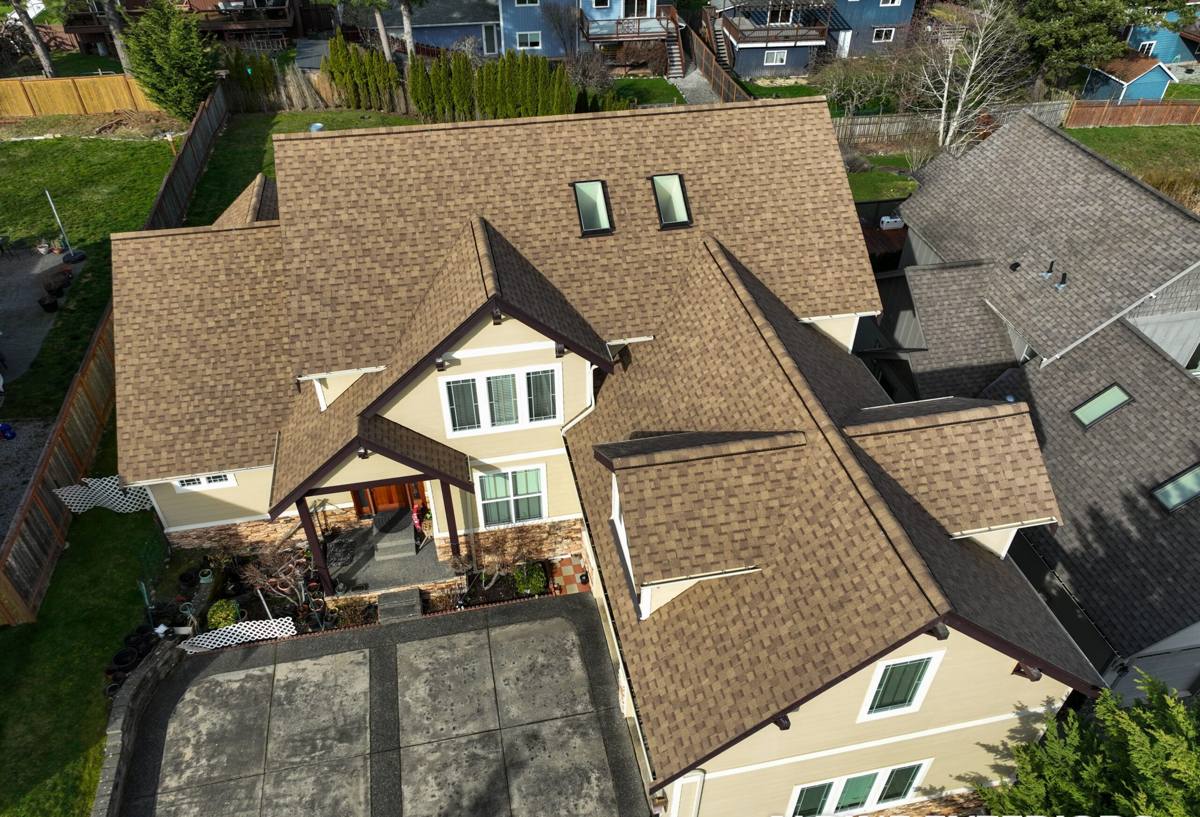
What Whatcom County Storms Actually Do to a Roof
Storm damage isn't always the dramatic kind. Plenty of the roofs we inspect after a bad windstorm show no missing shingles at all from the ground, but the damage is there once you get up close.
Wind
Sustained wind and gusts common to this part of Washington lift shingle edges and break the adhesive seal that keeps them flat. Once that seal is broken, the shingle may look fine but is no longer doing its job. The next rain gets underneath it instead of running over it.
Wind-Driven Rain
This is the one that catches people off guard. Rain that's being pushed sideways by wind doesn't behave like rain falling straight down. It finds its way under lifted shingle tabs, around flashing that's slightly loose, and into any gap at a roof-to-wall transition. A roof can survive years of normal rain and still leak the first time it takes a real wind-driven storm from the wrong direction.
Moss and Long-Term Moisture
Acme's tree cover and the region's long wet season give moss plenty of time to establish itself, especially on north-facing slopes and shaded sections of roof. Moss holds moisture against the shingle surface long after the rest of the roof has dried out, which accelerates granule loss and, over time, works its way under shingle edges. Storm damage and moss damage often show up in the same spot, because a moss-thinned shingle has far less resistance left when the wind gets under it.
Debris Impact
Falling branches and wind-blown debris are a real factor for properties with mature trees nearby, which describes a lot of the Acme area. Impact damage can crack shingles, dent metal flashing, or knock granules loose in a concentrated spot, and it doesn't always leave an obvious hole.
Signs You Need a Storm Damage Inspection
Some of these are obvious from the ground. Others aren't, which is exactly why a post-storm inspection matters even when nothing looks wrong from the driveway.
- Shingles that look curled, lifted, or out of alignment compared to the surrounding field
- Granules collecting in gutters or at downspout outlets after a storm
- A new water stain on a ceiling or in the attic following heavy wind or rain
- Visible gaps or movement at flashing around chimneys, vents, or roof-to-wall junctions
- Moss growth that's thickened noticeably, especially on shaded or north-facing slopes
- Any branch strike, even one that looked minor at the time
- Daylight visible through the roof deck from inside the attic
If any of these apply after a recent storm, it's worth having someone look before the next one arrives. Small openings get bigger fast under repeated wind-driven rain.
What a Correct Storm Damage Repair Involves
A lot of storm repairs done wrong aren't done wrong out of dishonesty — they're done wrong because the crew stopped at the visible damage and didn't check what's around it. Here's what we actually do.
Full-Slope Inspection, Not Just the Damaged Spot
Wind and impact damage rarely stay contained to one shingle. We check the full slope where damage is visible, plus adjacent slopes exposed to the same wind direction, since a storm that damaged one section likely stressed the ones around it too.
Underlayment and Deck Check
If water has gotten past the shingle layer, the underlayment and the roof deck underneath need to be checked for saturation or soft spots. Replacing shingles over a compromised deck just hides the problem for another season.
Flashing Verification
Flashing around chimneys, skylights, and roof-to-wall transitions is a common failure point in wind-driven rain events specifically. We check it as part of every storm repair, not as an upsell — it's often the actual source of a leak that looks like it's coming from the shingles.
Matching Materials
Repairs use shingles that match the existing roof as closely as possible in both profile and color line. On an older roof, an exact match isn't always available, and we'll tell you that honestly rather than mismatch it and hope you don't notice.
Moss and Debris Clearing
Where moss or organic debris contributed to the damage, we clear it as part of the repair rather than repairing around it. Leaving moss in place next to a fresh repair just sets up the same failure again.
Our Process for Acme Storm Calls
- Inspection and photo documentation. We walk the roof, document the damage, and identify the cause — wind, impact, moss-related deterioration, or a combination.
- Straight explanation of findings. You get a clear rundown of what's damaged, what's still sound, and what caused it, in plain language.
- Written estimate. Scope and cost in writing before any work starts, including whether the repair is localized or whether the underlying section needs more attention.
- Repair work. Matching materials, correct flashing detail, and a cleanup of the surrounding area so the fix holds through the next storm season, not just the next dry spell.
- Insurance documentation, if needed. If you're filing a claim, we provide the documentation your adjuster needs to evaluate the damage accurately.
Repair vs. Full Section Replacement
Not every storm-damaged roof needs a full slope replaced, but some do. The table below covers the general factors that push a decision one way or the other. Every roof is different, so treat this as a starting point for the conversation, not a substitute for an actual inspection.
| Factor | Favors Targeted Repair | Favors Section Replacement |
|---|---|---|
| Age of existing roof | Roof is under 10-12 years old | Roof is near or past expected service life |
| Extent of damage | Damage confined to a small, clear area | Damage scattered across most of the slope |
| Deck condition | Deck is dry and solid | Deck shows soft spots or saturation |
| Moss/moisture history | Minimal moss, good sun exposure | Heavy moss history, chronic shaded moisture |
| Shingle match availability | Matching shingles still available | Discontinued shingle line, poor match |
Why a Crew That Already Works Acme Matters
Storm damage repair is one of those jobs where local familiarity actually changes the outcome, not just the sales pitch. A crew that regularly works properties in and around Acme has a working sense of how wind tends to move through this part of the county, which slopes typically take the brunt of a given storm direction, and how much moss pressure to expect based on tree cover and slope orientation. That's not guesswork — it's the difference between an inspection that checks the obviously damaged spot and one that knows where else to look on a similar roof nearby.
There's also the simple matter of response time. After a significant windstorm, roofing crews across Whatcom County get busy fast. Being established in the area means we're not starting from scratch figuring out your property or driving in from well outside the region every time there's a follow-up question.
Insurance Claims and Storm Damage
Many storm repairs are covered under homeowners insurance, particularly for wind and impact damage, though coverage details vary by policy and by insurer. A few honest points on this:
- Document damage as soon as it's safe to do so — photos help, but a professional inspection report carries more weight with an adjuster
- Moss-related deterioration is sometimes treated differently than sudden storm damage, since insurers generally distinguish between a covered event and gradual wear — we'll tell you honestly which category the damage falls into
- Get a written estimate before repairs begin so there's a clear record of scope and cost
- We're happy to meet an adjuster on-site or provide documentation directly, but we don't handle the claim itself — that's between you and your insurer
Preventing the Next Storm Repair
A few maintenance habits go a long way toward reducing how often storm damage becomes a real problem in the Acme area specifically:
- Keep overhanging branches trimmed back from the roofline where practical, reducing both impact risk and shade-driven moss growth
- Have moss treated before it thickens into mats that hold moisture against the shingle surface
- Check flashing and roof-to-wall transitions periodically, since these are the first points wind-driven rain exploits
- Address minor lifted or curled shingles promptly rather than waiting for the next storm to finish the job
None of this eliminates storm risk entirely, but it reduces how much a given storm can do once it arrives, and it makes any future repair smaller and cheaper than it would otherwise be.
If a recent storm has you wondering whether your roof came through it in good shape, we're glad to take a look. We offer free, no-pressure estimates for Acme-area homes — no obligation, just an honest read on where things stand. Use the form below to get started.