 Lynden Roofing
 Roof Repair for Abbotsford, BC Homes Near the Border
Abbotsford sits just across the line from Whatcom County, close enough to Lynden that the two communities share the same weather system, the same wet winters, and a lot of the same roofing problems. A roof leak doesn't care which side of the border it's on. What matters is whether the crew fixing it understands how roofs actually fail in this part of the Pacific Northwest, and whether the repair is done in a way that holds up through the next storm season instead of just getting you through the next dry week.
This page is about one thing: roof repair for homes in the Abbotsford area. Not a full tear-off, not a sales pitch for a new roof you don't need yet — just an honest look at what local roofs need, what a correct repair actually involves, and how we handle the work.
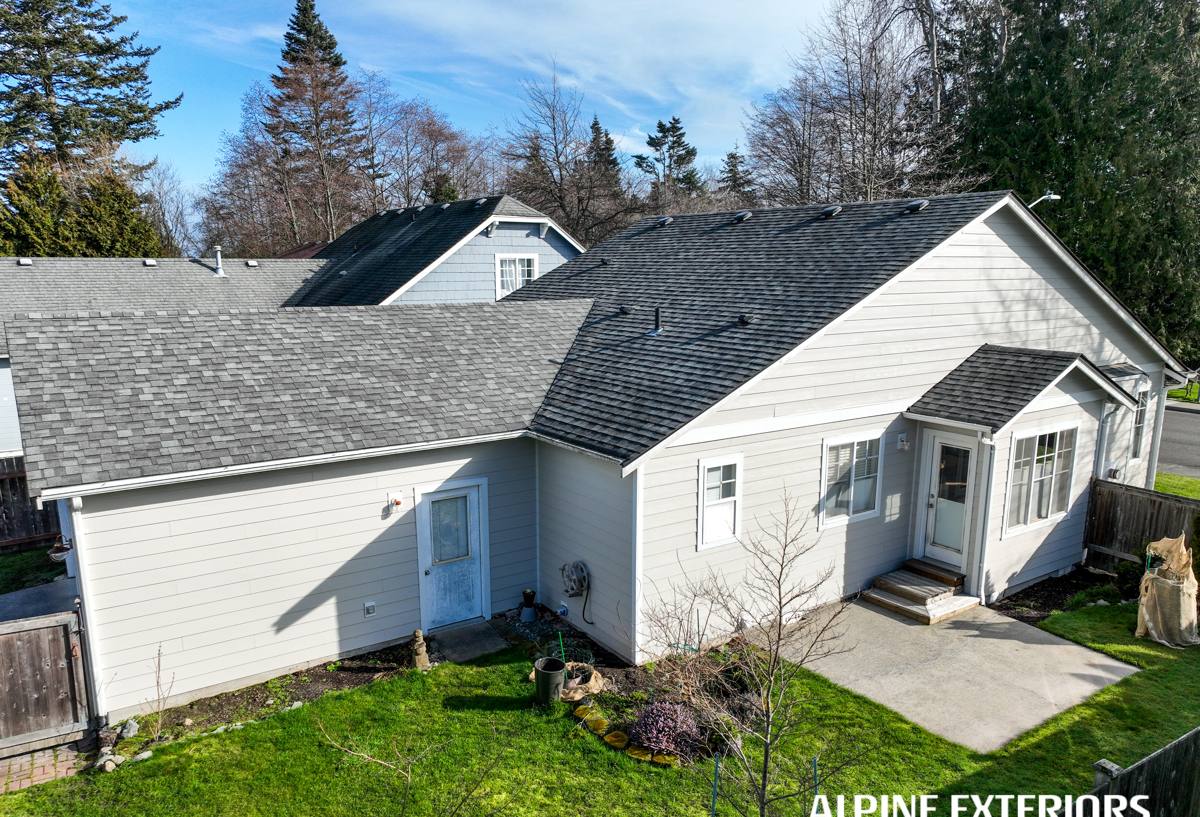
What the Local Climate Does to Roofs
The Fraser Valley and the north Whatcom border area get a specific combination of weather that's harder on roofs than most homeowners realize. It's not one dramatic event that causes most damage — it's the steady, repeated exposure over years.
Salt Air
Homes closer to the Strait of Georgia and the Salish Sea pick up salt-laden air that travels inland with the marine layer. Over time, that air accelerates corrosion on exposed metal roofing components — flashing, fasteners, valley metal, and vent boots. A fastener that would last decades in a dry inland climate can start rusting and losing its grip years earlier here.
Driving Rain
This region doesn't just get a lot of rain — it gets wind-driven rain, the kind that comes in sideways during a frontal system and gets pushed up under shingle edges, around chimney flashing, and into any gap in the roofing envelope that wouldn't be a problem in calm rainfall. Roofs here need every seam, lap, and penetration sealed with that in mind, not just installed to a minimum standard.
Moss Season
Mild, wet winters that stretch on for months create ideal conditions for moss and algae growth, especially on north-facing slopes and shaded sections under trees. Moss holds moisture against the roofing material long after the rest of the roof has dried out, and its root structure works its way under shingle tabs and shakes, lifting them and breaking the seal. Left alone, a moss mat doesn't just look bad — it actively shortens the life of the roof underneath it.
Signs Your Abbotsford Roof Needs Repair
Most roof failures don't start as a hole. They start small and get ignored because nothing is visibly wrong from the ground. Here's what we tell homeowners to actually check for:
- Water stains on interior ceilings or upper walls, especially after a windy rainstorm
- Granules collecting in gutters or at downspout outlets (a sign of shingle wear)
- Shingles that are curling, cracked, or missing, particularly on slopes facing prevailing wind
- Moss buildup thicker than a light film, or moss visible along shingle edges and in valleys
- Rust streaks below metal flashing or vent pipes
- Soft or spongy spots underfoot if you're on the roof for another reason (gutter cleaning, etc.)
- Daylight visible through the attic roof deck
- Sagging in the roofline between rafters
Any one of these on its own might be minor. Several at once, or any sign paired with an active interior leak, means it's time to get it looked at before the next storm.
What a Correct Roof Repair Actually Involves
A lot of "roof repairs" are really just patches — caulk over a gap, a shingle nailed back down, no real diagnosis of why it failed in the first place. That approach tends to buy a few months, not years. A repair done right starts with figuring out the actual cause.
Tracing the Leak to Its Source
Water that shows up on a ceiling rarely originates directly above the stain. It travels along rafters, sheathing, and underlayment before it drips somewhere visible. A proper repair means getting into the attic and onto the roof to trace the path back to the real entry point — usually a failed flashing detail, a broken seal around a penetration, or wind-lifted shingles — rather than patching where the water happens to be showing.
Matching Materials, Not Just Covering the Gap
Repairs need to use compatible materials and, where possible, matching shingle color and profile so the fix doesn't stand out as a mismatched patch and doesn't create a new point of weakness where old and new materials meet.
Flashing and Underlayment First
Most recurring leaks trace back to flashing — around chimneys, skylights, valleys, and where roof planes meet walls — or to underlayment that's failed at a seam. Shingles get the attention because they're visible, but flashing and underlayment are what actually keep water out. A repair that replaces shingles but ignores compromised flashing underneath will leak again.
Common Roof Types in the Area and What Repair Involves
Different roofing materials fail differently, and the right repair approach depends on what's actually up there.
| Roof Type | Typical Failure Point | Repair Considerations |
|---|---|---|
| Asphalt Composition Shingle | Wind-lifted or cracked tabs, granule loss, nail pops | Most common and usually most straightforward to repair; matching shingle age/color can be tricky on older roofs |
| Cedar Shake / Shingle | Moss and moisture retention, splitting, rot at fasteners | Requires careful moss management and often individual shingle replacement rather than large-panel patching |
| Metal Roofing | Fastener corrosion, seam separation, panel scratches exposing bare metal | Salt air accelerates fastener wear; repairs should use corrosion-resistant hardware matched to the panel material |
| Low-Slope / Flat Membrane | Seam failure, ponding water, membrane punctures | Needs membrane-specific repair materials; patches must be heat- or adhesive-sealed correctly to stay watertight |
Our Roof Repair Process
Inspection
We start by walking the roof and the attic, not just looking from the ground. That's the only way to catch flashing issues, soft decking, or moss damage that isn't obvious from the driveway.
Diagnosis and Estimate
Once we know what's actually causing the problem, we explain it in plain terms — what failed, why, and what it takes to fix it correctly. You get a written estimate before any work starts, with the scope of the repair spelled out so there's no ambiguity about what's included.
The Repair
We do the work to the same standard we'd want on our own roof: correct flashing details, properly lapped underlayment, matched materials, and fasteners sized and spaced to hold up against wind-driven rain and freeze-thaw cycling.
Cleanup and Walkthrough
We clear debris, check gutters and downspouts near the repair area for anything that fell during the work, and walk you through what was done before we consider the job finished.
Roof Repair vs. Replacement: How We Help You Decide
Not every roof problem calls for a full replacement, and not every roof problem should be patched indefinitely either. The honest answer usually comes down to a few factors: how old the roofing material is relative to its expected lifespan, how widespread the damage is versus isolated to one area, and whether the underlying decking is still sound. A roof with one damaged section and years of useful life left in the rest of the material is a repair candidate. A roof where repairs keep recurring in different spots, or where the material is past its expected service life, is usually telling you it's closer to replacement. We'll give you a straight answer on which situation you're in rather than defaulting to the bigger job.
Why a Crew That Already Works the Abbotsford Area Matters
Roofing companies that only occasionally work near the border don't always have a feel for how the local weather patterns actually load a roof — which slopes take the worst of the wind-driven rain, how fast moss builds back on shaded north faces here, or how quickly salt air chews through unprotected fasteners near the water. A crew that regularly works this stretch of Whatcom County and the border area brings that pattern recognition into every diagnosis, which matters when the goal is fixing the actual cause of a leak instead of the symptom in front of you.
Maintenance Tips to Extend the Life of Your Repair
A good repair lasts longer with a little ongoing attention. A few habits go a long way in this climate:
- Keep gutters and downspouts clear so water doesn't back up under roof edges
- Have moss treated or removed before it builds into a thick mat, not after
- Trim back overhanging branches that keep shaded roof sections damp longer
- Check attic ventilation — poor airflow traps moisture that shortens roof life from underneath
- Get a roof looked at after any major windstorm, even if nothing looks obviously wrong
If you're dealing with a leak, missing shingles, moss damage, or just want an honest opinion on the condition of your roof, we're glad to take a look. Use the form below to request a free, no-pressure estimate — we'll tell you what we actually find, not just what's easiest to sell.